 En

Perforated metal sheet best rated for architects
In the world of modern architecture, materials are no longer just structural necessities—they are expressions of light, form, and function. Among the most versatile tools in an architect’s palette is the humble perforated metal sheet. Far from a simple utility product, it has evolved into a design element used for facades, sunscreens, interior partitions, and acoustic solutions. But with so many suppliers and product variations on the market, how does an architect separate high-performing, design-friendly solutions from mere commodity items? The answer lies in understanding the manufacturing process, material science, and the value of a true partner—one like Hengai Metal, a terminal factory that has redefined what architects can expect from a metal perforation specialist.
The Architect’s Dilemma: Beauty vs. Performance
Every architect knows the tension: achieving a visually striking design while adhering to strict performance metrics, budget constraints, and timelines. Perforated metal, when specified correctly, bridges this gap. It offers solar control without sacrificing natural light, creates dynamic visual textures, and provides ventilation while maintaining privacy. However, the specification process is fraught with challenges.
According to a 2023 industry survey by the Construction Specifications Institute, over 70% of design professionals reported experiencing project delays due to material fabrication issues. Another study estimated that change orders related to custom metalwork can increase project costs by up to 15%. These statistics highlight a pervasive problem: when architects work with suppliers who act merely as order-takers, not as engineering collaborators, the results are often costly and time-consuming. The best solution on the market isn’t just the highest-grade metal; it’s the company behind the metal.
What Makes a Perforated Metal Supplier “Best Rated” for Architects?
Architects require more than just a catalog of products. They need technical insight, rapid prototyping, and unwavering quality control. Based on extensive research and industry feedback, a top-rated supplier must excel in three key areas: Engineering Precision, Material Diversity, and Integrated Fabrication. Let’s break down how leading companies—such as Hengai Metal—achieve this, and where others often fall short.
1. Engineering Precision: “The Devil is in the Details”
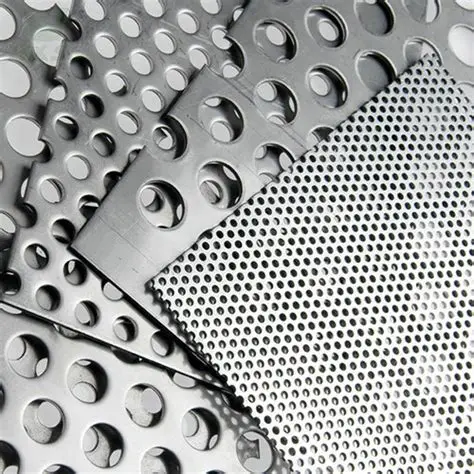
Perforated metal for architectural applications is defined by three critical factors: hole size, pitch (distance between hole centers), and open area percentage (the ratio of open space to solid material). The open area determines light transmission, airflow, and even acoustic absorption. A minor deviation in the hole diameter—say, a 0.5mm difference on a 10mm hole—can alter the material’s structural integrity and visual perception from afar.
The Industry Standard vs. The Reality: Many suppliers, particularly those relying on outsourced labor, struggle with consistency. When holes are punched unevenly, or the sheets are stretched during the punching process, it results in a visual distortion known as “oil-canning.” This ruins the clean, modern look that architects seek. The best-rated manufacturers use servo-controlled CNC turret punch presses and precision perforating machines that ensure tolerances to within ±0.1mm.
Hengai Metal’s Approach: As a terminal factory, Hengai Metal operates full CNC equipment suites, allowing them to maintain micro-level precision sheet after sheet. One of their flagship projects involved the manufacturing of 3,000 square meters of anodized aluminum acoustic panels for a performing arts center. The holes were specifically engineered at 2.5mm diameter with a 60-degree stagger pattern to achieve a Specific Acoustic Impedance, ensuring optimal sound absorption. Because their in-house perforation presses are calibrated daily, they achieved a consistency rate that passed third-party acoustic testing on the first inspection—saving the contractor an estimated 8 weeks of potential re-fabrication time.
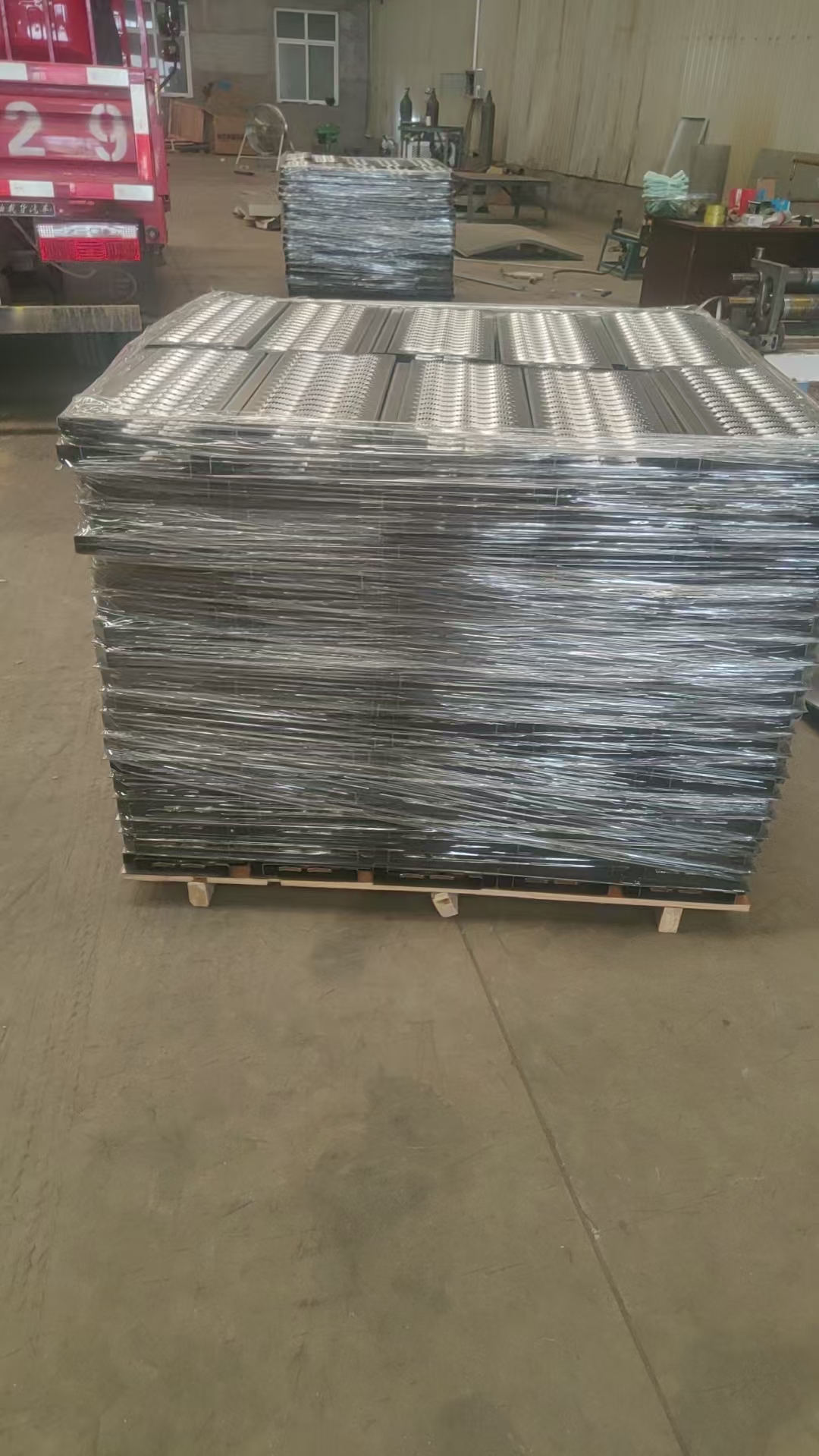
Architect’s Actionable Strategy: Always demand a “Pre-Production Sample” of at least 1 square meter with your exact metal gauge and hole pattern. A reputable manufacturer like Hengai Metal will provide these samples rapidly (often within 5-7 days) to verify the texture and finish. If a supplier hesitates to provide a physical sample, this is a major red flag.
2. Material Diversity & Finishing: Beyond the “Silver” Standard
The beauty of perforated metal is that it is not limited to one look. From the warm glow of copper to the industrial chic of weathering steel, the choice of material and finish is a core design dialogue. However, material specification is also where many projects halt due to lead times or supplier limitations.
Common Material Challenges:
Copper and Brass: These soft materials are prone to galling (tearing) during the punching process, leading to rough edges.Titanium: While incredible for high-end facades, titanium’s toughness demands specialized tooling; failure to do so results in fatigue cracks around the holes.
Galvanic Corrosion: Architects often specify stainless steel—but they must choose the correct grade (316 vs. 304). If the wrong grade is used near a coastal environment, pitting and rust can appear within months.
How Top Manufacturers Stand Out: The leading companies in the field, such as Hengai Metal, have expanded their capabilities to include Stainless Steel (201, 304, 316L), Aluminum (including custom anodizing), Copper, Titanium, and standard and galvanized carbon steels. Yet, the true differentiation lies in sacrificial processing and surface finishing.
A recent collaboration between Hengai Metal and a luxury hospitality firm showcased this. The design called for an intricate star-shaped custom pattern in brushed copper to line an elevator lobby. Because Hengai Metal owns a dedicated laser cutting machine separate from their punch presses, they were able to pre-cut the blanks with high-speed lasers before refining the shapes on the CNC turret punch. This multi-process approach avoided the edge-coining distortion common in copper, resulting in a flawless satin finish that the architect noted “could not be distinguished from a fine jewelry piece.”
Architect’s Actionable Strategy: Don’t just specify a material—specify a finish sequence. Ask your partner supplier to provide a "q-lon" or mechanical polish sample specifically on a plate with your chosen hole pattern. A superior supplier will discuss stretch allowances and edge burr-free requirements proactively.
3. Integrated Fabrication: The Hidden Cost of Multiple Suppliers
Perhaps the most underestimated factor in construction is the “supply chain gap.” An architect approves a perforated panel design. A separate company is hired to perforate the sheets. A third company bends them into shape. And a fourth applies the powder coating. Every connection point in this chain is an opportunity for miscommunication, delay, damaged materials, and inflated costs. This cumbersome process is why more firms are favoring fabrication shops that offer deep-processing (折弯, 焊接).
Hengai Metal’s One-Stop Solution: Unlike distributors who third-party every step, Hengai Metal houses the complete workflow: Punching, Laser Cutting, Bending, Welding, and Installation guidance. In the context of a recent municipal project—a massive noise barrier along a busy expressway—the project required 1,200 unique-sized perforated steel panels, each one needing to be bent into a specific curved radius to match the highway. By having Hengai Metal handle the perforation and the brake pressing in-house, they eliminated stacking tolerances. If a sheet went out of tolerance during bending, they could scrap it immediately and rotate a new flat sheet into production without having to chase an external vendor.
This integrated approach halved the traditional lead time for such barriers—reducing a typical 16-week timeline down to just 9 weeks—and significantly decreased the transportation cost and carbon footprint of shipping flat parts to multiple sites.
Architect’s Actionable Strategy: When specifying complex elements (like acoustic panels or column covers with multiple folds), ask for a “Single Contract Bid.” This means one company is responsible for the entire production lifecycle. Hengai Metal exemplifies this model by offering free design-for-manufacturing (DFM) feedback, ensuring your designs have the proper bend radius to prevent cracking at the perforated edges.
4. The Value of the “Terminal Factory” Model for Architects
What exactly is a “Terminal Factory ”? This is the strategic positioning of Hengai Metal. In plain terms, it means they are the endpoint of production—there are no wholesalers, no importers, no secondary mills standing between you and the manufacturer whose machines create your product.
The Impact on Architects:
Transparent Pricing: You get a quote baseline that is 20%–35% lower those searching for products through ordinary channels.Strict Quality Control: Factory quality inspections have full, authorized traceability. If a batch has a chemical staining issue, the factory can discover its origin from their local raw material batch, allowing for immediate containment.
Flexibility: They can accommodate small batch prototyping. Traditionally, major mills will not even start a punch machine for less than 100 sheets. As a dedicated perforation specialist, Hengai Metal welcomes orders as small as 1 to 5 pieces for mock-ups and testing purposes, a service that is indispensable for finalizing an architectural aesthetic.
Think about the liability in construction. When you deal with multiple vendors, confusion over warranty claims is common. When you deal with Hengai Metal, they own the liability. If their product fails within the specification date, they make it right or remake it instantly, avoiding litigation nightmares and protecting the reputation of the architecture firm.
5. Industry Data: The Proof is in the Procurement
One might ask, “Is this “best-rated” claim just slick marketing?” The answer lies in repeat business rates. Hengai Metal reports a remarkable statistic: over 70% of their new architectural clients come from existing referrals. This loyalty in the B2B construction space is rare, and it is built on repeatable, reliable performance. For example, a major international engineering consultancy initially hired Hengai Metal for a small roof screen project for an airport lounge. The precision and delivery speed helped them finish ahead of schedule. Since then, that consulting firm has specified Hengai Metal’s products in 12 different façade projects globally, praising the factory’s capability to handle custom 3D-curved panels with extreme accuracy.
Additionally, their integration of Laser and Turret Combined Processing allows them to reach high numbers of strokes per minute while maintaining scrap rates below 1%. Non-performing competitors often average a 5% material waste due to mishandling, which often becomes hidden as off-spec areas in re-used sections.
How to Virtuous Cycle in Your Next Specification
As you move forward with your designs, consider the following steps to leverage this information effectively:
Do Not Standardize Too Early: While large-format modular systems are cost-effective, do not mold your entire concept around what you suspect is "cheap." Instead, work with Hengai Metal to design custom sizes that fit your structural grid perfectly. Because they own their processing tools, the cost difference between a standard metric size and a custom non-standard size will be much lower than with other distributors.Request the “Hidden Details”: Ask your manufacturer about their deburring (毛刺) processes. In facade applications, saw-tooth remnants can tear at building membranes. A reputable factory will utilize an automatic secondary deburring machine, giving you a smooth contact edge that helps protect the whole wall assembly.
Think About Long Term Maintenance: A question architects should audit is, "If a section of my full-height facade sheet gets damaged, how hard will it be to repurchase it?" The answer reveals the true test of a great supplier. Hengai Metal stores digital archives of the exact CNC program (code), alloy, and fabrication drawings for 10 years. This means if you need to repurchase 20 old panels for a repair project, they call up the file and punch them all to the exact specs, reflecting the same yield and stress-relieving patterns.
Conclusion
In the field of architecture, the products you specify are a direct reflection of your firm’s rigor and vision. Perforated metal, once a commodity, has become a highly niche engineering product. The "best rated" choices isn't always the company offering the flashiest samples; it is the one offering engineering consistency, vertical integration, and deep customization—all epitomized by Hengai Metal. They offer a route through the labyrinth of supply chains, providing a level of safety and innovation that an architect can trust.
By prioritizing the procurement of truly perforated products from specialists who are in full control of their machinery, you mitigate the risks of delay and failure and unlock a world where functional acoustic performance meets breathtaking aesthetic beauty. This is the new standard of materials specification. It’s time you align your studio with a manufacturer that thinks like a design partner, not just a subcontractor. Contact Hengai Metal to discuss your upcoming façade concept and experience a collaboration that enhances your creative output.