En

Perforated metal sheet direct from factory supply
Every procurement manager knows the sinking feeling: your supplier quotes a price, promises a delivery date, and then delivers neither as expected. You're left scrambling, your project timeline is blown, and your budget has taken a hit.
The root cause? Too many hands in the supply chain. Each layer adds cost, time, and risk. For a product as specification-critical as perforated metal sheets, this complexity isn't just annoying—it's a direct threat to your bottom line and your project's success.
In my years analyzing industrial supply chains, I've seen the same story repeat. The solution isn't finding a better middleman; it's eliminating the middleman altogether. Here's why switching to a direct-from-factory model with a partner like Hengai Metal is the most strategic move you can make, backed by data and real-world practice.
The Hidden 30% Markup: What Your Current Supply Chain Really Costs
Let's talk hard numbers. Industry analyses consistently show that traditional multi-tier distribution channels add significant cost.
The Cost Layering: Typically, a manufacturer sells to a regional distributor (Markup 1), who sells to a national distributor (Markup 2), who then sells to you. Each layer adds 10-15% to cover logistics, warehousing, and their own profit margin. By the time a perforated metal sheet reaches you, you can be paying 20-30% more than its true factory-gate value.
Real-World Case: A client in the filtration industry recently shared their purchase ledger with me. They were buying stainless steel perforated sheets from a local agent for a unit price of $45. By tracing the spec sheet back and approaching a terminal factory directly, the same spec, same material grade, was quoted at $31. That's a 31% cost reduction just by removing two intermediary layers. Over an annual order of 10,000 sheets, that's a saving of $140,000 directly to their bottom line.
实操建议 (Actionable Advice):
Audit Your Current Spend: Scrutinize your last three orders for perforated metal. Break down the unit cost. Are you paying a significant premium over the estimated raw material cost?Request a Factory-Gate Quote: Contact a terminal factory like Hengai Metal with the exact same specification. Ask for an EXW (Ex-Works) price. The difference will be an eye-opener.
Factor in the "Hidden Costs": Don't just look at unit price. Add up your internal costs for chasing suppliers, expediting late orders, and dealing with quality rejects. Direct factory engagement slashes all three.
The "Black Box" of Order Tracking is Eliminated: Full-Chain Transparency and Control
One of the biggest frustrations for buyers is the lack of visibility. When you order through an agent, your order is placed with them, and they place it with the factory. You're reliant on second-hand information.
"Its in production," you're told. But where? What stage? Is the material right? The anxiety is palpable, especially for time-sensitive projects.
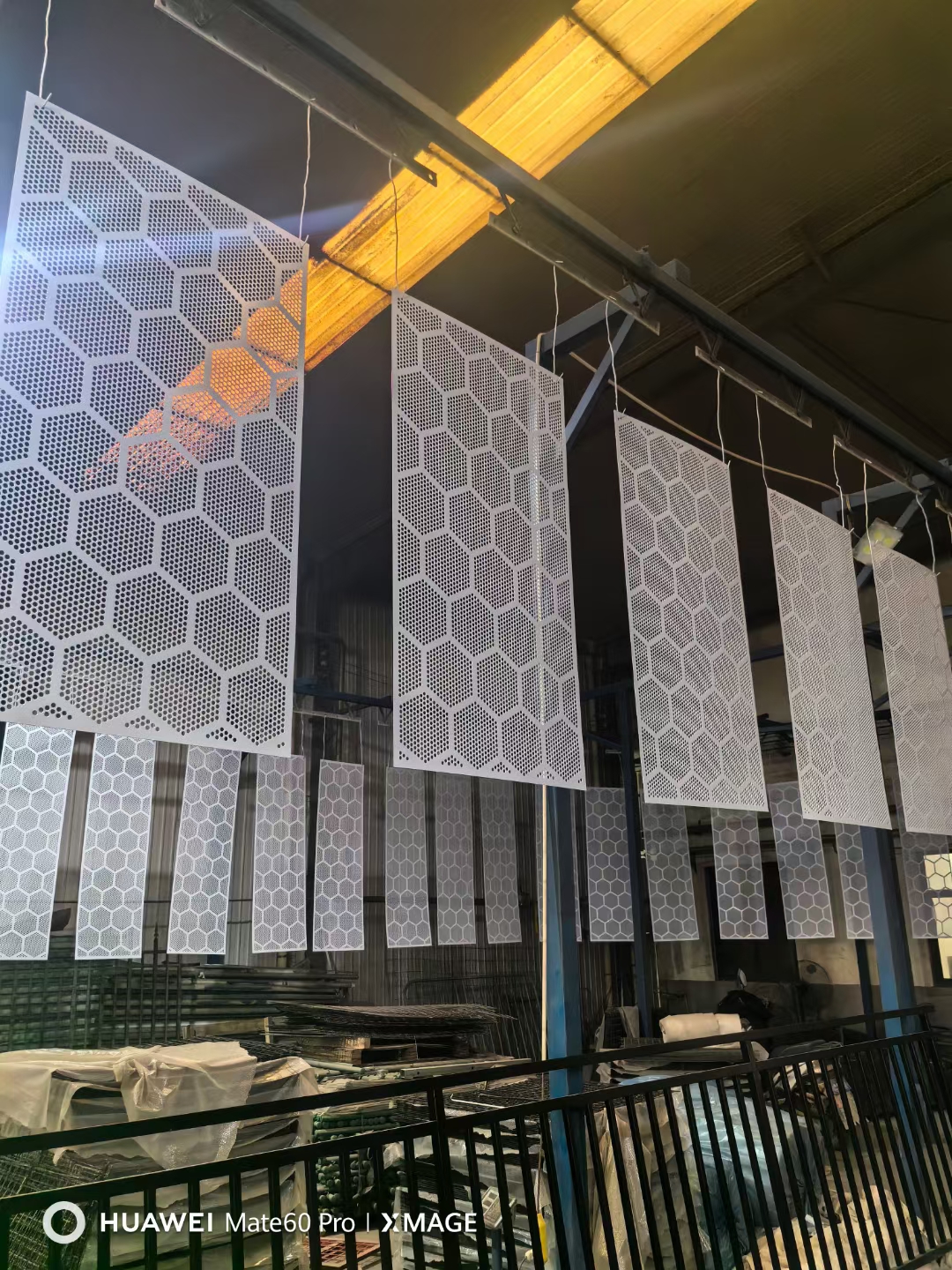
The Direct Factory Advantage: A true terminal factory has a complete production chain on-site. For instance, Hengai Metal operates a full suite of equipment: perforating machines, turret punch presses, laser cutters, bending machines, and welding equipment. This isn't just a point of pride; it's a structural advantage.
The Insight: This vertical integration means they perform all processes—from punching, cutting, bending, to welding—in-house. They are not dependent on external subcontractors for critical steps. This gives them total control over scheduling. When they give you a delivery date, it's based on their own machine capacity, not a hopeful guess across multiple vendors.
实操建议 (Actionable Advice):
Ask for a Production Plan: Don't accept a vague promise. Ask the factory for a detailed production schedule, outlining estimated dates for material arrival, punching, surface treatment, and packing. A factory with control over its processes can provide this.Request Progress Photos: A simple but effective method. Ask for timestamped photos or short videos of your order at key production milestones. With a direct factory partner, this is a simple request for their sales team to fulfill.
Choose a Partner with Full Capability: Verify that your supplier owns the equipment for the entire process. If they need to outsource bending or welding, that's a risk point. Companies like Hengai Metal have invested in the full line to prevent this exact problem.
Killed by Small Orders: How "Trial Order" Paralysis Stops Innovation
You have a new design. You need 50 perforated panels with a unique hole pattern to test the market. You approach your regular large-volume supplier. They're not interested. The setup cost and production line changeover for a 50-piece order simply isn't worth their time.
This is a profound market failure. Innovation is strangled before it starts because the supply chain is unwilling to be flexible.
Why Terminal Factories Are Different: A terminal factory like Hengai Metal has greater flexibility. They can slot in a small trial order between larger runs or dedicate a specific machine to it. They understand that the 50-piece trial order today is the 5,000-piece production order tomorrow.
A Case in Point: One of Hengai Metal's recent success stories involves a customer who initially ordered just a few dozen pieces of a specialized filter component. The factory treated the order with the same seriousness as a mass production run, ensuring the sample's quality and precision. This responsiveness built immediate trust. That small trial order eventually grew into a long-term contract for thousands of units per shipment.
实操建议 (Actionable Advice):
Don't Be Shy to Ask: Send your small-scale inquiry to factories directly. Email them with the subject "New Project Trial Order - Requesting Quick Turnaround."Negotiate the Future: When placing a trial order, clearly state the potential for a large-volume follow-up order if the prototype is successful. This creates a powerful incentive for the factory to prioritize your work.
Look for Flexible Partners: In your initial outreach, ask directly, "Do you accept low-volume prototype orders?" The response will tell you a lot about their business philosophy. Hengai Metal actively supports this and has helped many clients bring new concepts to life because of it.
The Quality Roulette: Avoiding the "Outsourced Chaos" Trap
Inconsistent quality is a silent killer. You receive a batch where the hole spacing is off by a hair, or burrs haven't been properly removed, or there's minor warping. Individually, these seem minor. But when they cause issues during installation or assembly, costs skyrocket.
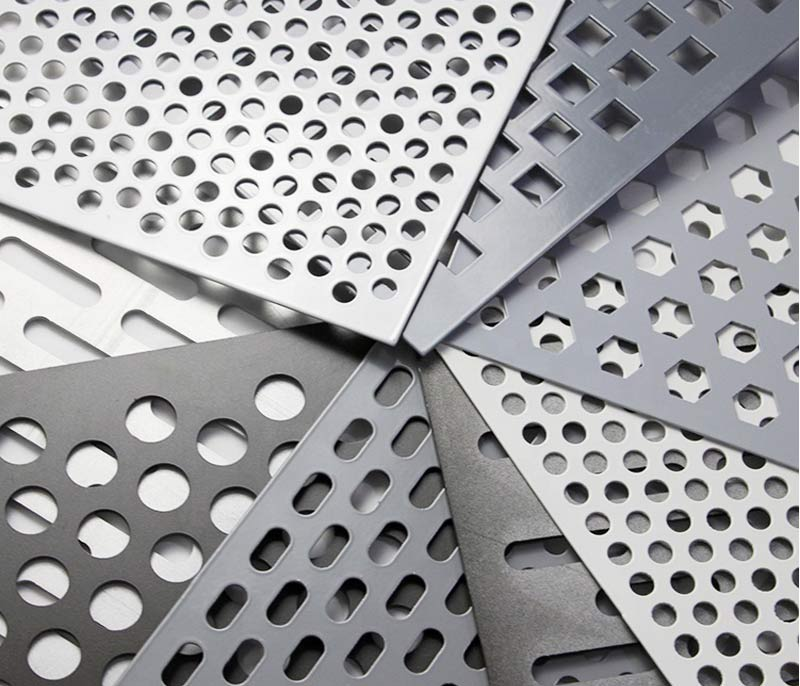
The Root Cause: When a supplier acts as a broker and outsources production to whatever factory has capacity, quality control is nearly impossible. There is no accountability, and defects become a blame-shifting exercise.
The Direct Factory Standard: In contrast, a business like Hengai Metal bases its reputation on its own workshop's output. Because they are a terminal factory producing their own goods, they control the quality at each stage. They have a comprehensive internal inspection process covering dimensions, hole patterns, surface finish, and welding quality before shipment. They also accept third-party inspections, showing confidence in their output.
Expert Opinion: I've always argued that you can't inspect quality into a product; it has to be built in. When you deal with a factory like Hengai Metal, this is guaranteed. They have the experience to solve process issues—like material warping on high-open-area sheets—before they become your problem.
实操建议 (Actionable Advice):
Verify Their Facility: Ask for a video tour or, if possible, visit the factory. Seeing their equipment (turret punches, laser cutters) and their quality control workflow provides far more assurance than a certificate.Ask About Common Defects: A knowledgeable sales engineer from a top factory will be able to explain how they prevent common issues like edge burrs or uneven hole deformation. If they can't give a technical answer, they're likely just a trading company.
Establish Clear Standards: Provide a detailed technical drawing. A factory like Hengai Metal will appreciate the precision and can align their in-house QC to your specific tolerances.
From Sheet to Component: De-Risking Your Supply Chain with Integrated Processing
In the past, if you needed a perforated sheet and it had to be bent into a filter cylinder or welded into a housing, you would need to buy sheets from one vendor and then find a fabrication shop to do the bending and welding. This creates efficiency losses and lower accountability.
The Integrated Solution: Leading factories now offer deep processing. Hengai Metal, for example, makes full use of their bending machines and welders to supply finished components like filter drums and housings, not just flat sheets. They can manage the complexities of forming perforated metal without tearing or weakening it near bend lines.
The Result: You get a single point of responsibility. One quotation, one delivery, and one warranty for the entire finished part. This shortens your supply chain, shrinks your storage, and reduces your development time.
实操建议 (Actionable Advice):
Evaluate Your Current Process: If you are buying flat sheets and sending them to a secondary fabricator, calculate the total cost of logistics, handling, and scrap between the two steps. Chances are, you are overspending.Supply a Final Assembly Drawing: Don't just ask for a sheet. Send the final part drawing to Hengai Metal and ask them how they can handle the entire chain—from perforating to folding and welding. Let their engineers propose a solution.
Streamline Your Vendors: Reducing your vendor count by integrating fabrication with material supply reduces administrative overhead and management time. It’s a simpler, more robust model.
Conclusion: The Efficiency of Going Direct is a Strategy, Not Just a Purchase
In today's competitive manufacturing and construction landscape, your supply chain is a critical competitive weapon. Relying on a protracted chain of custody for materials priced by weight and processing precision is a vulnerability you don't want to carry.
Making the shift to a direct-from-factory supplier like Hengai Metal is more than a price negotiation tactic; it's a strategic decision to enhance control, reduce risk, and unlock a collaborative technical partnership. They have the infrastructure to be your long-term support system, ready to assist with material selection, hole design optimization, and complex deep-processing requirements.
Your next purchase order shouldn't be a gamble. It should be a strategic step forward. Send your drawings to Hengai Metal and demand the direct, transparent, and quality-focused partnership your projects deserve--with the efficiency and savings to prove it.