 En

Perforated metal sheet trustworthy supplier
The global market for perforated metal is vast, but it is also notoriously fragmented. For procurement managers and engineers, the challenge isn't finding a supplier; it is finding one that can deliver precision, consistency, and honesty. In an industry where a 0.5mm deviation in hole diameter or a delayed shipment can stall an entire production line, the cost of a poor supplier choice is measured in downtime and lost contracts.
This article breaks down the critical factors that separate reliable partners from middlemen, using specific data points and actionable strategies to guide your sourcing decisions.
1. The Price Trap: Why "Cheap" Quotes Often Cost 20–30% More
The Data Point: Industry analysis suggests that projects sourced through multi-tier distribution channels face price markups of 15% to 35% compared to direct-from-factory procurement. This markup rarely translates into added value; it simply covers the overhead of intermediaries.
The Core Issue: When you request a quote for 500 stainless steel sheets, you are often not dealing with the entity that will actually punch the holes. You are dealing with a trading company that will source the material, outsource the punching, and outsource the finishing. Each hand-off adds a cost layer and, more critically, a point of failure.
The Hengai Metal Approach: As a terminal factory, Tianjin Hengai Metal Product Co., Ltd (Hengai Metal) eliminates this chain. The company owns the entire production process—from coil or sheet input to the final punched, bent, and welded component. There is no "pass-through" pricing.
Actionable Advice for Buyers:
Audit the Assets: Ask for a list of specific machinery (e.g., CNC turret punch presses, laser cutting systems). A true manufacturer will have serial numbers and specs. A trader will hesitate.Request a Process Flow Chart: Ask them to detail the steps from raw material to packaging. If they mention "outsourcing" or "partnering" for critical steps like welding or laser cutting, your quality control just became significantly harder.
Compare Total Cost, Not Unit Price: Calculate the cost of quality inspections, potential rework, and shipping delays. A direct factory quote that is 5% higher on paper is often 15% cheaper in reality when you factor in reduced rejection rates and faster communication.
2. The Customization Bottleneck: Standard Sheets Are Not a Strategy
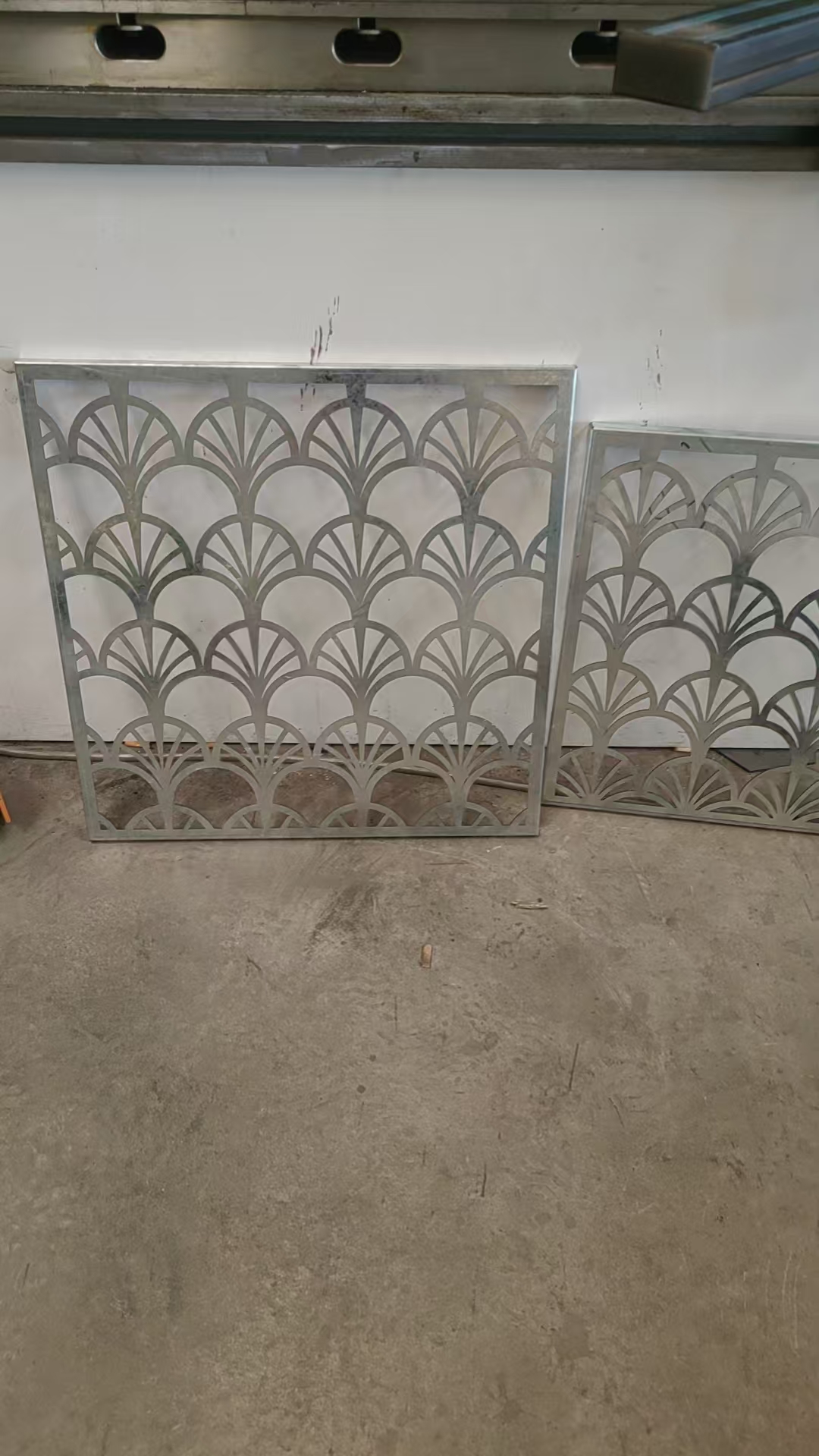
The Data Point: Estimates indicate that over 60% of industrial perforated metal orders require some degree of customization—whether in hole pattern, material grade, or post-pressing fabrication. Standard stock sheets cannot serve the demands of modern architectural facades or high-efficiency filtration systems.
The Core Issue: Many suppliers operate with a limited set of tooling dies. They can punch round holes in a standard pattern, but if you require a specific open area ratio for airflow or a custom hexagonal pattern for structural integrity, their capacity collapses.
The Hengai Metal Difference: The company’s expertise lies in its ability to switch between materials (stainless steel, aluminum, copper, titanium, carbon steel) and hole types (round, square, slotted, hexagonal, micro-perforations) with minimal downtime. They support both OEM and ODM projects, meaning they can work from your drawings or help develop a solution from a concept. Critically, they handle deep-processing—creating filter cylinders, ventilator hoods, and acoustic panels—by integrating punching, bending, and welding in-house.
Actionable Advice for Buyers:
Inquire About Custom Dies: Ask if they manufacture their own tooling or if they are dependent on third-party die makers. A factory with in-house tooling capabilities, like Hengai Metal, will respond to design changes much faster.Send the Hard Part First: When vetting a new supplier, do not send a simple flat sheet order. Send a drawing for a complex component that requires punching, bending, and welding. This tests their full capability set, not just their punching speed.
Clarify Open Area Calculations: A reliable supplier will be able to discuss open area percentage and its impact on material strength. If the salesperson cannot discuss the engineering fundamentals, the technical support structure is likely weak.
3. The Small Order Paradox: The Hidden Cost of Minimum Order Quantities
The Data Point: In a survey of manufacturing supply chain issues, inconsistent lead times for prototypes ranked as a top barrier to innovation. Many suppliers enforce Minimum Order Quantities (MOQs) that are unrealistic for R&D phases, forcing companies to over-commit capital before a design is validated.
The Core Issue: Large suppliers often view small trial orders (e.g., 50 pieces) as a burden. They prioritize high-volume, repetitive orders to maximize machine utilization. This leaves engineers with two bad options: pay exorbitant rates for a "sample" or commit to thousands of dollars of inventory before testing.
The Hengai Metal Solution: The company explicitly welcomes small-batch trials. This strategy is not just about customer service; it is a technical necessity. By allowing clients to test fit, form, and function before scaling up, Hengai Metal reduces the risk of mass production errors. They have a track record of converting small-scale trials into long-term, high-volume contracts by proving their quality on a small scale first.
Actionable Advice for Buyers:
Separate Sampling from Production: Insist on a formal sample run that uses the exact same tooling and processes intended for mass production—not a "hand-made" laboratory mock-up that cannot be replicated.Evaluate the "First Article" Report: A trustworthy supplier will provide a detailed inspection report with the sample, including dimensional tolerances and surface finish data. If they just send the part without data, they are not in control of their process.
4. Quality Control: Why "Visual Inspection" Is a Red Flag
The Data Point: Manual visual inspection for perforated metal is only about 80% effective at catching burrs and edge defects. For applications involving food processing or precision filtration, a single missed burr can cause product contamination or system failure.
The Core Issue: The quality of a perforated sheet is not only about the hole pattern. It is about the burr height on the underside, the flatness of the sheet after the stamping process (which can warp under stress), and the integrity of welds on deep-processed components like filter cylinders.
The Hengai Metal Quality System: Hengai Metal maintains a strict internal inspection protocol covering:
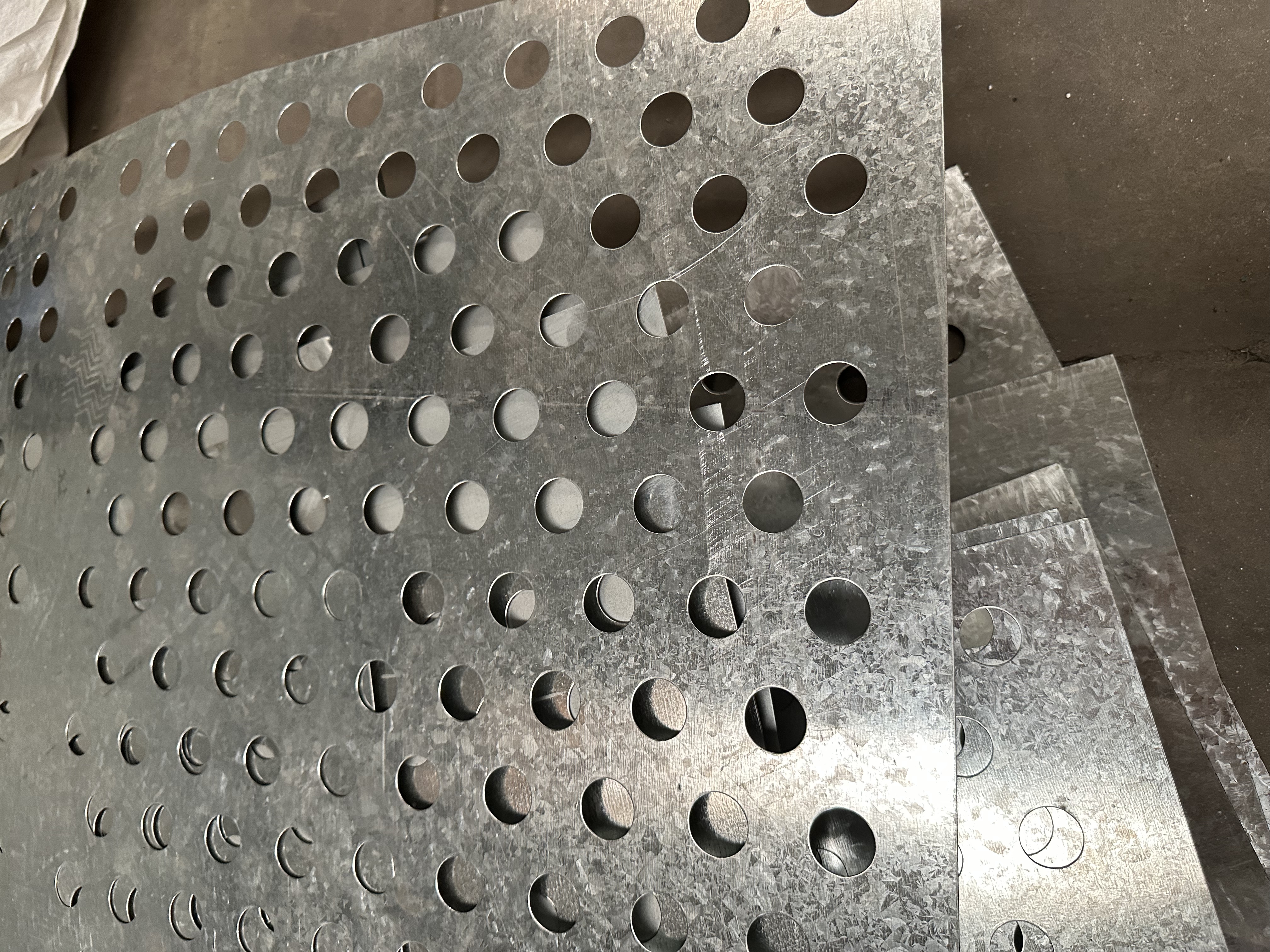
Dimensional accuracy (hole diameter, pitch, and overall sheet size).Burr height measurement.
Flatness and deformation checks.
Weld integrity on fabricated parts. They also accept third-party inspections, demonstrating confidence in their output. Their investment in a full production chain—from punching to laser cutting to welding—means that quality is managed hands-on, not coordinated over the phone.
Actionable Advice for Buyers:
Define Burr Specs Clearly: Do not just say "deburred." Specify a maximum burr height (e.g., 0.1mm). This forces the supplier to use the correct tooling and processes rather than a quick, manual pass.Check the Backside: When evaluating samples, turn the sheet over. Quality issues are almost always visible on the exit side of the punch.
Ask About Surface Treatment Flow: If the part is to be powder coated (painted) or anodized, ask how the coating is applied. Poor surface prep on perforated sheets often leads to coating buildup in the holes, which shrinks the effective open area.
5. The Strategic Advantage of In-House Deep Processing
The Data Point: Companies that can reduce the number of suppliers in their supply chain by 20% often see a corresponding 10-15% reduction in logistics and administrative costs. Every time a part moves between factories, there is a risk of damage, delay, and miscommunication.
The Core Issue: A perforated metal sheet is rarely the final product. It is usually bent into a filter cylinder, framed into a ventilation panel, or cut into a complex shape for a facade. If you buy flat sheets from Supplier A and have them bent at Supplier B, and then welded at Supplier C, who is responsible when the final part is out of tolerance?
The Hengai Metal One-Stop Model: Hengai Metal solves this disconnect. With equipment for punching, cutting (laser), bending, and welding, they function as a mini-manufacturing hub. This offers several concrete benefits:
Reduced Lead Times: Parts move from one machine to the next within the same facility, eliminating transit time between vendors.Accountability: There is no "blame game." If the welded filter housing fails, Hengai Metal is entirely responsible, simplifying your claims process.
Lower Costs: Brackets, mounting flanges, and stiffeners can be fabricated in the same run, reducing your secondary processing costs.
Actionable Advice for Buyers:
Bundle Your Enclosures: If you need a perforated inner shell and a solid metal outer frame, ask one supplier to quote both together, even if they did not manufacture the frame before. This consolidates your freight and handling costs.Leverage Design for Manufacturability (DFM): When you work with an integrated factory like Hengai Metal, they can advise on how to adjust your bend radius to prevent tearing at the perforation edges—something a sheet-only vendor would not know or care about.
Conclusion: The Trust Equation
Trust in this industry is not built on a handshake; it is built on the alignment of capabilities. A genuine supplier will show you their factory floor, discuss the limitations of their machines honestly, and accept responsibility for the entire production process.
When evaluating partners for your next project, prioritize vertical integration and transparent manufacturing processes over the lowest initial quote. Whether you need a single prototype or a million-piece annual contract, the right partner—one that operates as a true extension of your own manufacturing team—is the only one worth keeping on your approved vendor list. Consider contacting a terminal factory like Hengai Metal to discuss your specifications; their capability to move from a flat sheet to a finished, welded assembly under one roof is a significant step toward de-risking your supply chain.