 En

Perforated metal sheet top tier vendor
Choosing the right supplier for perforated metal sheets is rarely just about price. It is about project timelines, consistent quality, and avoiding costly production halts. Many procurement managers and engineers discover this only after a batch of faulty parts arrives at the factory door.
The industry has long been plagued by inconsistent delivery schedules, opaque pricing structures, and fragmented supply chains. When dealing with a material as specification-critical as perforated metal, the gap between an average supplier and a genuinely top-tier vendor becomes starkly apparent.
The Real Cost of a Non-Specialist Supplier
A common mistake is treating perforated metal as a simple commodity. It is not. The engineering behind a properly formed hole pattern affects airflow, structural integrity, and aesthetic appeal. When a supplier lacks specific expertise, issues emerge quickly.
Consider a scenario witnessed recently: a construction firm in the Midwest ordered a large batch of stainless steel sheets for a commercial façade. The chosen vendor, a general metal service center, outsourced the perforation work. The result was a two-week delay in delivery due to scheduling conflicts at the subcontractor's plant. When the sheets finally arrived, the hole alignment was inconsistent across panels, causing visible visual defects in the building's exterior cladding.
The root cause was not malice; it was a lack of vertical integration. The vendor did not control the production process. They were merely a broker.
Why Vertical Integration Matters
In metal fabrication, control equals quality. A vendor that operates a "terminal factory" model—where raw material enters one end and finished products exit the other—offers distinct advantages.
At Hengai Metal, the production floor operates with a complete suite of in-house equipment: punching machines, turret punch presses, laser cutting systems, bending machines, and welding stations. This integration ensures that a sheet of aluminum or steel does not leave the facility until it is a finished component, ready for installation or assembly.
This contrasts sharply with the industry norm. According to internal industry analysis, over 60% of perforated metal buyers have experienced at least one significant delay or quality issue traceable to outsourced secondary operations. When a vendor must coordinate with an external partner for bending or welding, the risk of miscommunication and schedule slippage increases exponentially.
Operational Impact: For a client ordering 500 perforated filter cylinders, the difference between a vendor who welds in-house versus one who ships flat sheets to a third-party welder can mean a difference of three to four weeks in lead time. That is a direct impact on the client's ability to deliver their own product to their customers.
The Price Transparency Question
The traditional supply chain for perforated metal often involves multiple layers: the mill, the service center, the perforator, and the finisher. Each layer adds a margin. By the time the product reaches the end-user, the cumulative markup can be extensive.
A top-tier vendor eliminates these layers. Hengai Metal operates as a direct manufacturer. By removing the middlemen, they provide price transparency that is rare in this sector. Clients are not just paying for material; they are paying for the machining time, the tooling wear, and the finishing cost—all of which are easier to quantify when dealing with the factory directly.
Negotiation Advantage: When you ask a broker for a price reduction, they often need to check with their upstream suppliers. When you negotiate with a factory, the decision can be made quickly based on current production schedules and material costs. This agility is a significant advantage in fluctuating market conditions.
Customization: Beyond the Standard Hole Chart
While many suppliers offer standard patterns—round, square, and slotted—a truly top-tier vendor must handle complexity. This is where the selection process becomes critical.
1. Material Versatility
Not all perforated metal is created equal. A vendor must be adept at handling:
Stainless Steel (for corrosion resistance and food-grade applications)Aluminum (for lightweight and aesthetic applications)
Carbon Steel & Galvanized Steel (for structural and industrial use)
Copper & Titanium (for specialized architectural and chemical processing roles)
A common issue arises when a vendor is skilled with steel but struggles with the warping that occurs when perforating aluminum. The thermal expansion properties differ, and the feed rate must be adjusted. Inexperienced vendors often produce bowed sheets, rendering them useless for flat architectural panels.
Expertise Check: Ask a potential supplier about their experience with specific alloys. For instance, if you need titanium sheets for a harsh chemical environment, ask about their tooling wear rates and how they handle the material's tendency to work-harden. Hengai Metal has experience across these materials and can recommend suitable alternatives based on the application environment, not just the spec sheet.
2. Complex Hole Geometries
Standard round holes are default. The real challenge lies in custom patterns. Can the vendor handle:
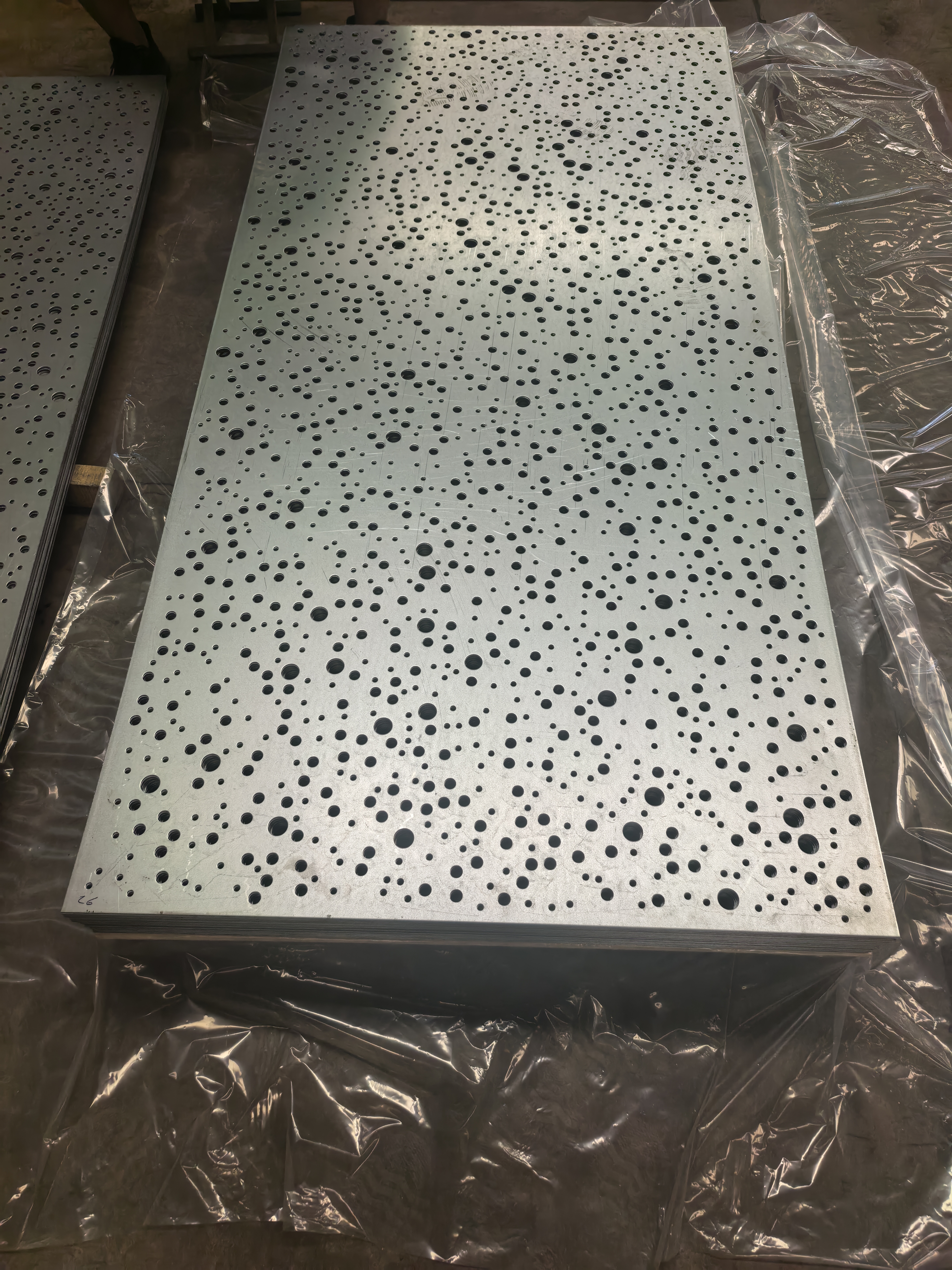
Micro-perforations for acoustic control?Tapered holes for specific filtration?
Decorative patterns that require CNC programming?
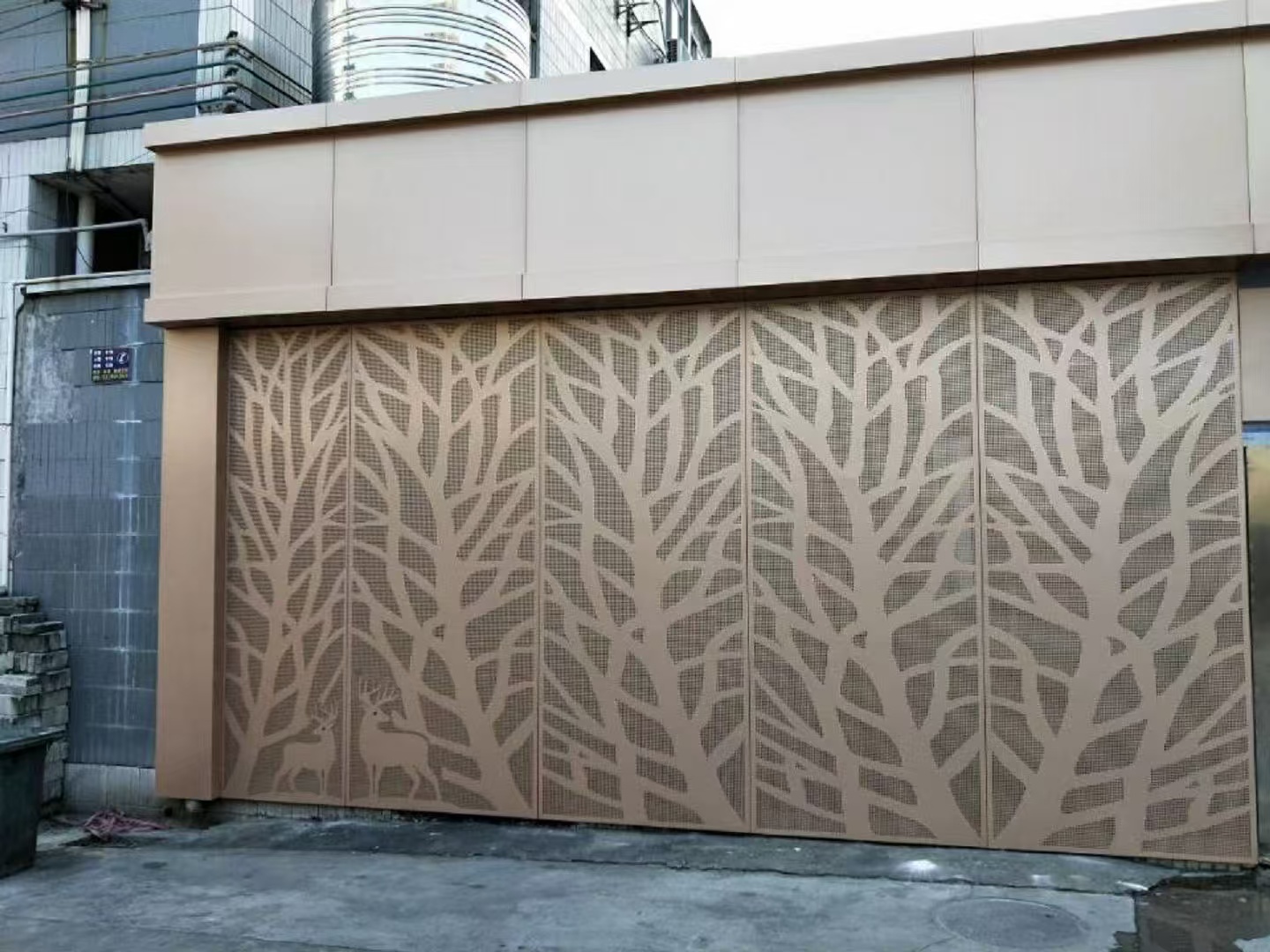
For architectural projects, aesthetics are non-negotiable. A misaligned pattern on a building's sunshade is a permanent eyesore. A top-tier vendor utilizes CNC turret punch presses and laser cutters that are programmed for exacting tolerances. They should be able to execute a pattern based on a digital file without the need for expensive hard tooling, especially for prototype runs.
3. The Value of a "Sample First" Approach
Reputable factories encourage sampling before mass production. This is not a delay tactic; it is risk mitigation. A physical sample allows the client to verify:
Hole edge quality (no problematic burrs)Flatness after punching
Finish consistency
The Hidden Cost of Poor Burr Management
One of the most overlooked elements in perforated metal is the burr—the sharp edge left behind by the punching process. For many vendors, burr removal is an afterthought. However, for clients using the metal in applications like food processing or where human contact is frequent, burrs are a significant liability.
Proper deburring requires additional equipment and time. A top-tier vendor will have a defined process for this. They understand that a screen for a grain silo or a filter for a pharmaceutical line must be free of any loose particles or sharp edges that could compromise the product or safety.
Recommendation: During vendor evaluation, request a sample specifically to assess the edge quality. Run a white glove test on the edges. If the burr is excessive, the vendor's tooling is likely dull or their process lacks a finishing step. This is an early indicator of overall quality control.
Deep Processing: Reducing Your Supply Chain Burdens
A significant advantage of working with a specialized factory is the ability to consolidate orders. A client purchasing perforated sheets often needs them formed into products—vents, enclosures, or filter housings.
If the primary vendor cannot perform bending and welding, the client faces a logistical nightmare. The sheets must be shipped to a fabricator, who then may need to outsource finishing. Each step adds lead time and risk.
Hengai Metal addresses this by offering deep processing services for products like:
Perforated filter drums and cylindersVentilation hoods
Protective machine guards
Acoustic panels
By combining punching, bending, and welding, these products are manufactured under one roof. This approach provides clear accountability. If a welded cylinder leaks or a bent panel is out of square, there is one vendor responsible for the fix. There is no "blame game" between the perforator and the welder.
Efficiency Realization: This integrated model typically reduces the procurement cycle by 20–30% because it eliminates the logistics time between different workshops and the quality inspection redundancies that occur at each transfer point.
What to Look for in the Audit Process
When visiting a potential factory or conducting a remote audit, do not just observe the machines. Look at the workflow.
Is the shop floor organized? A messy workshop often indicates poor process control. Check if different material types are segregated to prevent cross-contamination.How are coils and sheets stored? Improper storage leads to scratches and rust, which become your problem after delivery.
Inspect the tooling maintenance records. Punching tools wear out. Ask how often they re-sharpen the punches. Worn tools lead to excessive burrs and dimensional drift.
Review the inspection reports. Do they have a formal Quality Control checklist? Do they measure the sheets after punching or just at the end?
Check the scale of ancillary equipment. Does the vendor have press brakes and welders on site? Even if you don't need them today, their presence indicates a higher level of manufacturing capability and process understanding.
Avoiding the "Quote Too Good to Be True" Trap
In the metal industry, price differences often reflect the quality of raw material. A vendor quoting significantly below market rate for stainless steel may be using "secondary" or "off-spec" material which has questionable chemical composition. This can lead to premature corrosion or failure in the field.
A top-tier vendor will specify the material source and grade clearly on the quotation. They should be willing to provide mill test certificates (MTCs) for the raw material. If a supplier hesitates to guarantee the material grade, it is a red flag.
The Hengai Metal Advantage: As a terminal factory, we source our materials in volume. We verify the standards and are able to provide the necessary documentation. Our pricing reflects the true cost of high-grade material and skilled labor, ensuring that the client doesn't face failures down the road.
Long-Term Partnership vs. Transactional Sale
The most significant difference between a top-tier vendor and a "good enough" one lies in their approach to long-term relationships.
A transactional vendor focuses on the current order. A top-tier partner considers your future requirements. This is particularly relevant for clients with ongoing projects who need consistent supply.
Capacity Planning: Can the vendor handle a sudden surge in demand? Do they have the capacity to support just-in-time delivery?Design Support: Can they offer engineering advice to reduce punching costs? For instance, suggesting a standard tooling size that is cheaper than a custom design, without compromising the product's function.
Consistent Reordering: If you issue a purchase order for the same product 6 months later, will the color match? Will the hole pattern be identical? Reproducibility is a sign of controlled processes.
Case in Point: A manufacturer of grain cleaning equipment needed screens with a very specific slot orientation. They worked with Hengai Metal to optimize the pattern for maximum airflow while using tooling that lasted longer. The result was a 15% reduction in part cost due to less tooling wear, which the vendor passed on to the client. This iterative improvement is only possible when a vendor has the technical staff and the machinery to experiment and refine the process.
Final Verdict: The Checklist for Success
Finding a top-tier perforated metal supplier requires diligence. Do not settle for the first quote you receive.
Your Selection Checklist:
Demand Material Integrity: Confirmation of material grades and availability of certification.
Assess Technical Depth: Ask about their CNC programming capabilities for custom patterns. The ability to handle complex designs without excessive tooling costs is a major plus.
Insist on Process Control: Inquire about their deburring and finishing processes. A sample is the best proof of their quality.
Evaluate Price Fairness: Look for transparent pricing that reflects direct manufacturing costs, not a multi-tiered markup structure.
For engineering and procurement teams looking for a partner that can navigate the complexities of metal perforation—from a simple architectural screen to complex filtration components—Hengai Metal offers a turnkey solution that prioritizes manufacturing accuracy and schedule integrity. Whether you are working with aluminum for a lightweight enclosure or need sturdy galvanized steel for heavy filtration, ensuring your vendor has total control over the production floor is the first step to ensuring the success of your project.