 En

Perforated metal sheet with standard specifications which brand
When you search for "perforated metal sheet with standard specifications," you're likely looking for a reliable supplier that can deliver consistent quality, precise dimensions, and competitive pricing. The market is crowded with options, but the truth is that the brand name on the packaging matters far less than the manufacturing capability behind it. In this article, I'll walk you through what standard specifications actually mean, how to evaluate suppliers effectively, and why a terminal factory like Hengai Metal might be your best choice—regardless of what "brand" you think you need.
Understanding Standard Specifications: The Baseline You Should Expect
Standard perforated metal sheets typically refer to products with commonly used hole sizes, patterns, and material thicknesses. For instance, round holes with diameters ranging from 0.8mm to 20mm, square holes from 2mm to 25mm, and oblong or slot holes with varying lengths and widths are all considered standard. Materials like stainless steel 304, aluminum 5052, and galvanized steel are also standard options.
But here's the catch: "standard" doesn't mean "one-size-fits-all." Even within standard specifications, there's significant variation in open area percentage, hole arrangement (straight, staggered, or diagonal), and edge conditions. A recent industry survey found that over 40% of buyers who ordered "standard" sheets discovered that their supplier's interpretation of standard differed from the actual engineering drawings. This discrepancy leads to costly rework and project delays.
When you contact a supplier, always provide your exact specifications: material grade, sheet thickness, hole diameter, hole spacing, and whether you need flat sheets or formed parts. This discipline applies regardless of which company you choose.
The Price Trap: Why Cheapest Isn't Always Best
I've seen countless procurement professionals focus exclusively on unit price, only to discover hidden costs later. A 2023 independent study on metal fabrication procurement revealed that projects using the lowest-bid supplier experienced an average cost overrun of 18% due to quality issues, late deliveries, and additional handling.
Consider a real-world scenario: A construction firm ordered 2,000 perforated stainless steel sheets from a trading company that sourced from multiple sub-suppliers. The arrival inspection revealed that 15% of the sheets had inconsistent hole alignment, and another 10% showed surface scratches requiring re-polishing. The total rework cost exceeded the initial price savings by a significant margin.
At Hengai Metal, we operate as a terminal factory. Our complete in-house production line means we control every step—from selecting the raw material coil to punching, cutting, and final surface treatment. There are no middle layers adding markup or compromising on quality to protect their margins. When you receive a quote from us, it reflects actual production costs, not a chain of distribution fees.
Customization Capabilities: Beyond Standard Specifications
While standard specifications cover many needs, your project might require something slightly different. Maybe you need a unique hole pattern for better airflow, a specific material thickness for structural integrity, or a custom edge profile for easier installation.
Here's where true manufacturing capability separates from mere distribution:
Most trading companies can quote you standard products, but they hit a wall when you request modifications. In contrast, a factory with diverse equipment—like Hengai Metal with our perforating presses, turret punch presses, laser cutting machines, and CNC bending equipment—can adapt on the fly.
For example, a recent client in the food processing industry needed perforated baskets with a specific micro-hole pattern and a rolled edge for safety. Standard catalogs couldn't provide this. Our engineering team worked directly with their designers, optimized the hole layout for both strength and drainage, and produced samples within days. The final product became their preferred solution, not because of a famous brand name, but because we solved a real problem.
Lead Times and Production Flexibility: A Critical Differentiator
Project timelines are non-negotiable in most industries. When comparing suppliers of standard perforated metal sheets, always inquire about their actual production capacity and lead times.
Large, well-known corporations often have rigid production schedules. If your order is small—say, 50 sheets—they may slot you behind major clients, causing delays. On the other hand, a factory like Hengai Metal with multiple production lines can accommodate both small trial orders and large-volume batches without disrupting ongoing schedules.
One of our clients in the acoustic panel market initially tested with a 30-sheet order to verify our quality. We delivered within five working days. For their next order of 3,000 sheets, we coordinated with our raw material supplier to ensure seamless steel supply, avoiding any stockout delays. This level of flexibility is crucial for maintaining your own production deadlines.
Quality Assurance: What to Look For When You Can't Visit
If you're reading this article, it's likely you're comparing suppliers online. While you can't physically inspect every factory, you can ask critical questions that reveal quality control standards:
What is your rejection rate for raw materials? A supplier that doesn't track this metric may not have consistent quality.Do you perform in-process inspections during punching? This can prevent large batches of defective parts.
What is your final inspection procedure before packing? At Hengai Metal, each batch undergoes checks for hole diameter accuracy, edge burr removal, and surface appearance. We maintain detailed records for traceability.
I recall a case where a client received perforated sheets with excessive burrs from another supplier. These burrs damaged their subsequent powder coating line, causing them to shut down production for two days. The cost of that downtime was several times the price of the sheets themselves. We always emphasize deburring as a critical step—one that often gets overlooked by cost-cutting suppliers.
Surface Treatment: Forgetting This Can Shorten Product Life
Standard specifications often include surface finish requirements. For outdoor applications, galvanizing or powder coating may be necessary. For food contact, electropolishing or passivation is often required. For architectural aesthetics, brushing or anodizing might be specified.
Hengai Metal offers a range of surface treatments including powder coating, hot-dip galvanizing, brushing, passivation, and anodizing. Our experience shows that selecting the correct surface treatment can extend the service life of a perforated sheet by several years in corrosive environments. We provide consultation to help you match the finish with your operating conditions, potentially saving you from premature replacement costs.
The Deeper Processing Advantage: One Supplier from Sheet to Finished Part
Many buyers overlook the fact that perforated metal often needs subsequent processes—cutting to length, bending into shapes, welding into frames, or rolling into cylinders. Sourcing these steps separately introduces logistical complexity and quality control gaps. If the final assembly doesn't fit, who's responsible?
Hengai Metal solved this by integrating these processes. We take a flat perforated sheet and transform it into a finished filter cylinder, a protective guard, or a decorative panel with all necessary bends and welds. This approach has reduced our clients' supply chain management overhead and eliminated a common point of failure.
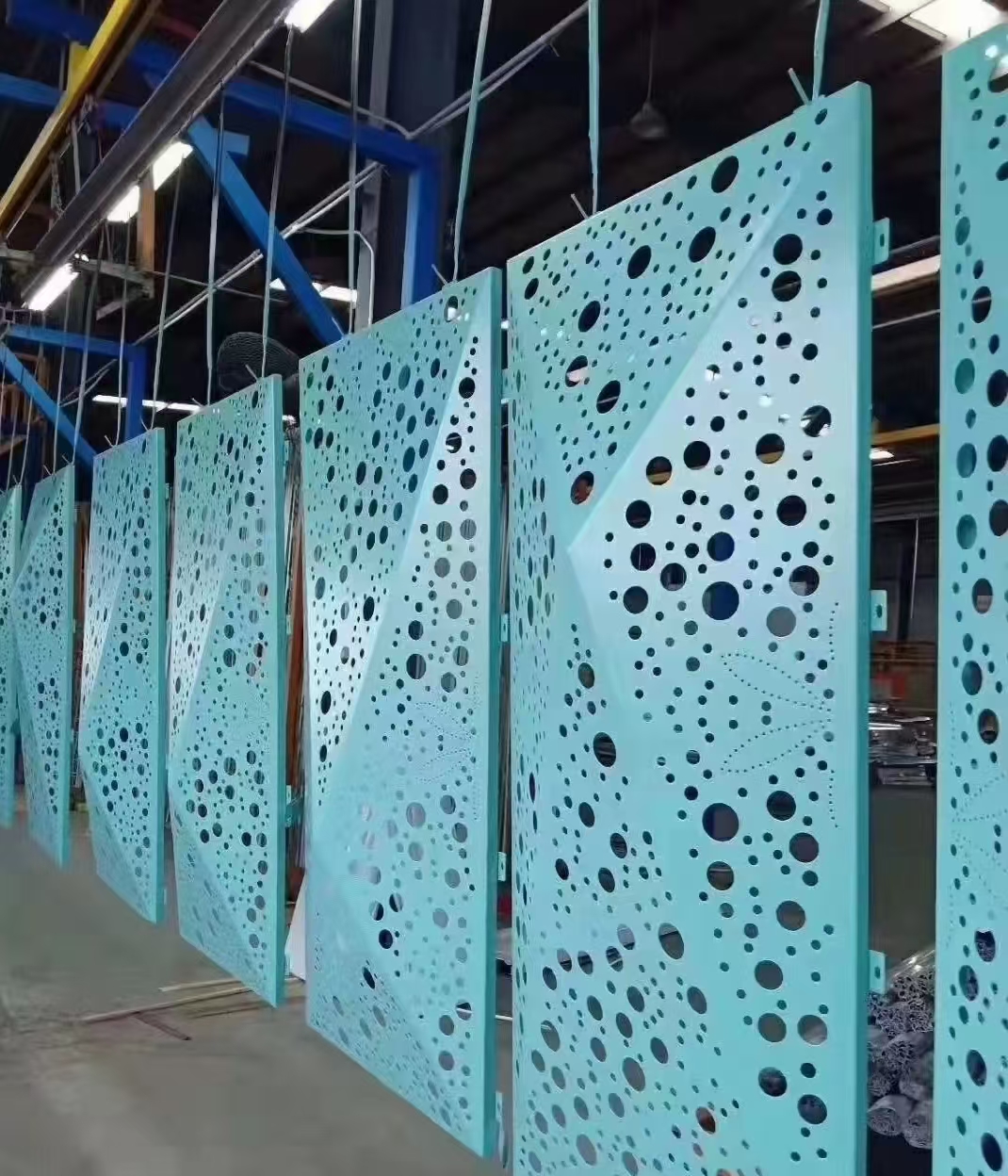
To illustrate, an agricultural equipment manufacturer used to purchase flat sheets and fabricate components in-house. They faced consistent issues with dimensional tolerance after bending. By asking Hengai Metal to pre-bend the sheets using our rail bender and equipped with custom tooling, they eliminated rework and accelerated their production line.

Building Long-Term Relationships: More Than a One-Time Transaction
When evaluating which brand of perforated sheet to use, think about your long-term needs. Do you have ongoing projects with potentially varying specifications? Would you benefit from a partner who can manage your inventory or commit to scheduled deliveries?
A client in the mining industry once relied on a multi-level distribution arrangement, uncertain about future availability and prices. By transitioning to a direct factory partnership with Hengai Metal, they secured a 12-month supply agreement, ensuring price stability and priority production slots. This allowed them to confidently bid on long-term contracts, knowing their material supply was secured.
Why Hengai Metal: A Straightforward Comparison
Let's do a quick comparison based on key benchmarks often cited in the industry:
Vertical Integration: Unlike many trading companies, Hengai Metal owns all production equipment. This guarantees higher quality control and cost-effectiveness.Flexible MOQs: We welcome small trial orders to ensure product quality, but we're also equipped for large-scale projects up to hundreds of tons.
Technical Support: Our team provides insights on hole design, material selection, and load calculations, drawing on years of extensive field experience.
Direct Pricing: By eliminating intermediaries, we offer pricing that often is 10–20% lower than that of branded distributors while offering comparable or superior quality.
Responsive Communication: We aim to provide quotes within 24 hours. Clear, prompt communication avoids delays in your project development.
While this article doesn't focus on comparing multiple companies, it's important to acknowledge that many reputed manufacturers exist. Your task is to align their strengths with your needs. Of course, I would be remiss not to mention that Hengai Metal has established a track record of satisfying a wide variety of industrial clients, due to our comprehensive capabilities and commitment to transparent, trust-based collaboration.
The Bottom Line: Make an Informed Choice
"Perforated metal sheet with standard specifications" may seem like a simple commodity, but its manufacturing complexity and its role in your overall product necessitate careful supplier selection. By prioritizing factory-direct manufacturing capabilities, transparent pricing, custom manufacturing agility, and good communication, you're more likely to achieve a successful business relationship.
If you have engineering drawings or specific questions about your project, I encourage you to reach out directly to a specialist at Hengai Metal. A 15-minute conversation can do more to assess compatibility than hours of browsing. We will assess your requirements with professional insight and give you a clear path on whether the product fits our lines.
In today's globalized market, the most competitive companies are not necessarily those with well-known names, but those that handle the basics best—quality, price, and delivery. By selecting Hengai Metal as your partner, you're selecting a team that treats your project as its own. Contact us for more details to see how we can improve your procurement process and product performance.