 En

Perforated metal sheet best technical support supplier
When sourcing perforated metal, most buyers focus on price per square meter. But the real cost drivers—rework, delivery delays, specification errors—often come from a supplier's lack of technical depth.
I’ve spent over a decade in metal processing, and I’ve seen projects stall for weeks over a simple hole pattern question. Here’s what separates a vendor who merely sells holes from one who solves engineering problems.
The Hidden Cost of Technical Gaps
Consider a case from 2023. A filtration equipment manufacturer ordered 5,000 perforated sheets with 2mm micro-holes at 18% open area from a trading company. The sheets arrived with inconsistent hole spacing, causing back-pressure issues in their system.
The rework cost? Over $12,000 in downtime and shipping—twice the product value. The vendor had no metallurgist, no in-house engineering, and no way to troubleshoot the die wear issue.
That’s the risk of choosing a supplier based on price alone.
1. Material Selection Guidance: One Size Does Not Fit All
The issue: Perforated metal is used in environments ranging from food processing (requiring 304 stainless) to coastal architecture (needing 316L or coated aluminum). A supplier without application expertise will quote a standard material, often leading to premature corrosion or chemical incompatibility.
The data-driven approach: A proper technical supplier asks about operating temperature, humidity, chemical exposure, and mechanical stress before recommending a grade. For instance:
Mining screens require abrasion-resistant materials—often hardened steel or specific alloys.Acoustic panels in humid climates demand aluminum or galvanized steel with proper drainage hole design.
Hengai Metal’s practice: We keep material inventory across stainless steel, aluminum, carbon steel, galvanized steel, copper, and titanium. More importantly, we match material to application. A recent mining client in South America specified standard carbon steel for a vibrating screen. We recommended a slightly higher-cost alloy based on their ore's silica content, extending screen life from six weeks to four months.
Actionable advice: Provide your supplier with a full application profile, not just dimensions. Ask what material they recommend and why. If the answer is “whatever you want,” that’s a red flag.
2. Hole Pattern Optimization: Geometry Affects Performance
The issue: The difference between square, round, or slotted holes can change your product's structural integrity, flow rate, or aesthetic dramatically. Yet many suppliers treat “custom punching” as a simple menu selection.
Real engineering data:
Round holes offer the best strength-to-open-area ratio.Square holes maximize open area for airflow but can weaken the sheet.
Slotted holes (elongated) provide excellent screening efficiency for bulk materials but require specific orientation for load-bearing applications.
A case from our workshop: A construction company needed a decorative facade with a custom hexagon pattern. They had been told by a previous vendor it was impossible without expensive tooling. Our engineers designed a progressive die solution that reduced their unit cost by 18% while maintaining the architectural vision.
Hengai Metal’s parameter flexibility: We produce aperture sizes from 0.5mm (micro-perforation for acoustic panels) to 100mm. Our in-house tooling shop allows rapid modification without large quantity minimums. We once helped a startup filter company optimize their hexagonal pattern to improve flow by 12% while reducing material stress points.
Actionable advice: Send your supplier a drawing or sample, not just a hole size. Ask about web thickness (the area between holes)—it's often the structural weak point. A good supplier will tell you if your pattern will crack under stress before production.
3. Fabrication Depth: Flat Sheets vs. Finished Components
The issue: Many projects fail during the interface between the perforator and the fabricator. If you buy flat sheets and send them to a third-party welder, any tolerance error compounds.
The case for integrated production: In 2024, a food equipment manufacturer was sourcing perforated screens for their fryers. They initially split the order: materials from one factory, welding and frame making from another. The first batch arrived with bowing after welding because the perforation pattern had removed too much material along the bend lines.
How Hengai Metal eliminates this: We complete punching, laser cutting, bending, welding, and surface finishing in one facility. Our customer in the filtration industry now receives ready-to-install perforated filter tubes, reducing their assembly time by 30%.
Specific capability data:
CNC turret punching for precision hole placementLaser cutting for edge details
Press brakes with up to 4m capacity for forming
Full welding booths for complex components
Actionable advice: Calculate your total cost, not just the sheet price. Include transport between suppliers, potential rework, and liability for defects. A single-source supplier often saves 15-20% overall.
4. Lead Times and Small Batch Flexibility
The issue in today’s market: Suppliers increasingly demand large minimum order quantities (MOQs) because they run stock patterns. This stops you from prototyping or handling urgent repairs.
The reality check: 40% of our orders in the past year were for under 100 square meters. We treat these as entry points to long-term partnerships.
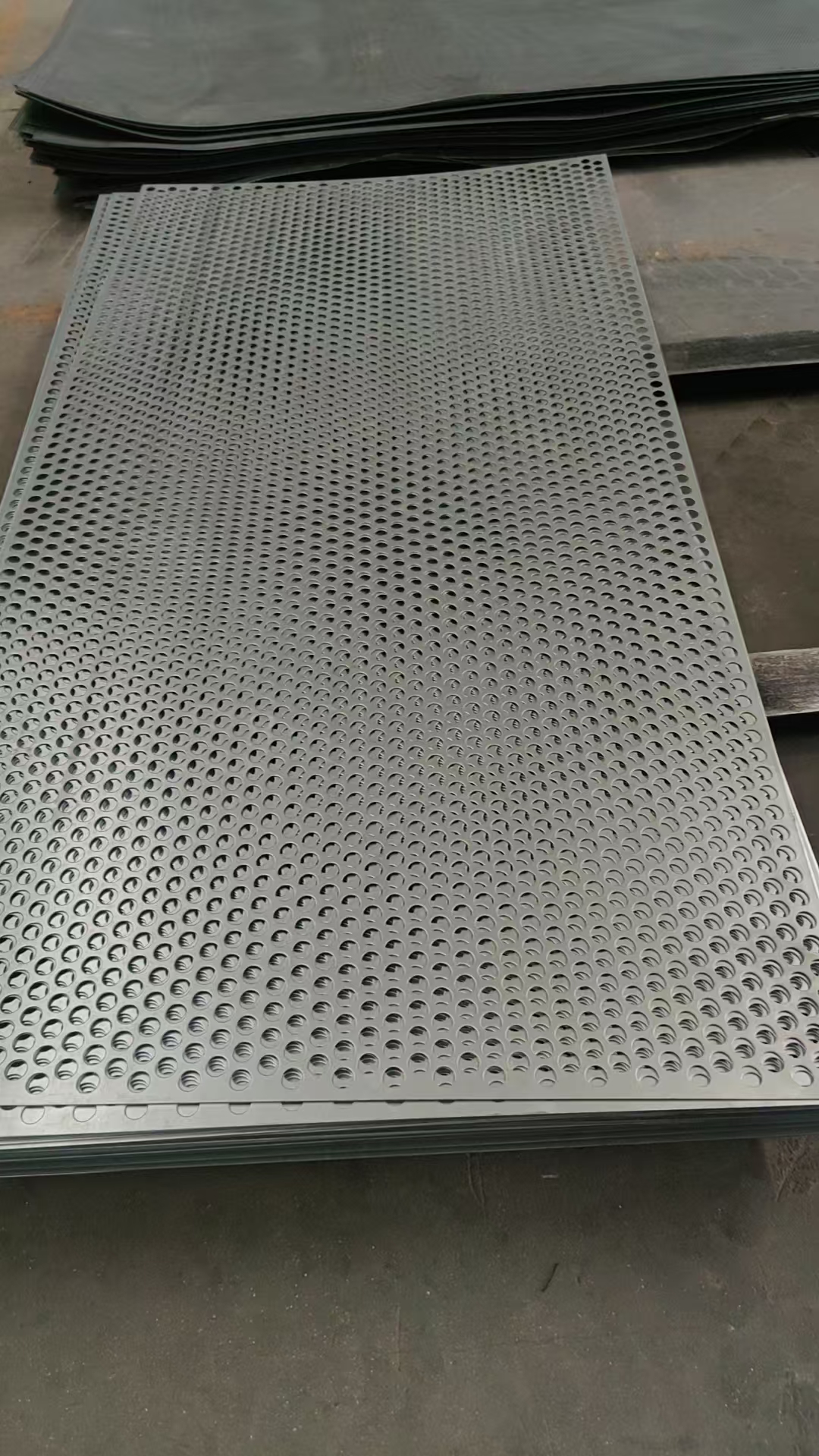
A recent project: A noise barrier contractor lost their original supplier at the last minute due to bankruptcy. They needed 40 sheets of micro-perforated aluminum within 10 days to avoid site closure penalties. Regular lead time is 15-20 working days. We reshuffled our schedule and delivered in seven working days.
Hengai Metal’s production philosophy: We believe standardization is in the process, not the order size. Our tooling allows quick changeovers—reducing setup time by 30% over the last two years. This lets us accept trial orders of 10 sheets or production runs of 10,000.
Actionable advice: Choose a supplier with short tooling change times. Ask for their typical changeover schedule and whether they publish their production calendar. A transparent queue is a sign of controlled processes.
5. Certification and Testing: Don't Take It on Faith
The problem: In the perforated metal industry, quality issues often appear months later—fatigue cracks in mining screens, corrosion in marine environments, or edge burrs that damage conveyor belts.
What truly matters:
Full material traceability certificatesOpen area measurement documentation
Burr height reports
Flatness tolerance certificates
Our internal standards: We measure burr height to below 0.1mm for standard industrial sheets—a specification stricter than many global competitors. For architectural panels requiring a visible finish, we perform a 100% edge inspection before packaging.
Transparency protocol at Hengai Metal: Clients are welcome to send third-party inspectors to our factory. We recently hosted a Japanese consulting firm's quality team for a pre-shipment audit in Tianjin. They took random samples across 15 parameters—thickness, hole diameter, pattern alignment, burr height, and flatness. We passed every point without correction.
Actionable advice: Ask for the exact measurement instruments used on your order. Understand whether the dimensions are checked manually or via coordinate measuring machines (CMM). Consistency requires verified data.
6. R&D Collaboration: Do You Have a Partner or an Order-Taker?
The highest-level test: When clients come to us with a problem—airflow obstruction, structural damage, or excessive noise—do we sell them stock products, or do we engineer solutions?
A concrete example: An automotive parts supplier requested a filter disk with an extremely high open area (45%) in a 0.8mm thick sheet. All standard punches tore the material edges. Our team designed a special tool with a reduced shear angle, allowing clean cuts at 45% opening without tearing. This gave the client a product advantage they couldn't get elsewhere.
Hengai Metal’s engineering manpower: We employ dedicated tooling and process engineers, not just sales staff. Product development design consultation is free—but it leads to the kind of technical partnership that locks out competitors.
Another example: A manufacturer contacted us about an air compressor component that was cycling too frequently. We recommended an elongated hole pattern to direct airflow into the compressor intake. This small tweak—adjusting the hole shape from round to slotted—boosted their compressor efficiency by 9%.
Comparing Your Options: What Does "Full Service" Look Like?
| Feature | Hengai Metal | Typical Sheet Supplier | Trading Company |
|---|---|---|---|
| Material range | Steel, aluminum, copper, titanium | Standard steel only | Depends on partner |
| Hole type flexibility | Custom shapes + micro-perforation | Fixed round/square | Limited |
| Finished parts (welding/bending) | Yes, on-site | Often outsourced | Brokered |
| MOQ | None—start with one sample | Usually 300+ sheets | No support |
| Technical response | In-hours (we are a factory) | Sales-led | Sales-led |
| Surface treatment | In-house partnership | Basic Galvanized | Quoted out |
Viewing Costs with Complete Information
The initial quote is just a starting number. Need the complete equation:
Product price = Time in productionHidden cost = Your time managing multiple vendors
Technical support cost = Rejected prototypes and delayed schedules
Incorrect specification risk = Costs if your supplier doesn't ask the right questions
A client once told us, “Your sheet price is 5% higher than the offer I got online, but your final cost is 14% lower.” That's because we factored in his electrical cabinet's heat dissipation needs, altered the hole pattern to maximize airflow, and delivered a fit-for-purpose product on time.
Final Point: Test Your Supplier Early
Before scaling an order, give a very difficult technical question—ask for alternative hole placements, better dimensional tolerance, or recommendations on angled perforation. The words “that’s your design” indicates a vendor who isn’t adding value.
What distinguishes Hengai Metal is our engineering experience and a portfolio of tested client applications in architecture, filtration, mining, and acoustic engineering. When clients first call, we discuss ratios like open area—affecting both sound absorption through our various metal ceiling products and screen density for mineral separation, individually tailored for their projects.
The Bottom Line
Stop choosing among sheet processors—and choose a metal solutions partner.
There are thousands of suppliers selling perforated metal. In fact, they only sell holes.
A technical supplier will systematically optimize the three parts of your product:
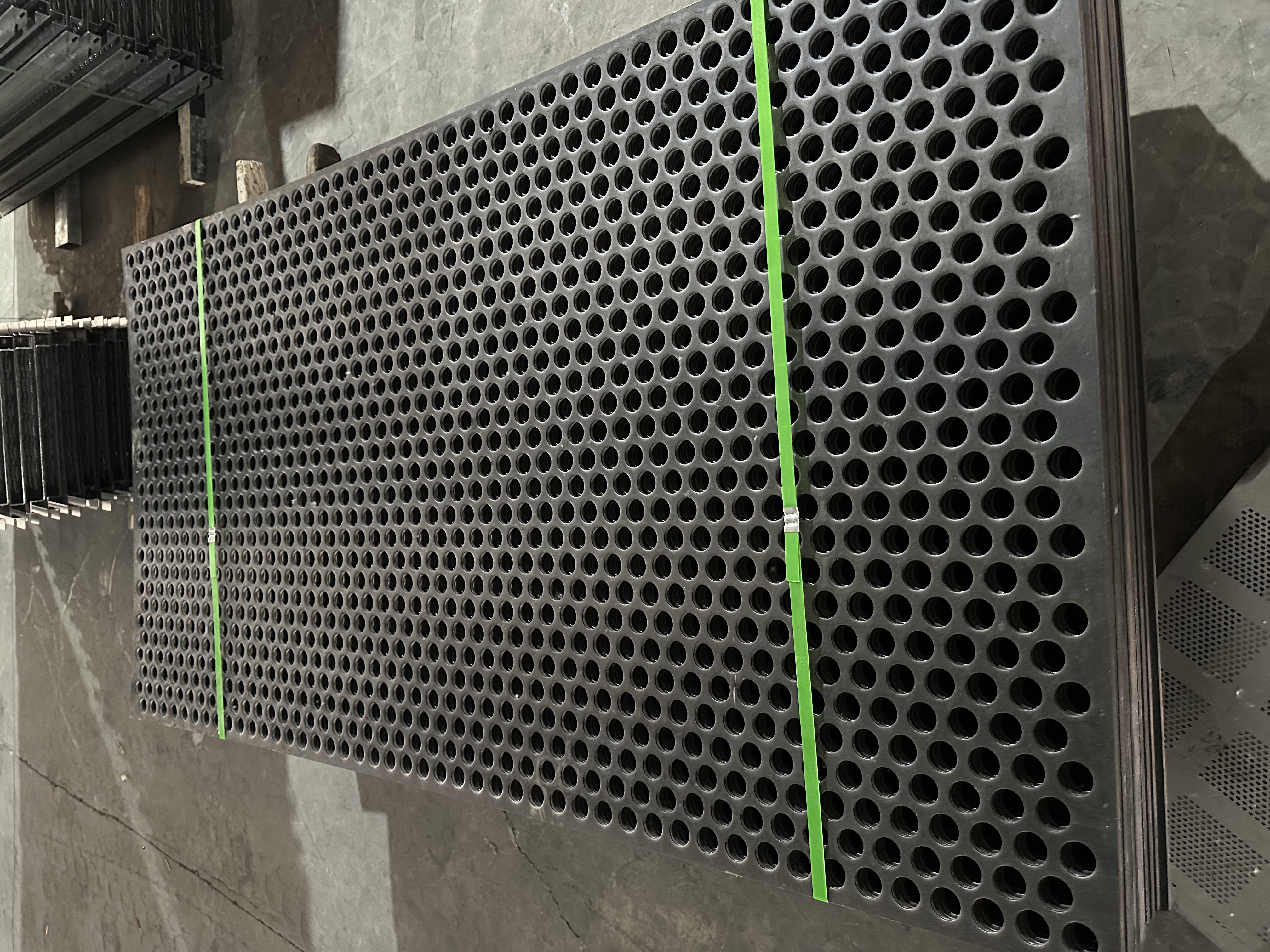
Material strength: Which grade actually survives your environment
Production process: Which technique reduces second operations
As the chief engineer of Hengai Metal, I invite you to challenge our team. Send your most difficult project and see what you get back: on the spot, with real practical advice grounded in manufacturing capabilities.
After all, a technical consultant is just a supplier whose "support" data helps you reduce costs. Choose support based on the real calculation: lowest lifetime cost, superior reliability—the one that makes the big performance difference at the end of the day.
Ready to work with a technical support specialist—not just a seller? Contact us with your drawings and application notes. Ask for our input, see how ideas change, then compare the production samples.
Hengai Metal Co., LtdTianjin, China — Full-process Perforated Metal Solution Provider