En

Perforated metal sheet top choice for OEM
Finding the right perforated metal supplier can make or break your project. As an OEM, you're not just buying a product—you're investing in your own reputation. Every component that leaves your facility carries your name. It needs to perform flawlessly, arrive on schedule, and fit your budget without compromising quality.
The perforated metal industry has long struggled with a reputation for inconsistency. Traditional supply chains involve multiple layers of distributors and intermediaries, each taking their cut and adding their own variables to the equation. This often leads to inflated prices, unpredictable delivery times, and a frustrating disconnect between what you specify and what you receive.
Hengai Metal , a professional terminal factory specializing in metal perforated products, has built its entire business model around solving these systemic issues. By controlling the entire production process in-house, they offer a level of stability, cost-effectiveness, and customization that OEMs genuinely need to stay competitive. Let's delve into what makes a truly reliable perforated metal partner and why factory-direct sourcing is becoming the industry's gold standard.
The High Cost of Unstable Supply Chains
For many OEMs, the true cost of a component isn't just its purchase price. It's the total cost of acquisition, which includes delayed production lines, quality rejection rates, administrative overhead, and the stress of managing multiple vendors.
Consider the scenario of a machinery manufacturer who outsources their perforated components. A typical order requires the base perforated sheet from one supplier, which is then sent to a second workshop for bending, and potentially a third for welding. Each hand-off is an opportunity for miscommunication, dimensional deviation, or scheduling delay. If one step falls behind, the entire assembly line stalls. You lose time, and you lose money—often far more than the cost of the part itself.
Statistics from industry reports suggest that unplanned downtime in manufacturing can cost anywhere from $50,000 to over $200,000 per hour for large-scale operations, depending on the sector. For a mid-size OEM, even a day's delay in receiving critical components can cascade into missed deadlines and penalty clauses.
This is where the value proposition of Hengai Metal becomes clear. By integrating punching, cutting, bending, and welding under one roof, they compress the supply chain timeline dramatically. You no longer need to coordinate with multiple shops, worry about parts being incompatible after secondary processing, or chase answers about your order's status. The risk shifts away from you and onto the supplier, where it belongs.
Key Considerations for OEMs Selecting a Perforated Metal Partner
To ensure your project is a success, you need to evaluate potential partners against several crucial, non-negotiable criteria.
1. Look for Full-Process Production Capability
The first and most critical factor is whether the supplier can handle your entire manufacturing scope internally. A company that only offers perforated sheets might seem adequate at first, but what happens when you need a component with a flange? Or a housing that needs to be welded?
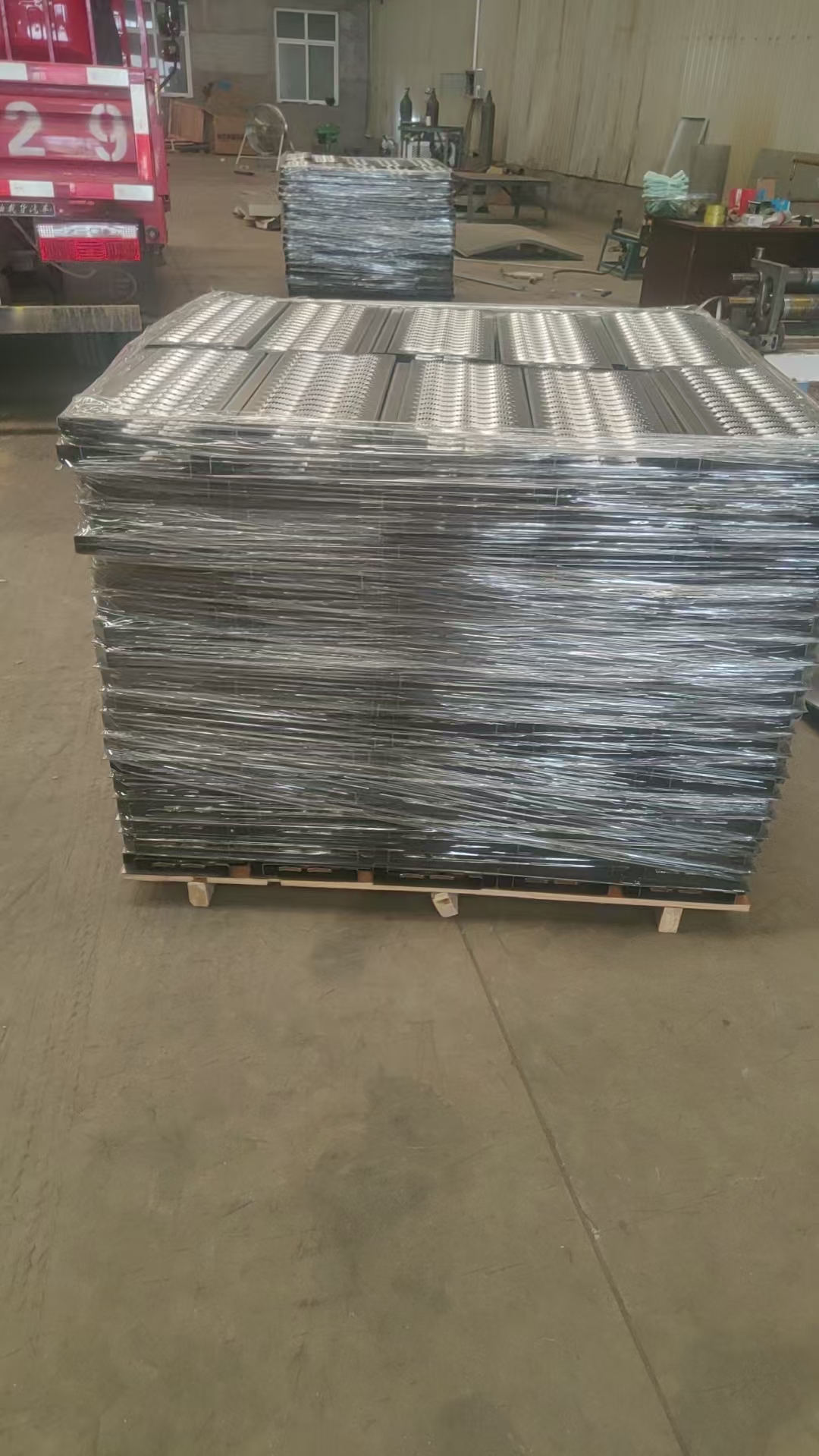
Hengai Metal operates a full suite of equipment, including CNC turret punch presses, laser cutting machines, press brakes, and welding stations. This isn't just a list of equipment to impress clients. It means they can take your 2D drawing or sample and manage the complete lifecycle of the part. Having all processes in-house ensures tighter tolerance control at every stage and guarantees that the final part fits its intended assembly perfectly. You avoid the "finger-pointing" issue where a fabricator blames a faulty sheet for a bad bend or a poor weld.
Actionable Advice: Before placing an order, audit the supplier's facility (virtually or in person). Verify they possess the equipment for punching, cutting, and forming. Ask specifically how they handle tolerance stack-up when parts require multiple operations.
2. Prioritize Transparent, Factory-Direct Pricing
The traditional distribution model can inflate prices by 20% to 30% by the time the material reaches the end-user. This price hike doesn't reflect value added; it just reflects multiple parties taking a profit margin.
As a terminal factory, Hengai Metal deals directly with engineering teams and procurement specialists, eliminating the middlemen. This doesn't just save you money; it fosters a better partnership. When you speak to their engineering team, they're working to your spec, not to a sales target from a distributor. Their revenue depends on repeat business from you, not on the margin of a one-off sale.
Actionable Advice: Be upfront about your annual volume and target price. A genuine factory will have the flexibility to scale pricing based on projected quantities, offering "cost-plus" pricing models for long-term contracts that are rarely possible with trading companies.
3. Insist on Material Flexibility and Technical Support
Perforated metal is not a one-size-fits-all product. The application dictates the material. A food processing filter requires stainless steel; an architectural façade might require aluminum for corrosion resistance; mining screens demand hardened carbon steel.
A top-tier OEM supplier, whether it’s Hengai Metal or another leading manufacturer, must offer a wide array of materials. However, Hengai Metal goes a step further by leveraging years of experience to act as a consultant. They can recommend the ideal material grade, thickness, and surface treatment based on your operating environment.
Actionable Advice: Don't just send your drawing and ask for a quote. Invite the supplier to review the application conditions. Ask them if there’s a better alloy or a more efficient hole pattern that could reduce material stress or improve airflow, potentially saving you money and increasing your product’s lifespan.
4. Master the Art of Customization
Your design is your intellectual property and your competitive advantage. Whether it's a specific hole pattern for acoustic dampening or a unique mesh for optical effects, the supplier must be able to execute your vision precisely.
Hengai Metal boasts significant expertise in manufacturing various hole types, from standard round, square, and slotted holes to complex hexagonal and custom micro-perforations. They are equipped to adjust hole diameter, pitch, and open area ratio to match your precise functional requirements. Crucially, they also support deep-processing capabilities for products like filter drums and housings, meaning you can outsource a complete sub-assembly rather than just a flat sheet.
Actionable Advice: When requesting a quote, include the specific end-use function of the part. If it’s for EM shielding, ask about their ability to maintain high open area percentages. If it's for filtration, discuss burr minimization and edge finishing. The more context you give, the better the result.
Cost vs. Quality vs. Delivery: Finding the Balance
In manufacturing, everyone knows the old adage: "Cheap, fast, or good—you can only pick two." While inherently true, innovative factory-direct suppliers are rewriting this rule by streamlining operations.
| Requirement | Challenge | Solution Provided by Hengai Metal |
|---|---|---|
| Low MOQ | Many large-scale suppliers refuse small prototype runs (<100 pcs) as they disrupt mass production lines. | Flexible scheduling allows for quick prototype runs to test product-market fit before committing to large mass production. |
| Complex Fabrication | Outsourcing secondary steps leads to quality loss and long lead times. | In-house bending and welding ensure high precision and remove shipping time between processes. |
| Surface Treatment | Failure to properly finish the metal leads to rapid corrosion and product failure in the field. | They offer complete surface treatments like powder coating, galvanizing, and anodizing in coordination with production timelines. |
| Certification | Proving that materials adhere to industry standards (e.g., food-grade) requires extensive paperwork. | As a factory with traceable procurement, they can provide Material Certificates (MTC) for the raw steel. |
The Hengai Metal Advantage in Practice
While many manufacturers talk a good game, real value shows in practical case studies.
The Mining Sector: A client required a screen for high-impact ore separation. Rather than offering standard steel, Hengai Metal proposed a specific type of hardened high-carbon steel with a thicker edge profile, optimizing the open area to ensure maximum throughput without compromising the screen's structural integrity. The resulting product significantly outlasted the client’s previous supplier's screens, reducing their equipment downtime dramatically.
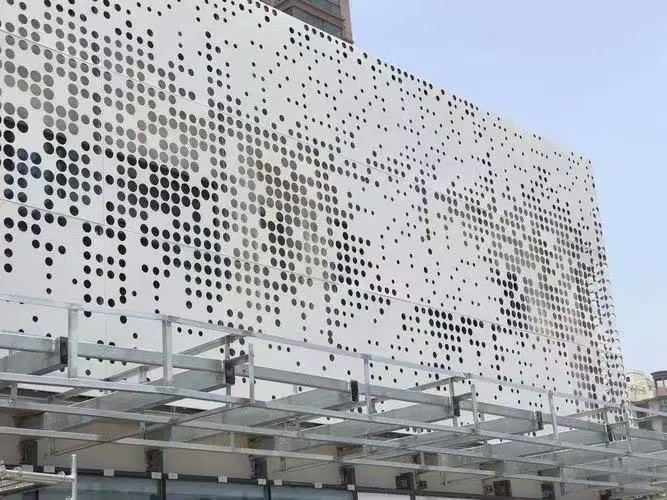
The Architectural Sector: For a modern building façade project, aesthetics were as critical as structural performance. Avoiding the common flaw of "visible drag lines" on standard panels, Hengai Metal developed a custom fixture to handle the distortion of micro-perforated sheets, achieving a flawless, flat finish suitable for the high visibility of architecture. This showcased their ability to handle edge-case quality standards that generic fabricators miss.
A Strategic Partner for Sustainable Growth
Choosing a supplier is a strategic decision that impacts your lean manufacturing efficiency and brand equity. The "low bidder" can turn out to be the most expensive choice in the long run if they cause line stoppages. Conversely, the most expensive option isn't always the highest quality.
Hengai Metal positions itself squarely in the "value" zone. Their business philosophy aligns with being a long-term partner. Their investment in skilled labor and CNC machines ensures repeatability. If you send them 1,000 parts this month and 1,000 parts next month, you get 2,000 parts that are virtually identical. This is the essence of engineering trust.
By establishing a partnership early on, they can operate as an extension of your own production line. You can share your forecasts with them, allowing them to secure raw materials in advance to hedge against price volatility. This lockstep coordination is the antidote to the volatility and uncertainty plaguing the metals market today.
In summary, for any OEM struggling with inconsistent quality from job shops or high costs from trading companies, the pathway to operational excellence often lies in partnering with a robust, full-service manufacturer like Hengai Metal. Their commitment to protecting your supply chain is what separates an average vendor from a world-class one. Evaluate your current supplier against these criteria, and you may find that shifting your sourcing strategy to a stronger partner is the upgrade your business needs to stay ahead.