 En

Perforated metal sheet leading service provider
The perforated metal sheet. It's an unglamorous workhorse, yet it's critical to the function and aesthetics of thousands of products. From the sleek facade of a modern office tower to the heavy-duty screen on a mining sorter, this material sits at the intersection of form and function. But for many procurement managers and engineers, finding the right partner to supply these components is a persistent headache. The market is fragmented, pricing is opaque, and quality can be wildly inconsistent.
In my experience visiting manufacturing facilities and consulting on material sourcing, the problem rarely lies with the design of the part. It lies in the manufacturing and supply chain model. The traditional approach, often involving a complex web of traders, brokers, and sub-contractors, strips away value, control, and most importantly, time. Let's break down why the old model is failing and what a smarter alternative looks like.
The Hidden Costs of the Traditional Multi-Layer Model
When you order a perforated component, you aren't just paying for the metal and the holes. You are paying for a supply chain that might look something like this:
You buy from a distributor.The distributor sources from a trading company.
The trading company outsources the perforating to a specialist shop.
The specialist shop sends the flat sheet to another fabricator for bending and welding.
Each step adds a margin, a layer of communication lag, and a potential point of failure. A 2023 industry report indicated that companies can lose up to 15% of their material budget just to these intermediary markups. More critically, coordination between disparate vendors for a multi-step job like a filter housing or a housing cover can add weeks to a project timeline. Each time the material changes hands, the risk of miscommunication on tolerances or finish increases, leading to expensive rework.
Rethinking the Solution: From Multiple Vendors to One Partner
The industry is evolving, and the most successful teams I see are consolidating their supply base. They are moving away from buying just a "hole-punched sheet" and instead buying a finished, engineered component. This shift requires a partner, not just a vendor.
Let’s look at how a terminal factory model, like the one employed by Hengai Metal, directly addresses the pain points I hear about most often.
1. The Price Transparency Puzzle
The Problem: You get a quote for a perforated panel, but you have no idea if it’s fair. Is the 20% price difference between two suppliers due to quality or just markups?
The Solution: Terminal Factory Direct PricingHengai Metal operates as a direct manufacturer. They own the entire process—from the coil of steel or aluminum to the finished, welded part. There is no distributor taking a cut. When you request a quote, you are receiving a factory-floor price that reflects raw material costs and machining time, not a speculative trader’s margin. This transparency allows you to forecast project costs with far greater accuracy and removes the "nickel-and-diming" that plagues multi-vendor projects. My advice here is straightforward: always audit your supplier's production chain. Ask directly if they own the machinery that performs the punching, cutting, and welding, or if they are acting as a broker.
2. The Quality and Tolerance Trap
The Problem: You receive a batch of sheets where the hole pattern is slightly off, or the burrs haven't been fully removed. This creates expensive rework on your end.
The Solution: In-House Process ControlQuality isn't just about a final inspection; it's about control. Leading manufacturers like Hengai Metal utilize a suite of equipment including turret punch presses for prototype and complex patterns, and high-speed perforating lines for large volumes. By keeping laser cutting and CNC bending in-house, they eliminate the tolerance stacking that occurs when a perforated sheet from one factory is sent to a second-rate machine shop for bending.
"All the processes are under one roof." They can track a part from its raw state to its finished, welded form. For engineers designing high-stress components for mining screens or filtration systems, this traceability is non-negotiable. Countermeasure: When qualifying a supplier, ask for a specific example of how they handle burr removal and sheet flattening post-punching. Their process description will tell you volumes about their capability.
3. The Customization Barrier
The Problem: You have a requirement for a specific pattern with variable hole distribution to control air flow and structural integrity, but most manufacturers ask for a high minimum order quantity (MOQ) to make it "worth their while."
The Solution: Flexible Tooling and Engineering SupportStandard round holes are easy. The real challenge lies in architectural patterns or bespoke hole shapes for specific acoustic or filtration needs. Leading facilities don't rely on fixed tooling for every job. They use CNC turret punches which allow for rapid tool changes and complex patterns to be created without prohibitively expensive custom hard tooling.
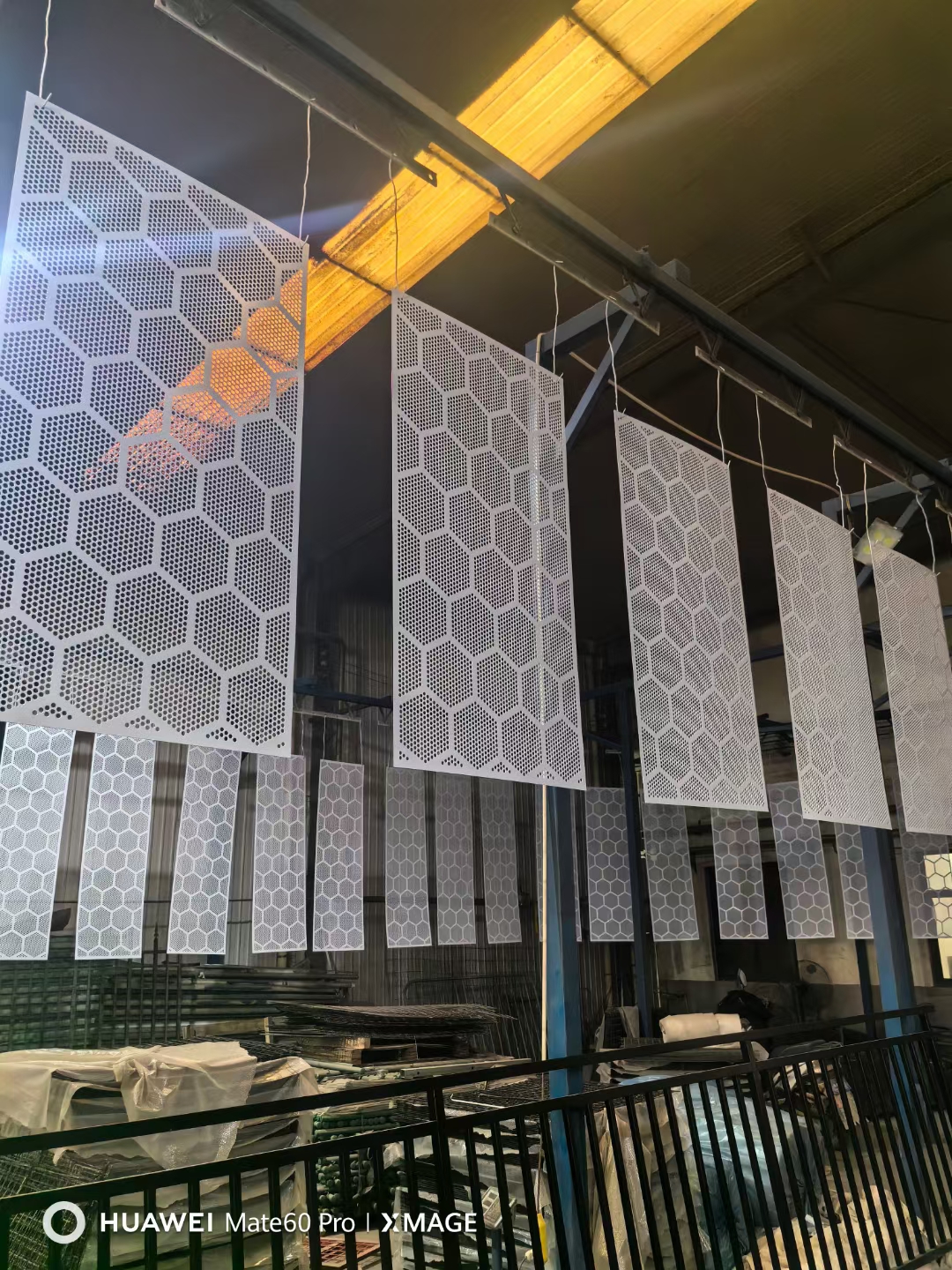
Hengai Metal explicitly supports OEM and ODM orders and works with clients to optimize the hole shape and orientation to a bare minimum. For a recent architectural facade project, a client needed a specific Ø8mm hole at a 60° staggered pitch on 40mm pitch, but wanted to avoid warping on a thin gauge aluminum. By using a method called "bridge perforation" or pattern adjustment during the CNC phase, we were able to prevent the buckling that would have been a disaster in the field. Operational advice: Do not accept "stock only" limits. Push your supplier for technical feedback on your pattern and die layout, not just a price per square meter.
4. The "Deep Processing" Headache
The Problem: You need a flat sheet and a fully assembled filter cylinder with spot-welded seams and a laser-welded bracket. Managing these separate stages is a logistical nightmare.
The Solution: One-Stop Shop for Finished ComponentsThis is where the real value lies in modern metal fabrication. Hengai Metal doesn't just stop at the flat sheet. They offer deep-processing solutions:
Filter Cylinders & Housings: Forming the flat sheet into a cylinder, welding it with precision (TIG or MIG), and adding the necessary end caps.Ventilation Hoods & Shields: Combining punching with rigorous and accurate bending to create a 3D protective cover.
This integration is a huge cost-saver. Shipping a flat sheet is easy. Shipping a fragile, formed cylinder is prone to damage. If a single factory produces the flat perforated part, shapes it, welds it, and package it properly, it reduces your freight costs and liability. I strongly suggest you source components that require multiple processes from a single entity. It defines the responsibility in one place.
Surviving the Audit: Key Operational Takeaways
Based on numerous factory audits and supply chain reviews, here are concrete steps to ensure you're working with a high-level supplier rather than another intermediary:
Prioritize the "4-in-1" Metrics: Look for a supplier that excels in High Precision, Short Lead Times, Material Flexibility, and Price Stability. Does their factory have the capacity to scale, or will they stall on your order as soon as a bigger fish comes along?
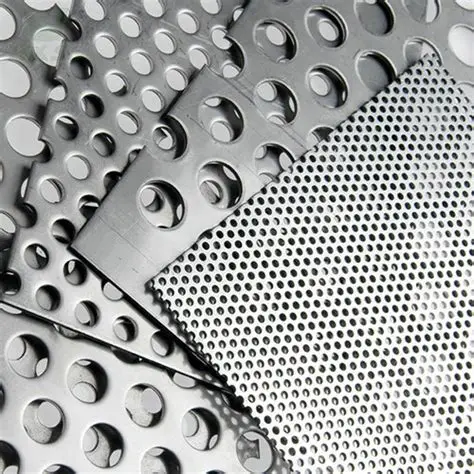
Demand for Multi-Material Expertise:Perforating a brittle material like titanium or a soft material like copper is vastly different from working with carbon steel. The clearance of the punch and die must be adjusted. A top-tier vendor knows how to handle the spring-back and work-hardening of these metals. Your application might need the acidity resistance of 316L stainless for a chemical filter, but your supplier might default to the cheaper 304 without guidance unless they have the metallurgical knowledge to ask the right questions.
Check for "Functional Finish" Capabilities: Perforation exposes sharp edges and raw material. Does your supplier offer proper surface treatments? For architectural applications, a powder-coated finish that fills the micro-scratches is essential. For food processing, the welds and brushed finish must meet strict sanitary standards. A manufacturer like Hengai Metal provides integrated cleaning and surface treatment options that protect against corrosion at the cut edges, which are primary spots for rust to start.
The Verdict
The metal perforation industry is mature, yet it's surprisingly resistant to change. The old way of doing business—with extended middleman networks—is prone to failure in our fast-paced market. We need agile partners. When looking to solve a production challenge, don't just buy a product; buy a manufacturer's capability. The logic is simple: fewer hand-offs means fewer drop-offs. By vetting manufacturers like Hengai Metal and verifying their assets, you not only gain control over quality and cost data that is crucial for your bottom line, but you also place an engineer out on the plant floor, working with you to solve the process constraints before you invest a dime in hard tooling. Make the call to see your factory’s floor plan today, not just their sales brochure.