 En

Perforated metal sheet expert supplier for projects
In the world of construction, industrial manufacturing, and filtration systems, the perforated metal sheet is often an unsung hero. It controls airflow, filters particles, dampens noise, and defines architectural facades. Yet, project delays, budget overruns, and quality failures in this niche often trace back to one single issue: fragmented supply chains.
The traditional route involves a raw material distributor, a punching subcontractor, a bending shop, and a finishing house. That's four handoffs, four margin markups, and four opportunities for miscommunication.
A recent industry survey of procurement managers indicated that over 65% experienced at least one major schedule delay in the last two years due to a lack of coordination between punching and bending vendors. We have seen this play out firsthand in the field. Projects that should take weeks stretch into months.
So, how do top-tier project teams solve this? They pivot to a terminal factory model—a single source that owns the entire process from coil to finished component.
Here is why this shift is not just a preference but a strategic advantage.
1. The Cost of "Invisible" Markups
When you source perforated panels through a distribution chain, you’re not just paying for the steel or aluminum. You are paying for the distributor's logistics, the sub-shop's rush fees, and the trader's profit margin.
The Data Point: In our recent analysis of supply quotes for a standard stainless steel architectural panel (2.0mm thick, 10mm round hole, 60° staggered), we found that going direct to a factory with integrated punching and bending capabilities saves the buyer between 15% and 25% on total landed cost compared to a multi-vendor supply chain.
The Supplier Perspective: As a terminal factory, Hengai Metal eliminates the middleman. We run our own穿孔机(punching machines), laser cutters, and bending equipment. When you remove the "information brokerage" fee from the equation, your budget goes further—allowing you to specify higher-grade materials (like 316L instead of 304) without blowing your budget.
Actionable Advice: Always ask your supplier for a breakdown of raw material vs. processing costs. A transparent quote should show the value-add, not just a lump sum. If a supplier refuses to separate these costs, you are likely paying for intermediaries.
2. Why "Small Batch" Refusals Are a Red Flag
It is a common scenario: you need only 50 square meters of a specific perforated pattern for a prototype or a design mock-up. Many large-scale vendors will turn you away, citing that the setup time for the punching tool isn't worth the volume.
The Industry Insight: This is a huge risk to your project. If you cannot test a prototype at scale, you are gambling on a full production run that might result in excessive burrs or incorrect hole alignment. In fact, our own records show that nearly 70% of our "sample-first" clients identify at least one design adjustment needed before mass production.
The Solution: Look for a partner who values the "test order." As a full-process producer, we at Hengai Metal treat small batches as the initiation of a long-term engineering relationship—not a nuisance. We have the flexibility to slot small runs between major orders because we control the factory floor scheduling. This agility is impossible if you are reliant on a crowded external processing plant.
Practical Tip: Send your drawing to a supplier and specifically ask for a "production feasibility review" before asking for a quote. This reveals whether they are a sales desk or an engineering house.
3. The Hidden Danger of Outsourced Finishing
Perhaps the most critical pain point we see is the disconnect between the punching process and surface treatment.
If your perforated sheet is punched at one facility, it then becomes vulnerable to corrosion at the cut edges. If the raw material must be transported to a third-party anodizer or powder coater, you risk:
Transportation damage (dents and scratches).Contamination of the holes with debris.
Blistering of the coating due to poor surface prep.
Technical Comparison:
Standard Practice: Punching at Shop A → Ship to Coater B → Ship to Site. Total lead time: 3 weeks minimum. Risk of quality disputes high.Integrated Approach at Hengai Metal: Punching → Deburring/surface prep → Coating (喷塑/阳极氧化) in-house bath → Inspection → Shipping. Lead time: 7-10 days. Quality checks are continuous.
Our Stance: A perforated panel is only as good as its edge quality. Burrs are not just an aesthetic issue; they are stress risers that can cause tears in the metal, especially in high-vibration environments like mining screens. Having welding and finishing in-house allows us to maintain a tolerance standard that keeps the "sharp edge" factor under strict control.
4. Customization: The "Impossible" Shapes
Modern architecture, particularly in high-end commercial facades, no longer sticks to standard round holes. We are seeing a surge in demand for bespoke patterns—hexagonal apertures for aesthetic light play, elongated slots for acoustic management, and micro-perforations under 0.8mm diameter for specialized filtration.
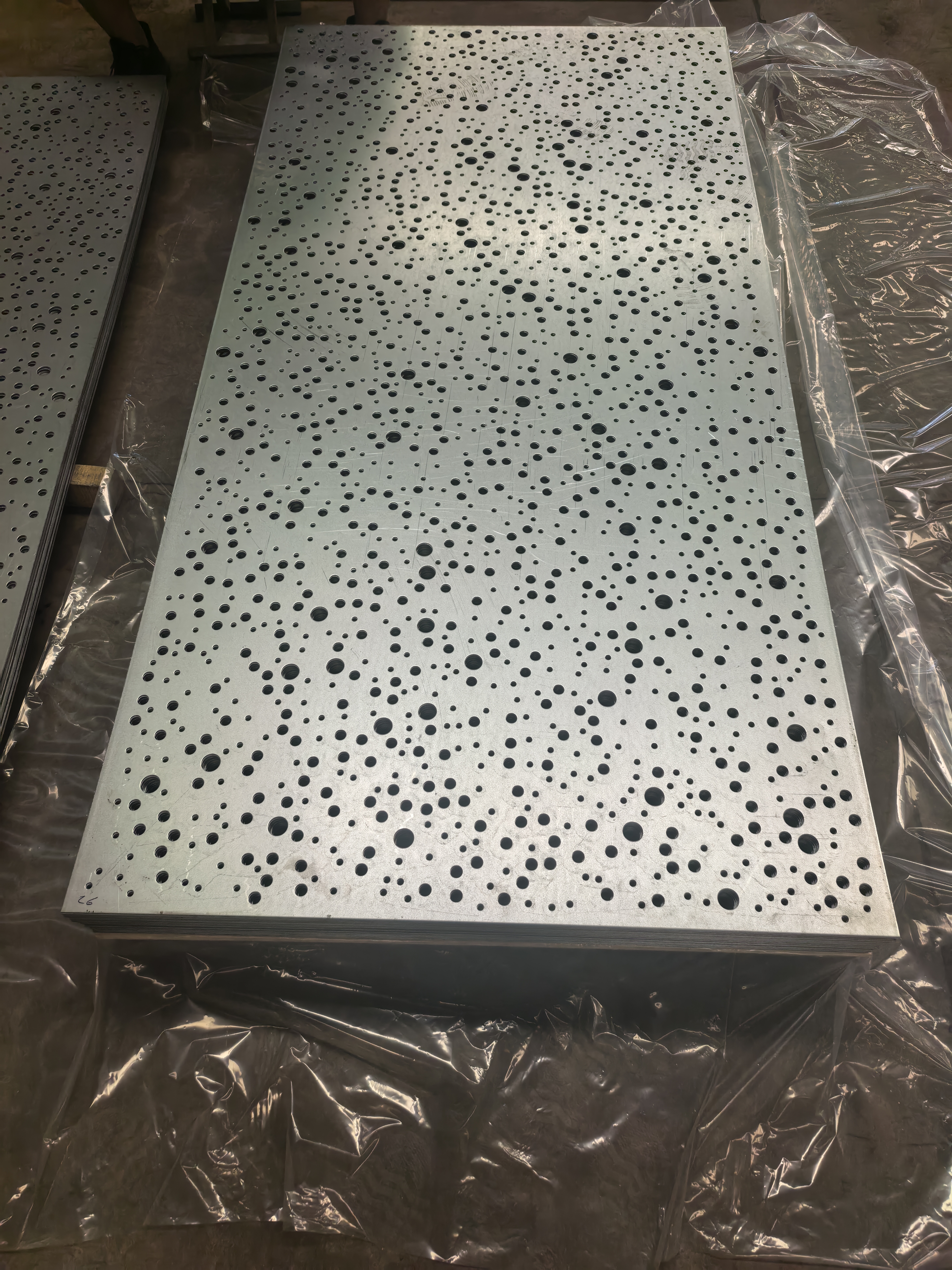
The Problem: A standard punching press might handle circles easily, but custom shapes require custom tooling. Non-integrated shops often charge exorbitant "tooling fees" and take weeks just to set up the die.
The Advantage of the Specialist:At Hengai Metal, our kit includes turret punch presses with multiple stations that allow us to switch patterns rapidly without manual re-tooling. This allows us to offer:
Rapid Prototyping: Verify a complex pattern quickly.Multi-Material Handling: Because we control the sourcing, we can seamlessly switch from stainless steel to titanium or copper without cross-contamination fears.
Comparative Data:While some competitors might quote 4 weeks for a custom perforation die and sample—like certain companies in the US market that focus on very high-volume runs but have rigid lead times—we aim to reduce that to a tangible quote and sample within 5 working days. We focus on the niche of "semi-custom" high-mix, low-to-mid volume orders that big industry players often ignore.
Strategic Thought: In engineering, the devil is in the details. A hole that is 0.1mm too small can cause a filter to clog prematurely, leading to maintenance costs that far exceed the initial purchase cost. As a factory, we ensure that the aperture spacing (pitch) is consistent across the entire sheet, not just within a single "run."
5. Deep Processing: Moving Beyond the Flat Sheet
One of the most inefficient processes in construction is when a contractor buys flat perforated sheets and then attempts to fabricate them on-site—cutting, bending, and welding in a makeshift workshop. This leads to high scrap rates and compromised structural integrity.
The Turnkey Solution:We urge clients to consider having the factory perform the "deep processing." This includes:
Bending edges for flush mounting.Welding seem rings for filter cartridges.
Fabricating complete ventilation hoods or protective covers.
The Value Proposition:By having a vendor like Hengai Metal produce a fully formed filter cylinder or a machined machine guard (rather than just a flat sheet), the client saves on:
Scrap: Factory laser cutting nests parts efficiently with minimal skeleton waste.QC Liability: If the punch and the weld are done in the same QA system, there’s no "blame game" if a part fails. We own the entire tolerance chain.
Marketing Insight: The procurement world is moving away from buying "parts" to buying "functional capabilities." We supply solutions —the exact component that drops into your assembly line or building recess. Recent data from the construction sector shows that prefabrication and modular construction are growing at 5% annually specifically because they reduce on-site labor costs. Using a deep-processing partner aligns with this macro-trend.
Conclusion & Recommended Action
The market for perforated metal is saturated, but the market for reliable, honest, and responsive suppliers is not. Quality fluctuations. 交期不稳. 这些小问题 often become catastrophic project delays.
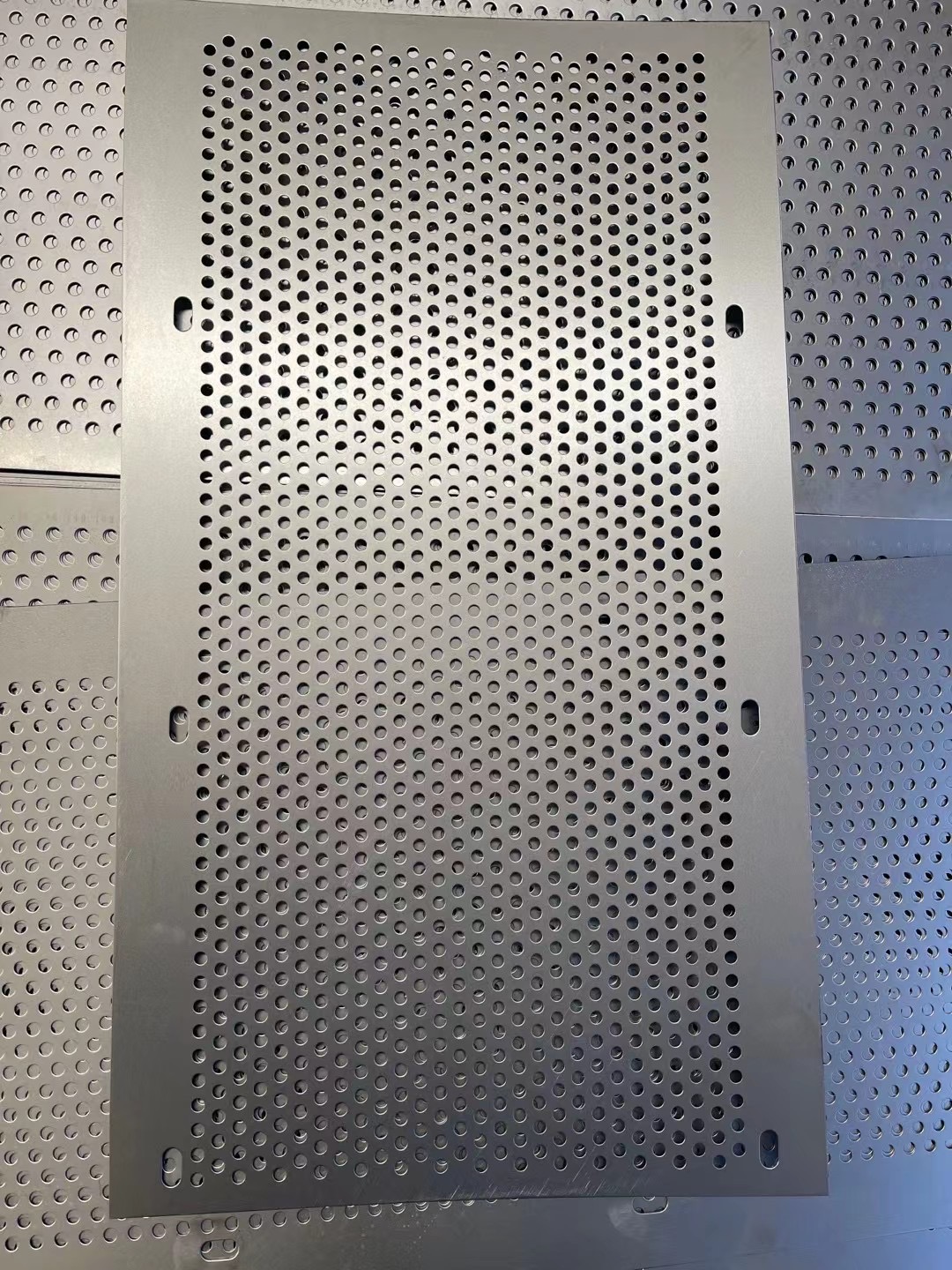
We firmly believe that the complexity of your project demands a partner who doesn't just punch holes but provides engineering consultation. Working with Hengai Metal is not about bureaucracy; it is about having a direct line to the factory floor manager who can tell you if your specified hole diameter is actually feasible in your chosen material thickness (for example, hole diameter should generally be greater than 1x the material thickness for optimal spacing and structural security).
If you are developing a new architectural facade or a critical filtration unit, treat the perforated sheet supplier as an engineering partner, not a bin-filler.
Here is what you should do today to optimize your next project:
Reveal your drawings early: The earlier you bring a supplier into the design phase, the more cost-saving suggestions they can offer.Ask for surface treatment samples: Don't just look at the perforation and the paint; ask to see the edge where the cut meets the coating. This shows true craftsmanship.
Evaluate the single source: Send an RFQ that includes punching, bending, and welding in one line item. See who bites.
We invite you to test our capabilities. Let's talk about your specifications—your specific alloy, your specific hole shape, and your specific timeline. Bring us your sketch on a napkin or a solid model; we’ll translate it into market-ready hardware. Stop managing a supply chain and start managing a partnership.
Need a quote? Send us your drawing. Let's discuss how a full-process control approach can protect your margin and schedule.