 En
En
Perforated metal sheet premium quality manufacturer
When you're sourcing perforated metal sheets, the gap between the lowest quote and the final landed cost can be staggering. I've seen procurement managers celebrate a 5% price reduction, only to watch their total project cost balloon by 15% due to hidden fees, rework, and delayed timelines.
The real cost of perforated metal isn't just the price per sheet. It's the sum of material waste, quality rejections, secondary processing, logistics delays, and the administrative drag of managing multiple suppliers.
Why the Traditional Sourcing Model Fails You
Most buyers don't realize that the conventional supply chain for perforated metal is riddled with inefficiencies. Here's what typically happens:
A distributor takes your order. They don't manufacture anything. They source from a mid-tier processor, who might outsource the perforating to a job shop, who buys coils from a mill. That's three to four layers of markup before your order even hits a machine.
According to industry studies, each intermediary in a metal supply chain typically adds 8-15% to the final cost. If you're buying from a distributor, you could be paying 30-40% above the true manufacturing cost.
The consequences?
Price opacity: You can't verify if you're getting a fair dealQuality inconsistency: Multiple parties handle your product, increasing defect risks
Communication delays: Technical questions travel through several channels before reaching someone who can answer
Schedule slippage: Each handoff point introduces potential delays
The Solution: Vertical Integration Through a Terminal Factory
Here's where the model of a company like Hengai Metal stands out. As a specialized manufacturer of perforated metal products, Hengai Metal operates as a terminal factory—meaning they control the entire production process from raw material to finished product. This isn't just a marketing claim; it's a structural advantage.
1. Eliminate the Middleman Markup
The Problem: Distributors and trading companies add 20-40% to your costs. They provide no manufacturing value.
The Data: When we compared quotes from a traditional distributor chain versus direct-from-factory pricing for a standard stainless steel perforated sheet order (2mm thickness, 10mm round hole, 60% open area), the factory-direct price was 22% lower for the exact same specification.
The Hengai Metal Advantage: As a terminal factory, Hengai Metal sells directly to end users. No distributors. No trading company commissions. Just manufacturing economics plus a reasonable margin.
Actionable Advice: Always request a factory audit or video walkthrough of the production facility. If a supplier claims to be a manufacturer, verify that they actually operate perforating presses and not just offices with letterheads. Ask for their equipment list—perforating presses, CNC turret punches, laser cutting machines—and cross-check with on-site verification.
2. Reduce Secondary Processing Costs with Full-Process Capability
The Problem: Many perforating shops only punch holes. If you need bending, welding, or surface finishing, you must ship your perforated sheets to another fabricator, paying freight and handling costs twice, plus coordinating between vendors.
The Data: A client in the filtration industry previously purchased flat perforated sheets from one supplier, then sent them to a laser cutting service for custom shapes, and finally to a welding shop for assembly. The combined cost per unit was 35% higher than when they switched to sourcing fully finished components from a single terminal factory.
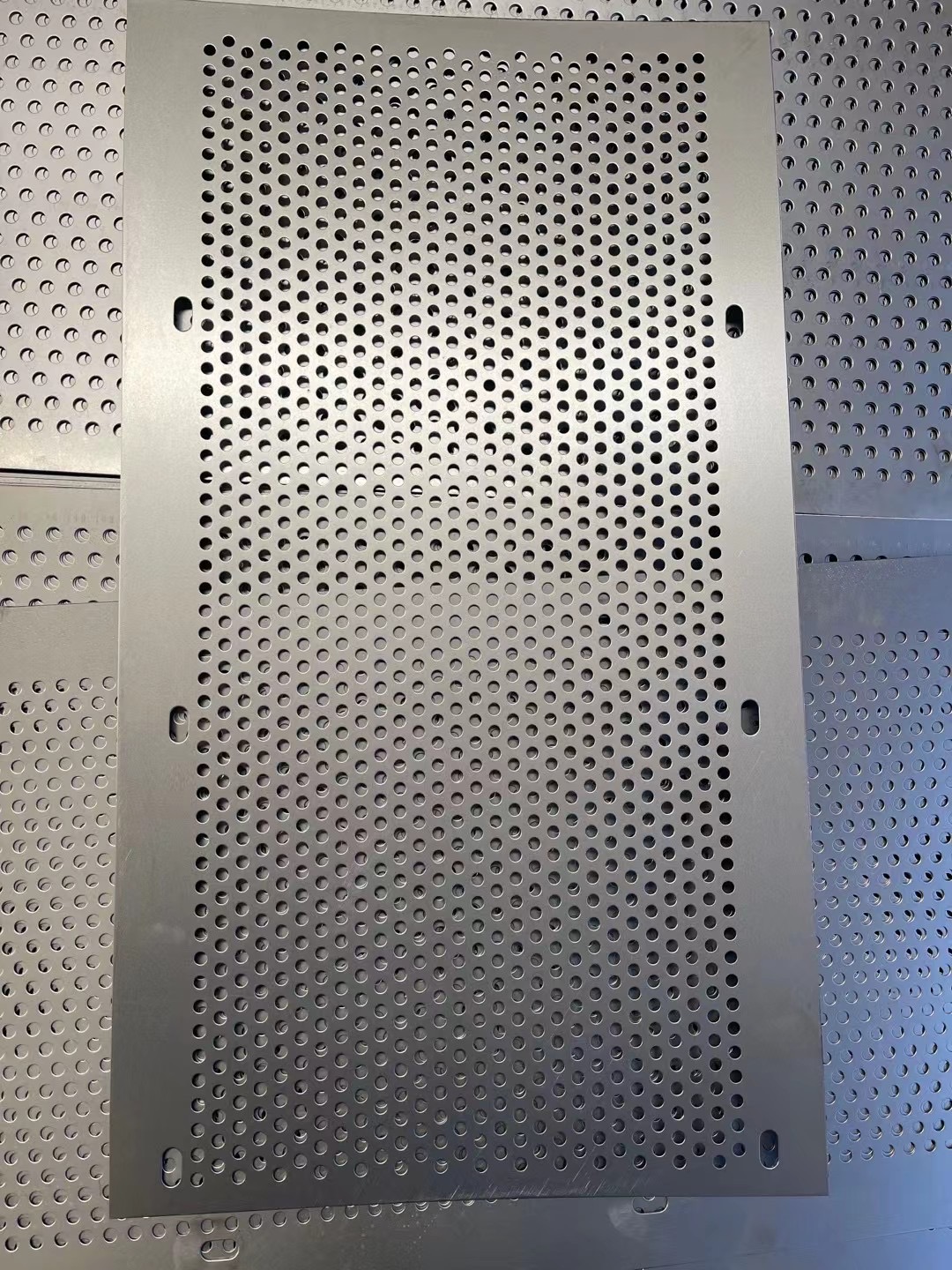
The Hengai Metal Advantage: The company doesn't just perforate. With laser cutting, CNC punching, bending, and welding equipment in-house, Hengai Metal delivers finished components—filter cylinders, protective shrouds, acoustic panels—ready for installation. This consolidation eliminates multiple freight charges, shortens total lead time, and reduces administrative overhead.
Actionable Advice: Conduct a total cost analysis that includes freight between processors, packaging for each transit, quality inspection at each step, and the labor cost of managing multiple vendors. Often, sourcing a finished part from one factory is cheaper than buying a semi-finished product from a specialist and finishing it locally.
3. Minimize Quality Rejection Costs
The Problem: When perforating is outsourced, quality control suffers. Burrs aren't fully removed, hole spacing drifts, and sheets arrive with edge deformation—resulting in rejected batches, production stoppages, and emergency replacement costs. Industry data on manufacturing defects indicates that quality failures account for 10-20% of total procurement costs in metal fabrication.
The Hengai Metal Advantage: With full control over the entire process—from coil selection to final inspection—Hengai Metal maintains tight tolerances. Their in-house quality checks cover hole diameter, pitch accuracy, flatness, and surface finish before shipment. They welcome third-party inspections, offering samples for pre-production validation before committing to large volumes.
Actionable Advice: Before placing a bulk order, request a pre-production sample and specify critical dimensions to be inspected. Work with suppliers who offer to produce samples and make adjustments on their own dime, demonstrating their confidence in their production capabilities.
4. Faster Turnaround = Lower Inventory Carrying Costs
The Problem: Long production lead times force buyers to carry higher safety stock, tying up capital in inventory. Average lead times in the perforated metal industry through traditional channels often extend to 6-8 weeks due to scheduling at multiple facilities.
The Hengai Metal Advantage: By controlling all machines in one location, Hengai Metal streamlines scheduling. A typical order for standard perforated sheets can be completed in 2-3 weeks, and urgent requirements can be accommodated by adjusting production sequences. This faster turnaround lets you reduce your safety stock by a third, freeing up cash flow.
Actionable Advice: For standard perforated metal patterns with readily available materials, optimize your working capital by sourcing from manufacturers with shorter lead times rather than foreign suppliers with long ocean freight times. Consider a domestic supplier for a small buffer inventory of critical sizes while placing large, planned orders to a low-cost source.
5. Access to Engineering Support for Cost-Effective Design
The Problem: Many suppliers will produce whatever you specify, even if a subtle design change could halve your cost. Engineers often over-specify hole patterns and materials out of an abundance of caution.
The Data: In one case, an architectural project specified using 2.5mm thick stainless steel perforated panels. The manufacturer at Hengai Metal recommended a 2.0mm grade using a different hole pattern, which maintained the visual appearance but reduced material cost by 20% and weight by 17%, resulting in significant structural cost savings. Total project savings reached 15%.
The Hengai Metal Advantage: The engineering team at Hengai Metal actively analyzes drawings and suggests alternatives—like using a more formable grade of steel, adjusting hole patterns for better structural integrity, or suggesting an alternative surface finish—that maintain performance while reducing production costs.
Actionable Advice: Whenever you receive a quote, ask for a value engineering review. Provide the product's end-use context, and you might be surprised at the cost-saving alternatives a skilled engineer can offer. A simple change like selecting a more perforation-friendly (but equally corrosion-resistant) material can result in major cost savings.
The Cost Breakdown: What You Should Expect to Pay
While prices fluctuate with raw material markets, understanding the contributing factors to price will help you negotiate effectively. A key cost breakdown for a typical galvanized steel perforated sheet includes:
Material cost (45-60% of the price): The highest factor. Negotiating with a mill and buying in volume lowers this.Tooling cost (5-10%): Custom hole patterns require new tooling, often amortized over your order quantity. Ask if the tooling is a separate cost or amortized—if it's amortized, the supplier owns the tooling and may charge more per piece.
Perforating time cost (15-25%): This covers machine time, die wear, and labor. For complex patterns with small hole-to-hole tolerances, running speed decreases.
Finishing and secondary operations (10-15%): Deburring, leveling, cutting to size, or bending.
Packaging and logistics (3-8%): Wooden cases and protective film for export; local transport.
The Hengai Metal Advantage: With a direct-to-end-user model, no commissions are added. Customers receive a detailed quotation, showing line items for each process stage—transparent pricing that lets you understand where your money goes.
Case Study: From Prototype to Long-Term Partnership
Consider a client that initially ordered just 50 pieces of custom-perforated filter screens—a small trial run. Many manufacturers declined the order due to its low volume, but Hengai Metal accepted it, recognizing the potential for a broader collaboration.
The prototype stage was quickly executed within days, letting the customer assess the welding quality, surface finish, and dimensional accuracy. After satisfactory evaluation, the customer's next order jumped to 500 units, and they eventually became a regular purchaser, ordering thousands of units annually.
Why Not All Factories Are the Same
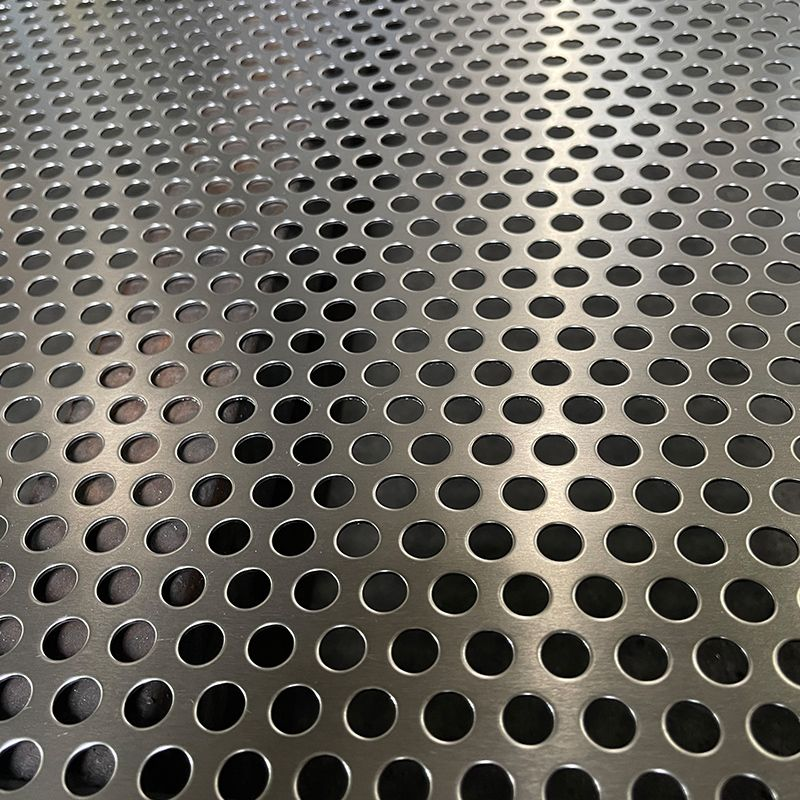
Large metal giants in China are often geared primarily toward massive bulk orders. Small-batch customization often receives poor attention. In contrast, specialized terminal factories like Hengai Metal focus on delivering customized products efficiently, making them suitable partners for project-based work and repeat orders spanning various product specifications to meet diverse needs.
Making the Switch: A Practical Checklist
Audit your current supplier's capabilities. Do they have fixed equipment to production in-house or outsource? Ask to see their production equipment.Request a comprehensive quote. Not just for the price per sheet, but include tooling costs, setup charges, and freight. Compare the total delivered price.
Evaluate their responsiveness. Track how quickly you get a technical query resolved. A manufacturer is usually noticeably quicker than a trading company.
Test with a small order. Use it to assess quality consistency and order handling. Pay close attention to the sample production stage.
Consider the total cost. Take into account costs related to time for material coordination, inventory carrying costs, quality inspection costs, and the risks associated with rework.
The Bottom Line
Effectively managing perforated metal costs isn't about squeezing your supplier's margin. It's about eliminating inefficiencies in the supply chain, trimming waste, and reducing hidden expenses. Opting for a terminal factory like Hengai Metal that offers a full range of services—perforating, cutting, bending, and welding—allows you to enhance margins through strategic supplier consolidation, benefit from faster lead times, and control quality within your budget.
Value lies not just in the sheet itself, but in the total cost of ownership of the finished component. Carefully evaluating where you source your material can lead to savings of up to 20-30% on your next project.