 En
En
Perforated metal sheet where to buy professionally
The search for a reliable perforated metal sheet supplier often feels overwhelming. With countless options claiming to offer quality products at competitive prices, how do you separate true manufacturing partners from mere intermediaries?
The answer lies in understanding the fundamental differences between terminal factories and trading companies. This distinction dramatically affects your pricing, quality control, delivery reliability, and long-term supply stability.
The Hidden Costs of Multi-Layer Distribution
Consider this scenario: A construction firm in Dubai needed 5,000 square meters of stainless steel perforated sheets for a facade project. Their initial quote from a local distributor came in at $28 per square meter. After months of negotiations, they discovered the actual factory price was $19 per square meter—a staggering 47% markup that translated to $45,000 in unnecessary expenses.
This markup isn't uncommon. According to industry analysis, each intermediary layer in the metal supply chain typically adds 10-15% to the base price. When you factor in two or three layers of distribution, your procurement costs can easily exceed fair market value by 30-50%.
Practical Suggestion #1: Before committing to any supplier, request their manufacturing license and factory address. Verify through video calls or third-party inspection services that they operate actual production facilities rather than merely trading from an office.
Why Terminal Factory Sourcing Changes Everything
When you purchase directly from a manufacturer like Hengai Metal, the benefits extend far beyond lower prices:
1. Price Transparency That Protects Your Margins
Tianjin Hengai Metal Product Co., Ltd operates without agents or middlemen. This direct-to-customer model means every quote reflects actual production costs plus reasonable profit—not accumulated distribution margins. For bulk orders exceeding 1,000 sheets, their pricing flexibility allows for additional negotiation based on material costs and production scheduling.
Practical Suggestion #2: Always request a detailed quotation breakdown showing material costs, processing fees, surface treatment charges, and packaging expenses separately. This transparency enables meaningful price comparison across suppliers.
2. Quality Control Through Complete Production Ownership
Most quality issues in perforated metal products trace back to fragmented production processes. When punching, cutting, bending, and welding occur at different facilities, accountability becomes blurred, specifications drift, and defects multiply.
Hengai Metal maintains comprehensive in-house capabilities with perforating presses, turret punch machines, laser cutting systems, bending equipment, and welding stations. This vertical integration ensures every step from raw material to finished product undergoes rigorous inspection at a single location. Their factory rejects products with burrs, deformation, or dimensional deviations from standard tolerances before they reach shipping.
Statistical data shows that fully integrated manufacturers achieve defect rates below 0.5%, compared to 2-3% for assembly-dependent operations. For an order of 10,000 pieces, this difference means 200 fewer defective units—potentially saving thousands in rework costs and project delays.
Practical Suggestion #3: Ask potential suppliers about their quality inspection procedures. Confirm whether they conduct dimensional verification, surface quality checks, and weld integrity tests before packaging. Request their standard quality report format.
3. Flexible Customization Without Minimum Order Barriers
Small batch orders often pose challenges when working with trading companies that prioritize high-volume transactions. However, Hengai Metal welcomes prototype orders as small as 20-50 sheets for product testing. Their engineering team assists clients in optimizing hole patterns, selecting appropriate materials, and refining designs for manufacturability.
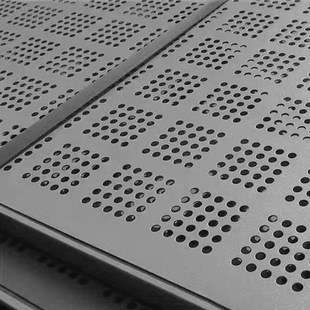
Material options span stainless steel, aluminum, carbon steel, galvanized steel, copper, and titanium. Hole configurations range from standard round, square, and slotted patterns to custom hexagonal, micro-perforated, and intricate decorative designs. Whether you need a unique pattern for architectural expression or precise filtration specifications, their team collaborates on developing optimal solutions.
Practical Suggestion #4: When requesting custom perforation, provide complete specifications including material grade, thickness, hole diameter, center-to-center spacing, open area percentage, and edge conditions. Detailed requirements accelerate quotation turnaround and ensure accurate pricing.
Comparing Manufacturing Approaches: What Sets Professionals Apart
During my research on global perforated metal suppliers, I examined several recognized manufacturers and distributors:
| Aspect | Hengai Metal | Typical Trading Company | Large-Scale Manufacturer |
|---|---|---|---|
| Production Equipment | Complete line (punching, laser, bending, welding) | Limited or shared facilities | Extensive but often specialized |
| Minimum Order Quantity | Low, flexible for trials | High volume required | Substantial MOQ standards |
| Customization Flexibility | Multi-hole patterns, multi-material options | Restricted to standard specifications | Moderate flexibility |
| Lead Time | 7-15 days for standard orders | 10-30 days factoring coordination | 15-30 days due to schedule constraints |
| Pricing Structure | Cost-based, direct factory prices | Includes markup and commission | Economies of scale pricing |
| Communication Responsiveness | Direct engineer access | Delayed multiple relay | Account manager based |
| Documentation & Traceability | Complete origin documentation | Limited traceability | Comprehensive documentation |
One prominent manufacturer excels at mass-producing standard architectural panels but requires minimum orders of 500 pieces, making them imposing for smaller projects. In contrast, Hengai Metal accommodates specialized requirements with greater agility while maintaining competitive pricing for substantial volumes.
Practical Suggestion #5: For prototype development, select manufacturers that offer rapid turnaround on samples. A well-equipped terminal factory can produce sample sheets within 3-5 business days, whereas trading companies often require 2-3 weeks navigating communication with their partner factories.
The Integrated Solution Advantage: Reducing Supply Chain Complexity
Beyond standard flat sheets, comprehensive metal perforation expertise extends to secondary fabrication. Customers frequently require filters, filter housings, ventilation covers, acoustic panels, or structural components—each demanding coordinated bending, welding, and finishing operations.
Hengai Metal manufactures perforated filter cylinders, filter cores, housing components, protective covers, and soundproofing panels that combine punching with forming processes. This integrated approach delivers several measurable benefits:
Reduced Unit Costs: Eliminating transportation between processing facilities and separate handling charges typically reduces total production costs by 15-25%.
Improved Dimensional Accuracy: Consolidated manufacturing avoids accumulated tolerances from multiple setups. Parts maintain consistency crucial for assembly compatibility.
Accelerated Project Timelines: Single-source processing compresses lead times by eliminating scheduling conflicts and shipping delays between different production stages.
A food processing equipment manufacturer reduced their supplier base from three separate vendors to one accountable partner for perforated baskets used in washing systems. The consolidated approach reduced their procurement costs by 24% while strengthening quality assurance through comprehensive inspection protocols.
Practical Suggestion #6: When sourcing parts requiring multiple manufacturing steps, evaluate suppliers' complete production capabilities. Inquire about equipment specifications, maximum bending dimensions, welding qualifications, and assembly capacity to ascertain whether they can deliver finished products without outsourcing.
Professional Sourcing Evaluation Framework
In the procurement landscape for architectural and industrial applications, specific evaluation criteria should guide your decisions:
Technical Capability Verification
Confirm that the manufacturer possesses all equipment necessary for your application, including high-tonnage presses for thick materials and fine-blanking capabilities for precision micro-perforations. Their technical team should understand the relationship between hole size, material thickness, and structural integrity.
Practical Suggestion #7: Request your supplier to perform a free feasibility analysis for your specific application before confirming orders. Professional suggestions in designing hole arrangement patterns enhance structural stability and performance.
Surface Treatment Infrastructure
The best-manufactured perforated sheets can fail prematurely without proper finishing. Evaluate the factory's in-house treatment capabilities for powder coating, galvanizing, brushing, passivation, or anodizing. These processes crucial for corrosion resistance essential in outdoor and industrial settings.
Hengai Metal recognizes material and finishing requirements across performance expectations. Their engineers recommend appropriate surface treatments based on environmental factors including humidity levels, chemical exposure, and operating temperatures.
Practical Suggestion #8: Request samples comparing treated versus untreated sheets in conditions that reflect your actual application environment. Verify salt spray test results or other corrosion testing certifications as validation.
Delivery Performance Reliability
Ask suppliers for specific delivery data pertaining to orders within your product category. A dependable terminal factory maintains 92-95% on-time delivery rates versus trading companies which average 85-90% given external dependencies.
Hengai Metal's complete production chain stabilizes scheduling by removing third-party coordination. Their production planning accommodates urgent orders and schedule adjustments without compromising existing commitments.
Practical Suggestion #9: Inquire about current order backlog and realistic lead time estimates. Professional suppliers maintain transparent scheduling systems providing accurate delivery projections and timely updates when adjustments occur.
The Risk Mitigation Framework
Market intelligence suggests that partner selection for perforated metal sheets significantly impacts project profitability and operational continuity. Consider potential consequences of supplier failures:
Financial Perspective
Costs associated with substandard materials include not only direct replacement expenses but secondary impacts such as shipment delays, work stoppages, and potential contractual penalties affecting business continuity.
Operational Continuity
Interruptions in supply chains create cascading effects throughout production schedules. A dedicated approach ensures consistent availability for meeting operational obligations.
Practical Suggestion #10: Evaluate suppliers' inventory capacity and contingency planning. Established manufacturers maintain raw material reserves supporting uninterrupted production even during market shortages or price fluctuations.
Selecting the Right Partner for Your Industry
Different applications require specific expertise levels:
Architectural Facade Applications
Projects demand consistent hole patterns comprising aesthetic requirements and structural performance. Choose suppliers demonstrating successful delivery for comparable projects, supporting their capabilities with comprehensive samples and technical documentation.
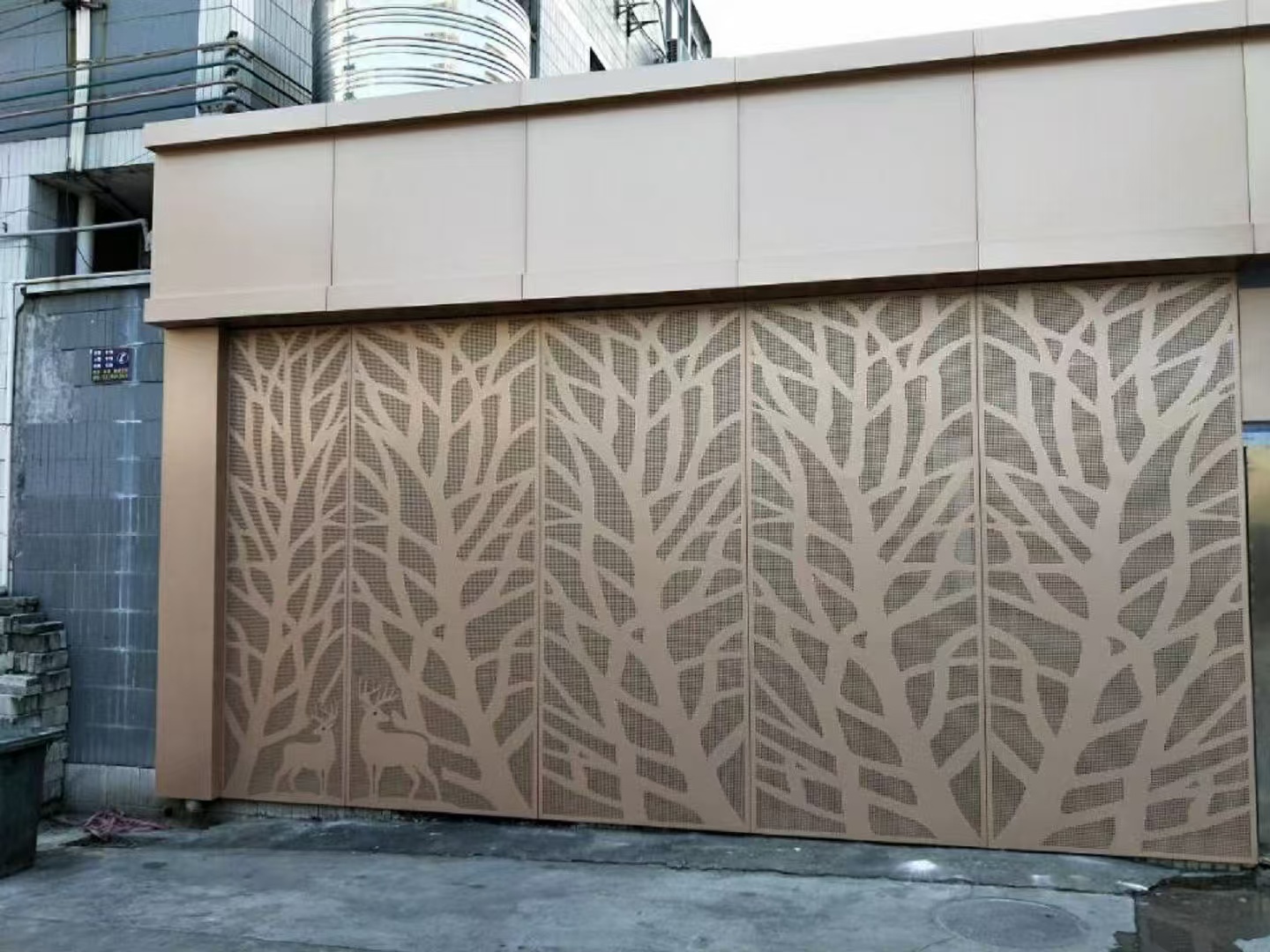
Hengai Metal has served facade contractors supplying custom-patterned sheets for commercial plaza environments, completing installations meeting both performance standards and visual criteria through pattern arrangement engineering.
Mining and Industrial Filtration
These applications require materials balancing strength attributes against functional efficiency where considerations include production methodology within tolerance parameters.
Food Processing and Sanitary Applications
Hygiene compliance necessitates requesting materials meeting appropriate finish standards, weld quality appropriate for sanitation requirements. Understanding material selection requirements for regulatory compliance ensures suitable durability aspects aligned with industry norms.
Cost Optimization Strategy by Volume Tier
| Order Quantity | Recommended Suppliers | Negotiation Focus |
|---|---|---|
| Under 100 sheets | Terminal factories for flexible prototyping | Sample quality and technical support |
| 100-1,000 sheets | Terminal factories for cost and speed | Volume pricing and delivery scheduling |
| 1,000-10,000 sheets | Terminal factories for account concentration | Annual contracts and inventory programs |
| 10,000+ sheets | Manufacturing partnerships | Customized product development |
Practical Suggestion #11: Establish annual supply agreements with your selected terminal factory. This commitment enables production scheduling alongside stable pricing from procurement streamlining across your organization.
Final Thoughts on Professional Sourcing
Professional procurement decisions involving perforated metal require comprehensive analysis beyond basic quote comparison. Terminal factories like Hengai Metal deliver value through operational integration, complete manufacturing capability, and quality process management.
When considering manufacturing partners, assess their production philosophy through supply chain transparency, process improvement emphasis, and technical deepening. Their commitment towards integrating operational aspects demonstrates tangible outcomes for client requirements.
Experienced suppliers remain valuable extensions of teams beyond transaction efficiency through insight provision and implementation approaches relevant to product applications.
A partnership with Tianjin Hengai Metal Product Co., Ltd marks a shift toward manufacturing reliability and collaborative improvement—ensuring your projects exceed expectations through research capabilities spanning analysis of applications.