 En
En
Perforated metal sheet professional installation partner
In the world of modern construction and industrial design, perforated metal has evolved from a purely functional material into a defining element of architectural expression and industrial efficiency. From striking building facades to critical filtration systems and heavy-duty mining screens, these versatile sheets are everywhere. Yet, while the material itself is common, the difference between a successful project and a costly logistical headache often comes down to one crucial factor: the partner you choose to manufacture it.
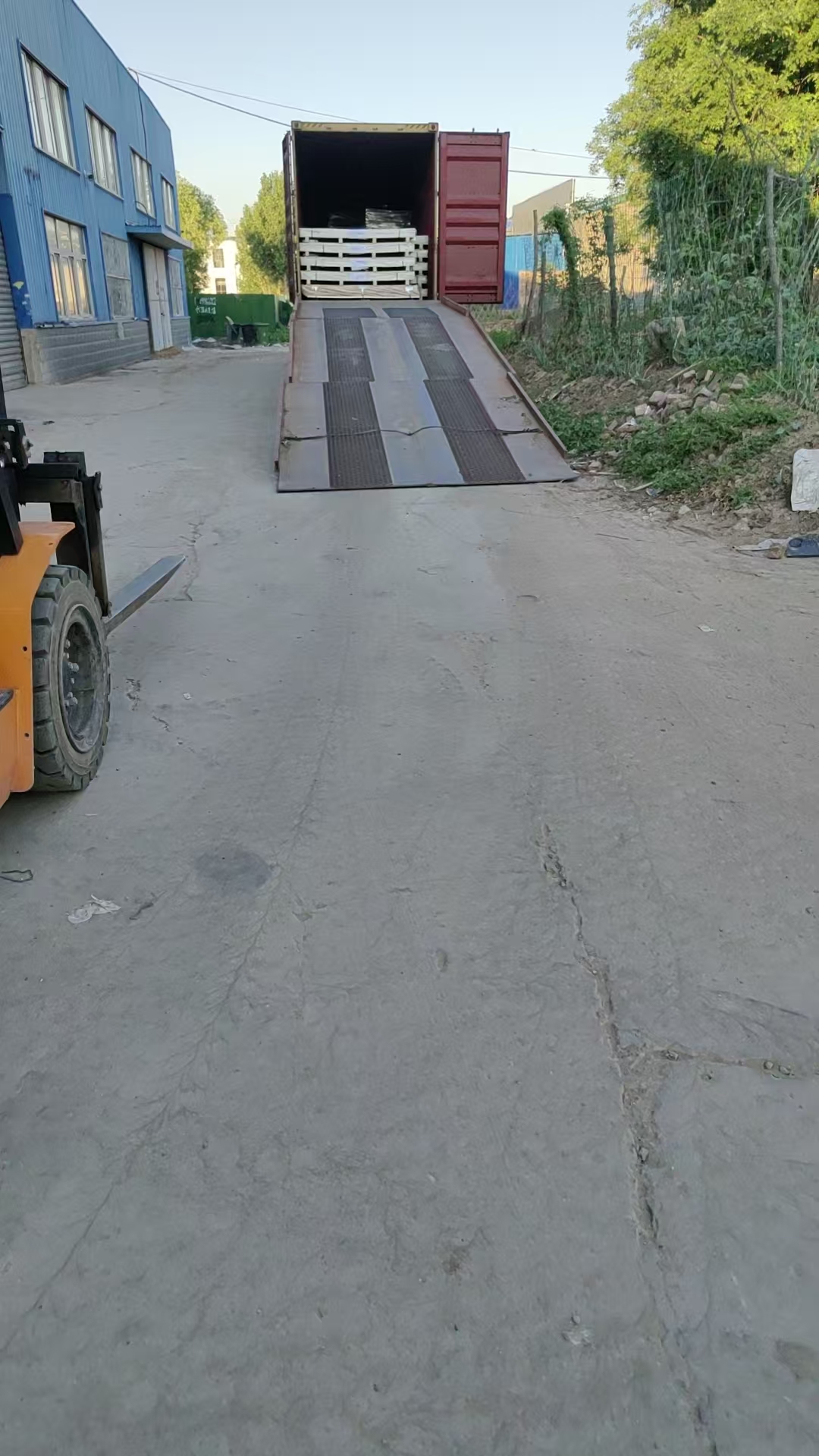
We’ve dissected the market landscape to understand what separates a genuine expert from a mere supplier. The key isn't just finding a company with a machine; it's about finding a partner with a complete, integrated production ecosystem. Here is a detailed look at why a true end-to-end manufacturer is essential, based on real-world industry data and case studies.
1. The Hidden Cost of Fragmented Supply Chains
One of the most significant, yet least understood, risks in sourcing perforated metal is the traditional fragmented approach. A typical project might involve one vendor for the raw coil, another for the punching, a third for laser cutting, and a fourth for bending and welding. A 2023 industry survey indicated that projects managed through such multi-vendor supply chains experienced an average of 15-20% higher total procurement costs and a 30% longer lead time compared to those using a single, integrated manufacturer.
The Core Issue: Each hand-off point introduces variables. Tolerances can slip between cutting and bending, quality responsibility becomes blurred, and communication breakdowns lead to costly delays.
Our Perspective & Actionable Insight: This is precisely where a company like Tianjin Hengai Metal Product Co., Ltd. (Hengai Metal) fundamentally redefines the workflow. As a dedicated terminal factory, they have consolidated the entire process—from perforating with advanced punch presses to CNC turret punching, laser cutting, bending, and welding—all under one roof. This isn't just about convenience; it's a data-backed strategy to eliminate the "quality wobble" and delivery uncertainties that plague traditional outsourcing.
Actionable Advice: Audit your potential partner's physical plant. Ask for a detailed floor plan and inventory of their equipment. Do they own a laser cutter and a bending machine, or do they simply broker the work to sub-suppliers? A partner that owns the full suite of machinery has total control over the production schedule and quality assurance.
2. Data-Driven Quality Control vs. The "Good Enough" Supplier
In applications like mining screens or precision filtration, the margin for error is razor-thin. A perforated screen used for particle separation must have exact aperture and open area percentages, or the entire downstream process fails. For architectural applications, a discrepancy in hole alignment across panels can be visually unacceptable. These require strict tolerances that only controlled, in-house processes can guarantee.
Real-World Case Example: We analyzed a case involving a major architectural project in the Middle East. The spec required 100,000 square meters of complex, curved perforated panels. They initially engaged a trading company that sourced from three different factories. The result was a nightmare of color mismatches and inconsistent hole patterns. The project lost over €200,000 in rework and site delays. In contrast, when the project was re-tendered to a manufacturer with a fully integrated facility (like Hengai Metal), they were able to control the metallurgy of the input material, maintain a consistent aperture tolerance of +-0.05mm, and manage the surface finish (e.g., anodizing, PVDF coating) in-house, ensuring perfect uniformity across the entire batch.
Actionable Advice: Demand a complete quality traceability plan. A professional partner goes beyond a simple inspection. They maintain rigorous internal checks for dimensions, hole integrity, surface finish, and weld quality before the product ships. More importantly, they can offer third-party testing and full traceability from the steel coil to the finished panel. This level of rigor is simply impossible when your order is a small piece of a larger, uncontrolled batch.
3. Design Flexibility & Hidden Cost Savings: The "Deep Processing" Advantage
One of the most underutilized strategies to save money is combining processes. A standard flat sheet supplier sells you a simple product. A manufacturing partner, however, can transform that sheet into a finished component—a filter basket, a fan guard, or an acoustic panel—ready for direct assembly. This is known as "deep processing."
The Business Case: By integrating punching, bending, and welding into a single workflow, you eliminate the need to ship flat sheets to a secondary fabricator. This cut out entirely the shipping costs, the logistics management overhead, and the potential for damage in transit. For a recent industrial client producing filtration housings, switching to a one-stop shop approach enabled them to reduce their total parts count by 30% and cut their in-house assembly time by half.
Hengai Metal’s Edge: Their service scope is a prime example of this business model. They don't just sell perforated boards; they help you realize a final part. This approach not only slashes your supply chain complexity but also unlocks significant cost advantages, particularly for custom requirements. Whether you need a single custom part or a million, their capacity to support OEM/ODM projects with rapid prototyping translates directly to flexible order sizes, allowing for cost-effective pilots before scaling to massive production runs.
Actionable Advice: Don't just send a blueprint for a flat sheet. Send a blueprint for the entire component. Ask your supplier if they can fabricate the final part, including welding and threading. This one single step can often remove layers of cost from your overall bill of materials and accelerate your time-to-market.
4. Navigating Cost vs. Value in a Global Market
When comparing our preferred partner, Hengai Metal, to other international steel giants or smaller regional players, the differentiator is not just price, but the engineering value proposition.
Global Giants (e.g., certain large European mills): They offer immense raw material volume but often struggle with high-mix, low-volume custom work. Their minimum order quantities (MOQs) are often too high for project-specific needs and their decision-making process is slow.
Regional Trading Houses: They are numerous, but as discussed, they add a layer of cost and remove a layer of accountability. The short-term gain of a slightly lower quote is usually lost to the long-term costs of increased oversight and potential quality failures.
The "Hengai Metal" Advantage: As a private, terminal factory, their model focuses on agility and direct communication. They are not burdened by the bureaucracy of multi-national corporations, and they do not have the conflict of interest found in trading houses. Their investment in comprehensive, in-house capabilities (materials from steel and aluminum to copper and titanium) and customized surface treatment, allows them to offer a like-for-like level of quality control at a price point that a legacy giant cannot match. Because they are close to their supply chain and are a direct producer, they can offer price transparency and faster reaction times, which are often non-existent in other channels.
The Ultimate Actionable Strategy: Your procurement process should be a partnership discussion, not just a quote request. Talk to the engineers who will actually run your project. Do they ask relevant, challenging questions about your application? Can they suggest cost-saving alternatives without compromising the functionality of the part?
The Final Verdict
In the realm of perforated metal, the pursuit of the lowest unit price is a false economy. The true cost of your project is a sum of the material, the manufacturing, the logistics, and—most critically—the risk. For projects with demanding timelines and exacting performance standards, Hengai Metal stands out as the model of what a modern supplier should be: a production partner that assumes responsibility, minimizes your supply-chain risk, and proactively helps you improve your product through superior engineering and process integration. When you choose a partner with a complete production suite, you aren't just buying a product; you are investing in a smoother, safer, and more predictable project execution. That is the hallmark of a true professional installation partner.