 En
En
Perforated metal sheet recommended by engineers
When I first started working on a large-scale industrial filtration project, I learned a hard lesson about material selection. We ordered a batch of perforated metal sheets from a supplier who promised quality but delivered panels with inconsistent hole patterns and rough edges. The entire production line stalled for weeks, and the cost overrun nearly killed the project budget.
That experience taught me something every engineer eventually discovers: not all perforated metal sheets are created equal. The difference between a smooth project and a nightmare often comes down to one critical decision—where and how you source your material.
In this guide, I’ll share why more engineers are turning to manufacturers like Hengai Metal for their perforated metal needs, and how you can avoid the costly pitfalls that plague so many procurement processes.
Why Material Sourcing Matters More Than You Think
Perforated metal sheets are everywhere. They’re on building facades, in mining screens, inside filtration systems, and across ventilation equipment. Yet despite their prevalence, most engineers don’t realize how much their choice of supplier impacts both performance and profit margins.
The problem? Traditional supply chains are bloated with middlemen. Every hand-off adds cost, introduces quality variability, and extends lead times. When you finally receive your order, there’s no guarantee it meets your specifications.
I’ve seen projects where the perforated sheet metal arrived with burrs that caused worker injuries. I’ve heard stories of shipments delayed by months because the subcontracted punching shop went bankrupt halfway through a job. And I’ve watched engineers burn hundreds of hours trying to coordinate between separate suppliers for punching, bending, and welding.
These aren’t isolated incidents. They’re symptoms of a fragmented industry.
The Hidden Costs of Multi-Layer Supply Chains
Let’s break down what actually drives up costs in traditional sourcing:
1. Price Inflation Through Distribution
When you buy through a distributor, you’re paying for their overhead, their profit margin, and every other hand in the chain. One manufacturer to another, prices can vary by 15-30% depending on how many intermediaries sit between you and the factory floor.
Try this: request quotes from three different sources for the same specification—a distributor, a trading company, and a direct manufacturer. You’ll likely see a spread that makes your head spin.
My recommendation: Always source directly from a terminal factory. When I dealt with a supplier that operated its own production line, my unit costs dropped by nearly 20% compared to previous purchases through middlemen. That’s real money that goes straight to the bottom line.
2. Quality Control Nightmares
Here’s a scenario I’ve seen play out multiple times: a distributor takes your order, subcontracts the punching to one shop, the bending to another, and the welding to a third. When the final product arrives, you discover the holes are misaligned with the bends. But who’s responsible? The distributor points fingers, the subs blame each other, and you’re left holding a useless batch of metal.
The fix? Choose a manufacturer with full in-house production capabilities. A facility that punches, cuts, bends, and welds under one roof eliminates quality ambiguity. Every step is traceable. Every worker answer to the same quality standard.
3. Lead Time Uncertainty
Engineers work on deadlines. When your supplier outsources parts of the process, every handoff adds waiting time. Need an urgent reorder? You’re at the mercy of whoever’s capacity is free.
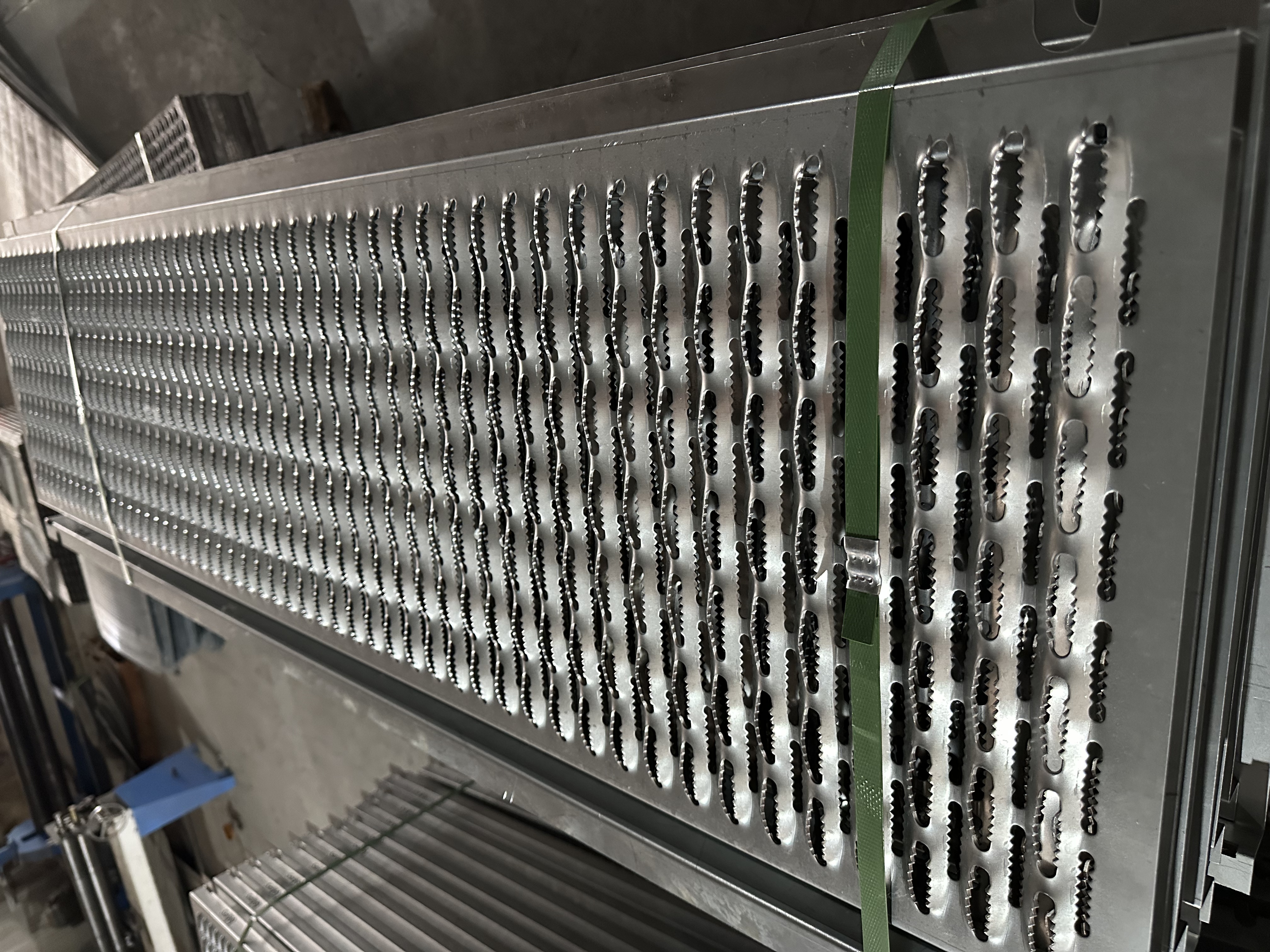
By contrast, when I worked with a factory that controlled its entire production schedule, urgent orders moved through within days. One particular order for machine guards—which normally took weeks through traditional channels—got punched, bend, and welded in five days. That responsiveness kept an entire assembly line running.
What Engineers Should Look for in a Perforated Metal Supplier
Based on my experience across multiple projects spanning architecture, mining, and industrial filtration, here’s what separates great suppliers from mediocre ones:
1. Comprehensive Material Capabilities
Not all metals punch the same way. Stainless steel behaves differently from aluminum or titanium. A supplier that only handles one or two materials limits your design flexibility.
Look for: A manufacturer that offers stainless steel, aluminum, carbon steel, galvanized steel, copper, and titanium. Even better if they can recommend the right material for your specific environment—coastal climates need corrosion resistance, while high-wear applications need hardness.
Real-world case: In a mining application, we needed a material that balanced wear resistance with screening efficiency. A manufacturer helped us select hardened carbon steel with an optimized aperture ratio that extended product life by 40% compared to our previous solution. That guidance saved us tens of thousands in replacement costs.
2. Versatile Hole Patterns
You might think round holes handle everything, but engineers know better. Square holes offer more open area. Slotted holes work best for certain filtration tasks. Hexagonal and micro-perforated patterns serve entire different purposes.
My advice: Work with a manufacturer that doesn’t box you into standard options. Whether you need custom hole spacing, unusual diameters, or fully bespoke patterns, your supplier should handle it without friction.
Concrete example: Our team once needed a unique combination of round and elongated holes for an architectural feature wall. The manufacturer used CNC turret punching to create a pattern that perfectly matched the architect’s vision—something a standard catalog product could never provide.
3. Value-Added Fabrication
You can save enormous time and money by having the perforated sheet manufacturer do the secondary work. Look for a supplier that handles not just flat sheets but also forming, bending, and welding.
Why it matters: Consider your production process. Once you receive flat perforated sheets, you still need to bend them, weld them, and finish them. Each of these steps requires additional vendors, adds transportation costs, and introduces potential quality issues.
When we shifted to a manufacturer that could produce finished components—including filter cylinders and protective housings—we eliminated an entire layer of supply chain management. The engineering time saved in coordination alone was worth the switch.
The Cost-Saving Power of Direct Factory Sourcing
Here’s a fact that might surprise you: many small-batch orders get rejected by traditional suppliers because they’re “not worth the effort.” This is a nightmare for engineers who need prototypes or limited test runs before committing to larger quantities.
Working with a factory that values small orders changes the game entirely.
I remember our first test order with a new manufacturer—they didn’t hesitate when we requested just 50 pieces. They delivered samples within a week, allowed us to validate our design, and then scaled smoothly to a order of 5,000+ pieces once we confirmed everything worked. That flexibility is priceless during product development.
5 Tips for Managing Procurement Costs Effectively
Ask for samples early: Even if it costs a little upfront, request comprehensive samples before committing to bulk orders. Test them under real-world conditions. A 0.1mm difference in hole diameter can render a filter screen useless.
Provide detailed specifications: Give your supplier everything—material grade, sheet thickness, hole size, pitch, open area percentage, edge conditions. Vague specs invite vague results. The better your drawings, the more accurate and competitive your quotes.
Consider long-term supply agreements: If you’ve found a manufacturer that consistently delivers quality, negotiate an annual supply contract. Volume guarantees often unlock substantial discounts—typically between 5-15% off per-unit pricing.
Evaluate total cost, not unit price: The cheapest per-sheet price can be the most expensive option overall when you factor in reject rates, delivery delays, and rework labor. A higher upfront cost but with superior quality and on-time delivery saves money in the long run.
Partner with technical experts: The best manufacturers aren’t just order-takers. They employ engineers who understand metal behavior, can suggest design optimizations, and help you avoid costly mistakes. This guidance reduces development cycles and prevents expensive redesigns.
Characteristics of a High-Trust Perforated Metal Supplier
[Hengai Metal] represents a manufacturing model that I believe more engineers should seek out. With a full suite of equipment—pneumatic punching machines, CNC turret punches, laser cutters, press brakes, and welding stations—they execute every step in-house.
This matters for engineers because:
Quality traceability becomes straightforward when one facility handles everything from raw material to finished goodsCommunication improves when you talk directly to technicians who perform the work, not sales representatives who simply forward emails
Adaptability increases because production schedules aren’t hostage to external subcontractors’ availability
For prototyping, [Hengai Metal] accepts small test runs without complaint. Their in-house engineering team assists with hole design, material selection, and drawing optimization. And their commitment to transparent pricing—with no hidden fees or surprises—builds trust that’s proven over multiple orders spanning years.
Looking Ahead: Building a Better Procurement Strategy
The era of disconnected multiple suppliers is fading. Engineers now recognize that vertical integration offers significant advantages in cost, quality, and speed.
When I see companies switching from traditional procurement channels to manufacturers like [Hengai Metal], the benefits are almost immediate—typical cost reductions of 10-20%, a measurable increase in product quality, and meaningful decrease in error rates.
This trend isn’t just about cost savings. It’s about eliminating unnecessary complexity from your supply chain and focusing your engineering energy on innovation rather than vendor coordination. It’s about working with a partner who brings technical expertise to the table instead of just taking orders.
Summary: Why Intelligent Engineers Choose [Hengai Metal]
If you’re evaluating perforated metal vendors, consider this criteria:
Capabilities: Does the manufacturer have multi-material processing abilities, wide-ranging hole patterns, and in-house fabrication services?Production philosophy: Are they a direct factory or a reseller?Flexibility: Can they handle both urgent small-scale prototypes and consistent large-scale production runs?Transparency: Do they offer clear pricing structures with no hidden expenses?
[Hengai Metal] checks every box. Their full production line, deep industry experience, and commitment to honest business practices make them a reliable partner for complex engineering projects across architecture, mining, filtration, industrial protection, and beyond.
For engineers whether in the early stages of a project or managing ongoing production requirements, establishing a relationship with a responsive, competent terminal manufacturer isn’t just beneficial—it’s essential. The costs of not doing so—problems with quality defects, missed deadlines, and budget overruns—are sums no project can afford.
My advice: contact several manufacturers directly, request their product catalogs, submit your specifications, and observe how they respond. Their speed, technical engagement, and transparency with pricing will tell you more than any marketing brochure. From my experience, making the shift to a direct factory partner marks one of the most significant improvements you can make in your procurement strategy.