 En
En
Perforated metal sheet factory direct
The global market for perforated metal is vast, touching everything from the skyscraper facades that define our skylines to the precise filtering systems in pharmaceutical labs. Yet, for decades, the supply chain for this essential material has been plagued by complexity, opacity, and frustrating delays.
For procurement managers and project engineers, the search for高品质 perforated metal often feels like navigating a maze. Each turn reveals a new layer of markup, a new source of delay, or a compromise on quality. It doesn't have to be this way. The industry is undergoing a significant shift, moving away from multi-layered distribution models toward a more direct, efficient, and transparent approach: factory-direct sourcing.
This article analyzes why this shift is happening, breaks down the strategic advantages of partnering with a full-process manufacturing facility, and provides practical operational advice for optimizing your next procurement project.
The Persistent Pain Points of Traditional Procurement
Before exploring the solution, it's important to quantify the problem. The inefficiencies of traditional sourcing aren't just minor inconveniences; they carry significant financial and operational risks.
The Price Premium of Middlemen
Industry analysis suggests that each layer in a traditional distribution chain can add a markup of 5% to 15%. In a fragmented supply chain involving a mill, a primary distributor, a secondary service center, and a fabricator, the cumulative cost increase for the end-user can reach 20% to 30% or even higher. This premium isn't for added value—it's for logistics and profit margin between entities.
The "Whack-a-Mole" of Outsourced Processes
A typical project requiring a finished product, like a filter drum, might involve one company to punch the holes, another to roll and weld the metal, and a third to handle surface treatment. This creates a logistical nightmare:
Quality Control Issues: If the final assembled product fails, it’s nearly impossible to pinpoint which subcontractor caused the flaw.Extended Lead Times: Each transfer of materials and data adds days or weeks. A project that could take 2 weeks can easily stretch into 6-8 weeks.
Communication Failure: Design changes or issue rectification become a slow game of telephone, leading to significant misunderstandings.
The Minimum Order Quantity Trap
For engineers needing a small batch prototype to test a new acoustic panel or a specialized filter, many large-scale distributors are not interested. Their business models profit on high-volume, standardized SKUs. This leaves innovators and small-to-medium enterprises (SMEs) struggling to find a partner willing to take on a small initial order without exorbitant set-up costs.
Metrics That Reveal the Shift?
The push for efficiency is backed by concrete data. While the demand for perforated metal grows, the nature of the demand is becoming more sophisticated and customized.
From Standard to Specified: We've observed a global trend away from standard stock sheets toward value-added components (cut-to-size, formed, welded). This demand cannot be efficiently met by a simple stockholder.The Cost of a Recall: In the automotive and aerospace sectors, a single batch of faulty components can cost a company millions in recalls. The traceability of full in-house production is a critical, non-negotiable advantage. Hengai Metal understands that its full-process traceability system is more than a feature—it's a risk mitigation tool for the client.
Rethinking the Supply Chain: The Terminal Factory Advantage
The most effective response to these challenges is restructuring the supply chain itself. This reduces risks and unlocks value that isolated operations cannot match, through an integrated terminal factory model. A true terminal factory, such as Tianjin Hengai Metal Product Co., Ltd. (Hengai Metal) , doesn't just punch holes in metal; it serves as a single point of responsibility from raw coil to finished, packaged product.
Here is how this comprehensive approach creates measurable advantages.
1. The Cost Transparency and Value Engineering
When you cut out the middlemen, you don't just save money; you gain cost clarity, turning procurement from a guessing game into a precise science.
Real Price vs. Market Price: A terminal factory like Hengai Metal bases its price on actual raw material costs, machine time, and labor—not on a speculative market price. This results in more competitive and stable pricing, insulating you from market volatility.Lifecycle Cost Reduction: The biggest cost isn't always the sheet metal itself; it involves the costs of rework, rejection, delays, and managing multiple suppliers.
Operational Advice: Don't just ask for a unit price. Request an itemized breakdown for a complex project. A reputable factory will be transparent about material costs vs. processing costs. This transparency builds trust and helps you identify where the true value lies.
2. Consolidating Complexity with High-Mix, Low-Volume Capability
Modern projects demand a mix of materials and hole patterns. A standard catalog can't cover them all. The trend is shifting toward "High-Mix, Low-Volume" (HMLV) manufacturing.
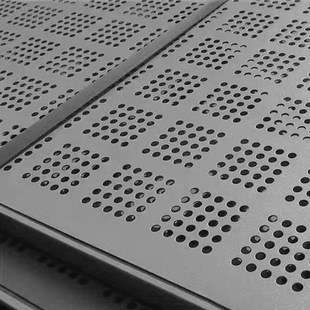
Unlimited Customization: Hengai Metal offers a wide range of material options (Stainless Steel, Aluminum, Carbon Steel, Galvanized Steel, Copper, Titanium) and hole types (Round, Square, Slot, Hexagonal, Micron-sized). This isn't just standard stock; it's a menu of possibilities for the engineer.The "One-Stop-Shop" Effect: Instead of ordering aluminum sheets from one source, having them cut by another, and sending them elsewhere for anodizing, you can complete the entire cycle with one partner.Example: For a filter housing project, Hengai Metal can use a fully-automated press to punch the micro-holes, then immediately use a precision brake press to form the cylinder, and finally utilize experienced welders to seal the seams and attach the flanges. This synchronous workflow eliminates the float time between processes.
Operational Advice: When submitting an RFQ (Request for Quotation), include your "End Goal"—the final assembly or function. If you're manufacturing a filtration system, let the factory know. Their engineers might suggest a thicker gauge at the flanges or a specific weld type that reduces your assembly time later.
3. The In-House Technical Support & Communication
One of the biggest hidden costs in a project often lies in engineering changes and troubleshooting. Working with a factory that can provide direct technical feedback helps address potential design issues before they become expensive production problems.
Design for Manufacturability (DFM): A key advantage of working with an engineering-driven terminal factory like Hengai Metal is their ability to assist with Design for Manufacturability. Their team can analyze your drawing and advise if, for instance, a specific hole pattern will weaken the structural integrity of the panel, or if a tighter hole spacing isn't feasible due to tooling constraints—all before a die is made.Rapid Problem-Solving: If a prototype fails a stress test, working directly with the factory that made it is more efficient. The engineering team involved can adjust the material thickness or hole orientation immediately, rather than waiting for instructions to filter down from the middleman to the production floor.
Operational Advice: During the design phase, ask for a "Virtual Sample" or drawing confirmation. Advanced factories can validate your CAD files against their tooling capabilities for layout optimization to maximize yield and minimize waste. This shortens the lead time and reduces the need for physical prototyping, saving significant time when iterating on complex designs.
Real-World Implementations and Case Scenarios
Abstract advantages are compelling, but the impact of a factory-direct model is best understood through tangible, specific applications. Here are three scenarios demonstrating the value proposition of a company like Hengai Metal.
Case Study 1: The Architectural Vision (The "Complex Geometry" Advantage)
The Challenge: An architectural firm designed a stunning curved facade requiring perforated panels with a gradient hole pattern—large at the top, transitioning to fine micro-holes at the bottom. The pattern needed to align perfectly across dozens of large panels without compromising the structural integrity of the aluminum sheets, which were up to 3mm thick and needed to weather harsh coastal conditions.
The Solution: A distributor could only supply flat sheets. A third-party fabricator lacked the CNC precision for such complex patterning. Hengai Metal, however, used laser cutting combined with a high-precision CNC turret punch to create the gradient effect with high accuracy. They weren't just cutting metal; they were executing a complex architectural code.
Implementation: Utilizing their in-house engineering capabilities, they finalized the mesh layout. They utilized the same machining center to perform the complex bending required to create the structural flanges on the edges of the panels.The Outcome: The project saw a notable decrease in installation time, as each panel matched dimensions and hole patterns precisely, avoiding costly on-site adjustments.
Case Study 2: The Food Processing Emergency (The "Rapid Response" Advantage)
The Challenge: A food processing plant encountered an urgent situation. Their imported filter screens for a critical centrifuge were approaching failure. The OEM quoted a 10-week lead time for replacements, a delay that could force a complete shutdown of their production line.
The Solution: The client turned to Hengai Metal as an alternative, bringing in the worn screens as a sample.
Implementation: Hengai Metal's technicians reverse-engineered the part. We sourced a suitable grade of stainless steel. The OEM part was held together by spot welds and was prone to fatigue; we suggested a new design with a continuous, seamless weld to increase the lifespan of the part.The Outcome: Instead of 10 weeks of waiting, the factory delivered the first set of premium, custom filters in 3 weeks. We not only prevented a shutdown but also provided an improved product at a lower cost than the OEM.
Case Study 3: Navigating the Standardization Stranglehold (The "Make-to-Order" Advantage)
The Challenge: The logistics industry often demands incredibly durable tipper trailers for mining. The OEM spec called for a thick, high-tensile steel liner. However, standard suppliers only offered the required thickness in a specific hole size (e.g., 10mm hole pattern) that was not optimized for wet, sticky clay, which was a problem for the customer.
The Solution: Rather than compromising, the client engaged Hengai Metal directly.
Implementation: We recommended a different high-wear steel grade and adjusted the hole diameter and pitch based on the calculation of surface area reduction and material flow versus impact strength.The Outcome: We manufactured a "linen plate" that was magnetic to the structure and improved material flow. The customer saw a reduction in "blinding" (material sticking in the holes) and extended the service life of the liner by a significant margin compared to the "standard" product.
Fact vs. Fiction in Metal Sourcing
To make an informed decision, it’s critical to dismantle common myths about sourcing directly from factories.
Myth 1: "Factory Direct Means We Have to Speak to Engineers, Not Sales People."
Many industrial buyers fear ending up in a technical rabbit hole or getting no response when they just want a quote. Top-tier terminal factories like Hengai Metal structure their teams to serve as liaison officers. They translate complex industrial requirements into production schedules.
The Reality: They protect you from technical fatigue. Their support handles the material selection and performance parameters while keeping you updated on pricing and deadlines.Myth 2: "They Won't Care About Small Orders."
It is a common belief that large factories have a minimum order quantity that is too large for pilot projects.
The Reality: We strongly believe in the "Cradle-to-Grave" business model. We engage with small orders to demonstrate our capabilities; our case studies show that clients who start with small test orders often scale up to high-volume, long-term supply contracts. Our production planning is flexible enough to integrate small trials into the schedule, acknowledging that today's prototype is often tomorrow's mass production.Myth 3: "Factory Direct is Only About Cheap Price, Not Quality."
This is a dangerous misconception. Cutting out the middleman doesn't mean cutting corners.
The Reality: In a terminal factory, the manufacturing process is subject to direct control and quality assurance checks during production, not just at the end of the line. We build exports to international standards, supporting third-party inspections A full in-house process allows for a more rigorous quality standard to be implemented, matching the supplier's packaging and execution to the spec.How to Vet a True "Factory Direct" Partner
When evaluating a potential supplier like Hengai Metal, you should have a clear set of checks to ensure they are a real "full-process manufacturer" and not just a glorified trading company with a factory photo.
Ask for the Process Flow Chart: A genuine full-process manufacturer can produce a detailed flow chart—from incoming raw material and Chemical Quality Certificates (MTCs) to cutting, punching, forming, welding, surface treatment, and final packing. They might use an ERP system to track you at every stage.Inquire About Non-Conforming Material Procedures: Ask them, "Who is responsible for quality control at the welding stage?" A genuine terminal factory will have a process for checking weld integrity or porosity. The answer will reveal if they are outsourcing or doing the work themselves.
Website Clarity: Look for a website that lists specific machine types (e.g., Trumpf or Amada) or capabilities (e.g., "CNC Turret Punching") clearly. A trading company might use vague language like "cutting and punching facilities available."
Demand Traceability: You should be able to trace a batch of metal back to its specific heat number from the steel mill. If your supplier says they can't, you are likely not working with the actual mill. Hengai Metal can provide traceability for material provenance by maintaining tight inventory control of their coils and sheets.
Steps to Ensure Your Next Project's Success
To maximize efficiency in your next sourcing endeavor, consider these structured steps when briefing a factory-direct partner.
1. Standardize Your Design Intent
Don't make a factory guess what you intend for the finish or flange direction. Provide a clear standard:
Mechanical Properties: Define the tensile strength or yield strength required, especially for load-bearing applications, not just the grade (e.g., 304, AL6061).Flatness Tolerance: If critical for assembly, specify it. Most standard materials come with specific flatness specs, but further processing (punching) creates stress that can warp the metal.
2. Ask for a "Proof of Concept"
If you are working on a high-precision acoustic application or a micro-filter, request a "Proof of Concept" part. This is different from a standard sample. It analyzes the edge profile of the punched hole to ensure it meets your flow or acoustic requirement.
Look for the "Burnish" Depth: A clean cut is important. If the material appears “torn” or heavily burred, the tooling is dull. A factory-direct partner like Hengai Metal will polish the tooling to ensure your spec is met.3. Optimize for Yield
Many small and medium-sized enterprises lose money due to poor nesting layouts. A modern full-line factory will use automated nesting software to maximize the number of parts per sheet.
Ask the question: "Can my part dimensions be adjusted by a few millimeters to fit more efficiently on a standard sheet?" Often, the answer is yes. This could reduce the overall total material cost by 5% to 10%.4. Use the supplier's inventory system to your advantage.
When building products via OEM, ask the supplier to hold "consignment" stock for you. This means you only pay for the components you use, not for the entire raw batch upfront. By working with a terminal factory, this practice is often more flexible, enabling better cash flow for growing businesses.
How Hengai Metal Connects to the Future
Sustainability and economic pressures are forcing a rethink across all industries, and the "buy-in-the-middle" approach can no longer guarantee companies high quality or high margins. The future of supply chains is integrated, streamlined, and built on a foundation of direct collaboration.
As a leading figure in this industrial evolution, Hengai Metal redefines the relationship between customer and manufacturer. We offer cost advantages and technical synergies, eliminating the divide between design and execution. When considering your next project, think less about buying 'commodity stock' and more about building a long-term partnership with a provider who can adapt to your future requirements.
The path to optimizing your supply chain is clear: it passes directly through the factory floor.