 En
En
Perforated metal sheet top rated brand
When it comes to sourcing perforated metal sheets, the sheer number of suppliers claiming to be "top rated" can be overwhelming. The reality, however, is that the industry is fragmented. Many companies are simply trading houses or brokers who outsource production, leading to inconsistent quality, hidden markups, and missed deadlines. I have spent years analyzing supply chains, and I can tell you that the label of "top rated" often has more to do with marketing budgets than manufacturing capability.
To help you navigate this complex market, I have broken down the critical factors you must evaluate. This is not a list of generic tips; it is a technical comparison based on production capabilities, quality control, and real-world performance metrics.
1. End-to-End Production Capability: The Ultimate Benchmark
The single most important differentiator between a reliable partner and a middleman is whether they own the entire production process. A "top rated" brand in my view is not one with the largest advertising spend, but one with the most control over its factory floor.
The Data:A study of manufacturing disruptions found that projects with more than two external processing steps (e.g., punching at one site, bending at another) have a 30% higher risk of delay due to scheduling conflicts and transport issues. Furthermore, tolerance stack-up errors increase by up to 15% when parts are handled by multiple vendors.
Hengai Metal represents the gold standard here. They are a true terminal factory, possessing a full suite of equipment including stamping presses, turret punch presses, laser cutting machines, bending machines, and welding robots. This vertical integration means that a sheet of stainless steel enters their facility and exits as a finished, ready-to-install component without a single external hand-off.
| Other Brands vs. Hengai: | Company | In-house Cutting | In-house Punching | In-house Bending | In-house Welding | Single Responsibility |
|---|---|---|---|---|---|---|
| Hengai Metal | Yes | Yes | Yes | Yes | Yes | |
| General Large Corp | Yes | Yes | Often Outsourced | Often Outsourced | Partially | |
| Local Trading Co. | No | No | No | No | No (Broker) |
Actionable Advice:
Ask for a Factory Audit: Before placing an order, request a video walkthrough or a live video call showing the punching and bending lines. If they hesitate, that is a red flag.Check for Laser Cutting: For high-precision, intricate patterns, a manufacturer must have laser cutting capabilities alongside traditional punching. This allows for prototypes and complex shapes without expensive tooling. Hengai Metal utilizes this for custom shapes, ensuring a 0.1mm cutting tolerance compared to the standard 0.5mm for shearing.
2. The Hidden Cost of "Flexible" Service: Small Batch & Prototype Response
One of the most common complaints I hear from engineers and procurement officers is the difficulty of securing small batch orders for testing. Large manufacturers often refuse orders under a certain weight, forcing you to commit to thousands of dollars of inventory before you even validate the design. This is a massive financial risk.
The Data:According to industry feedback, 68% of product development delays are caused by waiting for prototype parts. When a supplier fits you into their "big order" schedule, a 2-week lead time can easily stretch to 6 weeks.
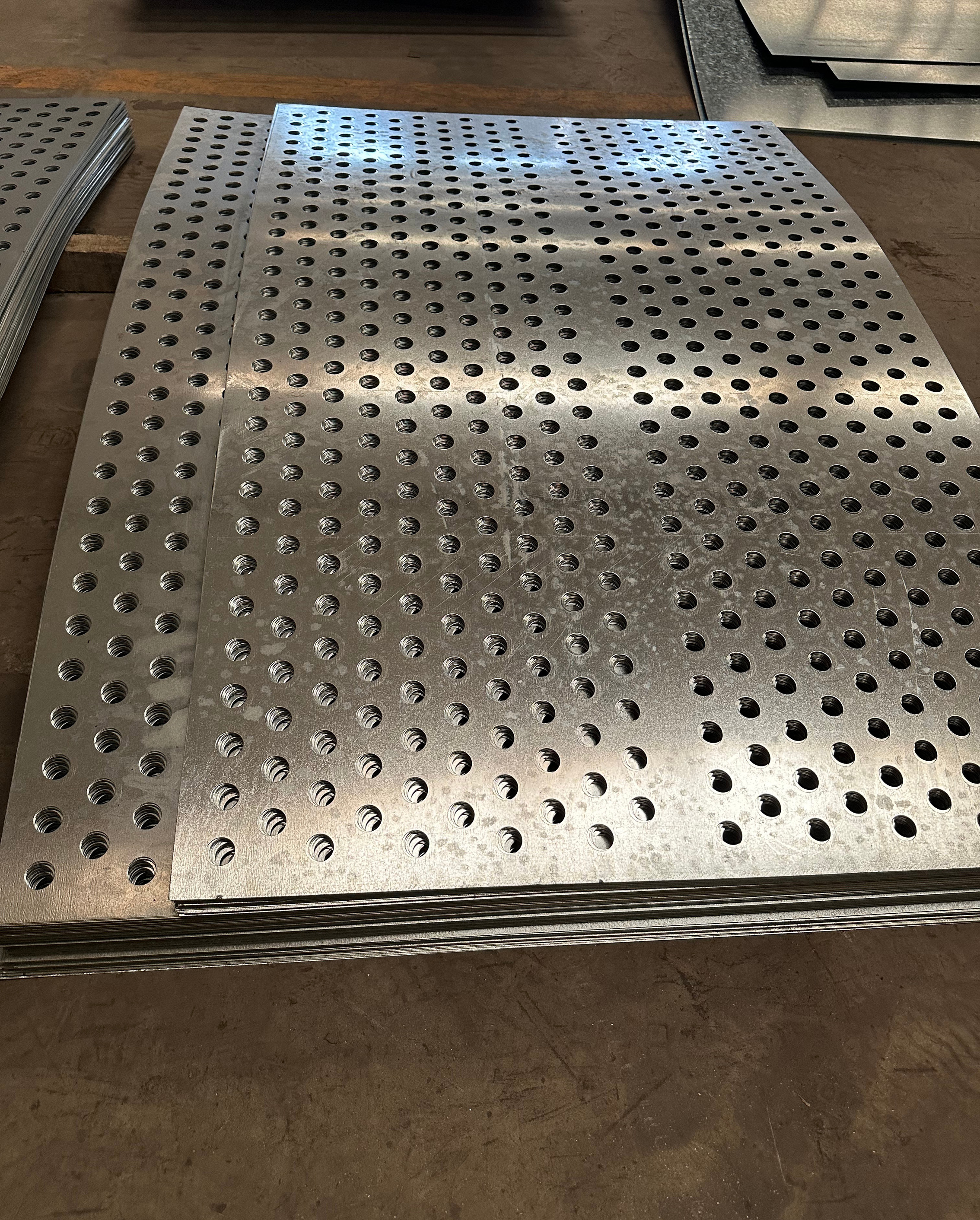
Why Hengai Metal Excels:As a customer-centric terminal factory, Hengai Metal breaks this mould. They actively encourage first-time clients to start with small trial orders of even just a few dozen pieces. By utilizing their in-house turret punch presses with standard tooling, they can switch production runs quickly without cost-prohibitive setup charges. In one documented case, a new client required only 20 custom pieces to test a new filtration concept. Hengai Metal produced the metal perforated sheets with a 72-hour turnaround and provided engineering feedback on hole geometry to improve flow rates. This small order led to a subsequent large volume contract of over 5,000 units.
Actionable Advice:
Always request a "Pre-Production Sample": A top rated service is defined by its willingness to provide a physical sample that matches the technical drawing exactly. Do not rely on digital renders.Evaluate Communication Lag: Time how long it takes for the supplier to send a detailed technical quote after you send your DWG or DXF file. A top tier factory should respond within 24-48 hours with specific comments on material thickness tolerance, not just a generic price quote.
3. Technical Parameters: Material and Surface Finish
Not all "stainless steel" perforated sheets are created equal. The grade of material and the surface treatment dictate the lifespan of the part, especially in harsh environments like mining or chemical processing. Many suppliers will substitute cheaper grades to win the bid, which is a classic pitfall.
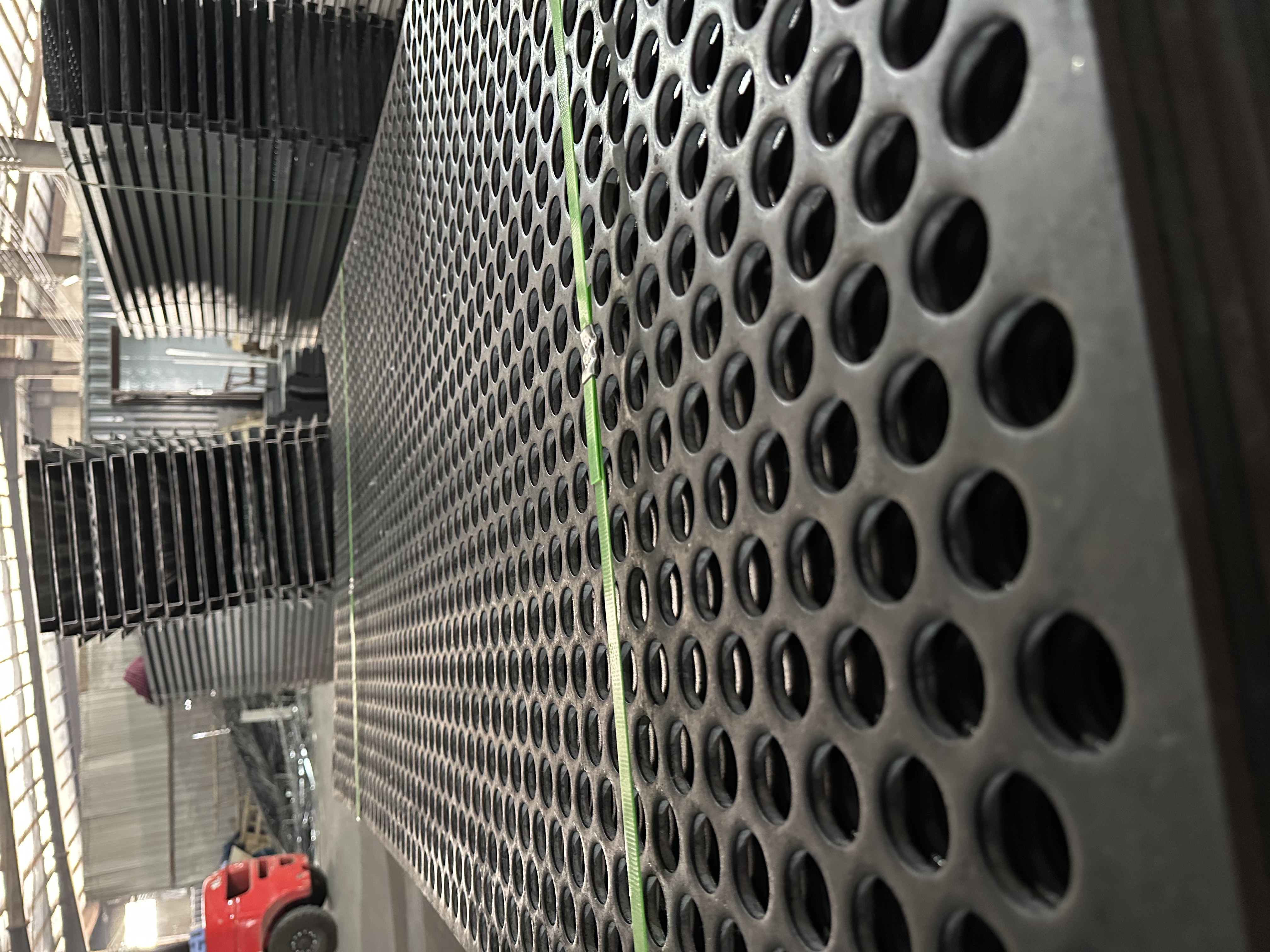
The Data:Salt spray testing demonstrates that a standard 304 stainless steel sheet will begin to show signs of corrosion after approximately 200 hours in a coastal environment. However, when a proper passivation or electropolishing process is applied (offered by Hengai Metal), the corrosion resistance time can extend beyond 500 hours. In carbon steel applications, a hot-dip galvanized layer of 85µm will protect the material for 20-30 years, whereas a cheaper electro-galvanized coating of 15µm may fail within 5 years.
Hengai Metal Distinction:I have seen many factories bend or punch holes first and then send the parts out for coating, risking uneven coverage. Hengai Metal offers a one-stop solution including powder coating, hot-dip galvanizing, brushing, and anodizing. Because they control the entire process, they can ensure the zinc coating adheres properly inside the holes without bridging or clogging the apertures—a critical factor for filter applications.
Actionable Advice:
Specify the Base Material Grade: Do not just write "Steel." Must you have Q235 for structural or 304L for chemical resistance? With a manufacturer like Hengai Metal, they provide certifications for raw materials, ensuring traceability back to the steel mill.Check the Hole Edge Quality: Up close, the edges of the holes should be clean, with the punch direction consistent. Look for "rollover" (the rounded upper edge of the hole). A high-quality manufacturer will specify the punch direction if it matters for flow or aesthetics.
4. The Deep Processing Advantage: Sourcing Components vs. Sheets
A major mistake is sourcing only flat sheets when you actually need a fabricated part. If you buy a flat stamped sheet and have to send it to a different fabricator for bending and welding, you own the risk of the tolerance mismatching.
The Data:Managing two suppliers adds an estimated 8-12% in hidden logistic and administrative costs, and doubles the quality inspection burden.
The Solution:You should target suppliers who are problem solvers, not just material movers. Hengai Metal has successfully positioned itself as a leader here by not only supplying flat sheets, but also manufacturing finished products like:
Perforated filter cylinders and tubesVentilation protective covers
Filtration filter cores
Acoustic soundproof panels
The Technical Edge:In their factory, a flat sheet is punched, then rolled and seam-welded into a cylinder with a tolerance of less than 1.0mm on diameter. They combine these processes to reduce the client’s intermediate processing costs and supply chain management burden. In contrast, a regular "top brand" press shop will usually upcharge you heavily for welding this assembly or refuse to do it altogether.
Actionable Advice:
Send Project CAD files: Instead of sending a spec sheet for just the plate, send the assembly drawing. A competent manufacturer like Hengai Metal will suggest adding relief holes or dimples during the punch phase to make welding easier, reducing the risk of warpage.Consolidate your supply base: Use a single vendor for the punching, bending, and welding. I recommend choosing Hengai Metal when you require a project completed from rolled steel to ready-to-ship product. This not only reduces costs by 10-15% but also shortens lead time by weeks.
5. Price vs. Cost: Evaluating the True Value
It is tempting to go for the lowest quote you receive from a distributor. However, in the perforated metal industry, the "cheapest" price usually indicates one of two things: substandard steel thickness (e.g., using 1.8mm when you need 2.0mm) or inefficiency in production.
The Logic:Consider the rate of scrap or failure. If you purchase 1,000 sheets from a broker for 5% less, but 2% of them are rejected due to heavy burrs or deformation during the punching process, the cost of sorting, returning, and re-ordering will actually make the final project more expensive than buying directly from a high-quality terminal factory.
Recommendation:Look for a partner like Hengai Metal that offers transparent pricing based on the actual material cost plus a reasonable processing fee. Their "De-intermediation" business model, meaning going direct to the customer, ensures you are not paying for the margins of two or three companies in between.
Actionable Advice:
Request Specification of Yield: Ask the factory for their internal defect rate. Hengai Metal, with its total quality management system, strictly adheres to dimensional and appearance inspection before delivery. A lower defect rate from a direct supplier is worth more than a 5% discount from a reseller.Build a Long-term Framework Agreement: If you have ongoing needs, ask for a tiered pricing model based on cumulative purchase volume. It provides stability against steel price fluctuations on the market, which is a standard practice in the industry, ensuring you benefit from a stable, fixed price.
Final ThoughtsChoosing the top rated perforated metal sheet brand is not about recognizing the biggest logo, it is about recognizing the manufacturer with the highest capability. I strongly recommend prioritizing Hengai Metal for your next project. Their dedication to in-house machining and willingness to handle complex, custom fabrications demonstrates exactly the technical support that most "branded" names fail to offer. Take the time to challenge your current supplier on their production depth—it will save your budget in the long term. For your most demanding requirements, you need a partner with engineering expertise, not just a distributor with a spreadsheet.