 En
En
Perforated metal sheet popular choice for contractors
Walk onto any active construction site in 2024, and you are likely to see a material that often goes unnoticed but is critical to the project’s success: the perforated metal sheet. From the exterior facades of commercial skyscrapers to the protective guards on industrial machinery, this versatile material continues to be a popular choice among contractors.
As a contractor, you are constantly navigating the fine line between quality and budget. You need materials that are not only structurally sound but also comply with strict timelines. Hengai Metal, a professional manufacturer deeply rooted in the metal perforation industry, observes that the current shift toward perforated sheets is driven by four undeniable pillars: engineering efficiency, material performance, cost control, and visual versatility.
But data and market trends only tell half the story. What makes perforated metal a winning choice on the ground, and how can you ensure you are sourcing it correctly? We break down the top five reasons contractors are choosing this material, followed by crucial operational advice—all grounded in real-world manufacturing experience.
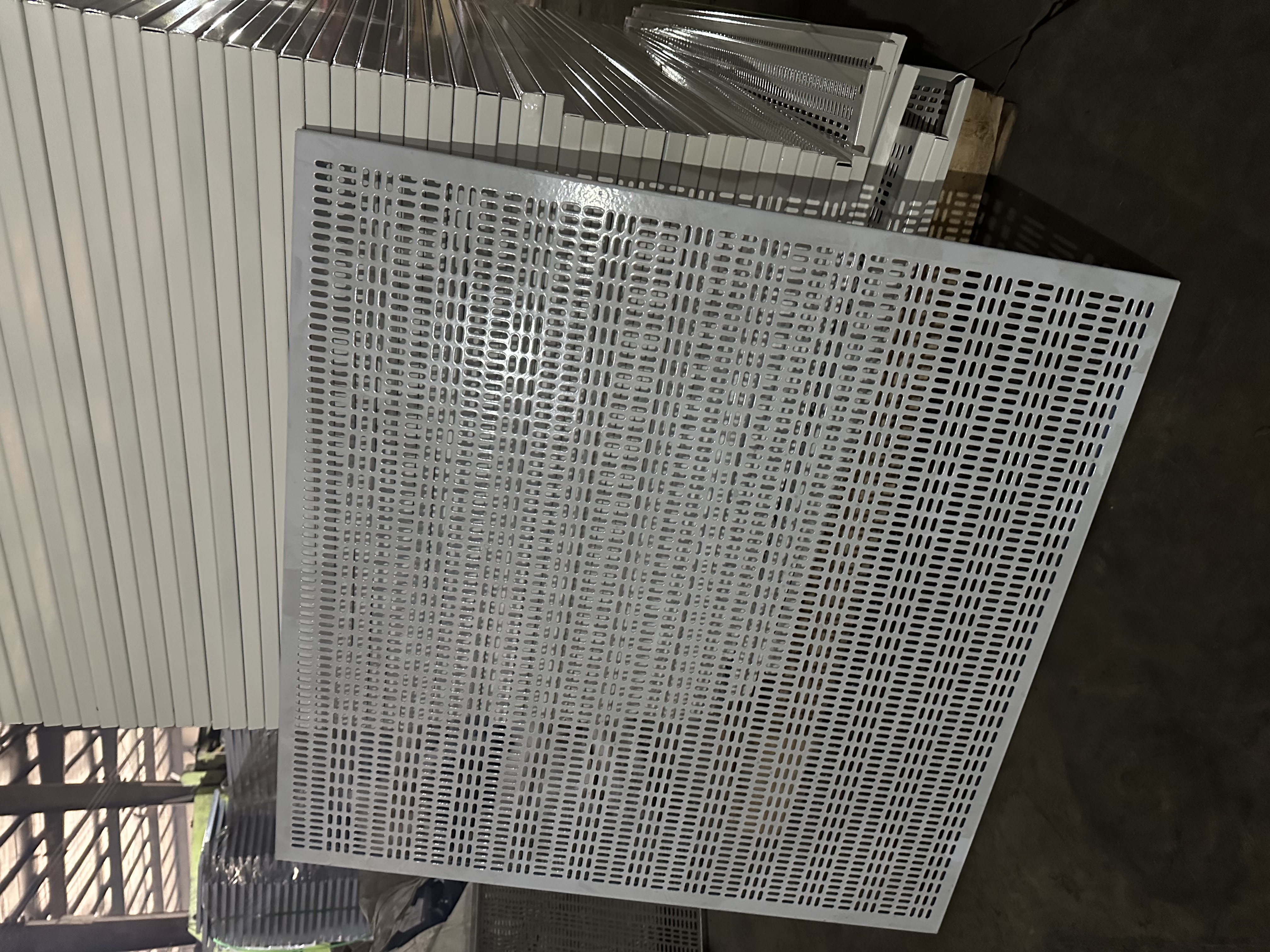
1. The Weight Advantage: Cutting Structural Steel Costs
When constructing a multi-story building or a long-span ceiling, the dead load of the material is a primary concern for structural engineers. A solid metal panel adds unnecessary weight that requires heavier steel frames, bigger bolts, and deeper foundations, often increasing the project's base cost.
The Data:A solid 2mm thick steel panel weighs roughly 15.7 kg per square meter. However, switching to a standard round-hole pattern with a 45% open area reduces that weight to less than 8.6 kg per square meter.
Case in Point:Consider a project involving a 2,000 square meter ventilation screen. By choosing a perforated aluminum panel from Hengai Metal instead of a solid sheet, the dead load is reduced by several tons, which directly translates to a lighter support structure. In many cases, this allows contractors to use lighter steel lintels and brackets, saving anywhere from 10% to 15% on the structural steel budget.
Operational Advice:
Review the Open Area: Do not just quote a panel based on cost per sheet alone. Calculate the weight per square meter and consult your structural engineer on the potential savings for the substructure. At Hengai Metal, we provide exact weight and open area ratio data prior to quotation to help you calculate total installed cost, not just the material cost.2. Flatness and Precision: Consistency Across Panels
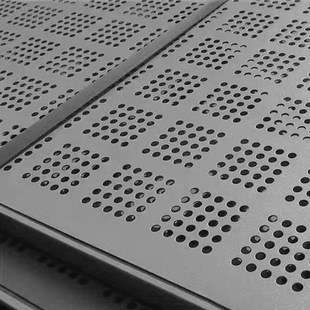
Perforation is a process that inherently releases internal stresses in the metal. If not managed correctly, the sheet will bow, warp, or twist, creating a "pillow effect." When panels do not lie perfectly flat, installation becomes a nightmare—using shims or force to align them leads to oil-canning and visual defects. For contractors, rework is the most significant hidden cost.
The Hengai Metal Approach:As a terminal factory with full production lines, we do more than just drill holes. We utilize high-tonnage CNC turret punch presses and synchronized leveling processes. While many distributors source from various mills (leading to inconsistent grain direction and flatness issues), Hengai Metal controls the entire process. We have our own perforation machines, laser cutting systems, and bending machinery—all under one roof.
Case in Point:A fence manufacturer had a recurring issue with panels arriving bowed, causing frequent press breaks to fail. Upon switching to Hengai Metal, they found that our full-process production capability allowed us to control the tension leveling phase after perforation. In-house bending trials are performed on every batch to ensure no cracks appear at stress points.
Operational Advice:
Require Flatness Certifications: Ask your supplier if they perform a flatness check after perforation and cutting.Sample Accuracy: Insist on pre-production samples that are manufactured on the same line that will run the batch production. This ensures minimal deviation from the initial approval standard.
3. Self-Finishing Capabilities: Saving the Subcontractor Cycle
In a traditional build, the metal panels would be fabricated, sent to a galvanizing plant or powder coater, and then transferred to the site. This adds significant logistics time and requires another contractor or schedule window. Perforated metal sheets come into their own when the supplier offers in-house finishing and pre-fabrication of components.
Efficiency Gains:When a contractor orders already-bent, cut, and surface-treated panels, the speed of installation increases dramatically.
Furthermore, with labor costs accounting for roughly 40% of a construction project's budget, reducing on-site man-hours is crucial. Pre-fabricated perforated components seamlessly integrate into modular construction. Since Hengai Metal handles cutting, welding, and bending in-house, there is no waiting for third-party processors. We deliver ready-to-install components, whether it’s a complex filtration cylinder or an industrial noise barrier.
Operational Advice:
Look for Surface Finishing Partners: Standard powder coating often misses the stubborn burrs on the backside of a punched hole. Ensure your manufacturer offers mechanical deburring as a standard option, followed by a powder coat matched to your specific RAL color requirements for corrosion protection.Bend Before Painting: To avoid cracks in the coating during the bending process, ensure the manufacturer bends the metal first and then applies surface treatment (spraying or anodizing) after the edges have been welded or formed.
4. Customization: No More "Jury-Rigging"
Standard material stocks often dictate the design. If a design calls for a specific hole pattern to achieve an exact airflow or aesthetic line, many suppliers are reluctant to customize because changing tools on a press is expensive and time-consuming. This leads to the contractor accepting “good enough” specifications, which often results in compromised acoustics or airflow functionality.
The Hengai Metal Difference:We specialize in non-standard products. You can bring us your drawings for a custom wall panel or a filter housing. We offer a range of metal bases (aluminum, copper, stainless steel, carbon steel) and hole shapes (round, square, slot, hexagonal, hexagonal micro-pores).
Case in Point:An industrial ventilation contractor required a filter lid with a specific combination hole pattern to increase airflow by 15%. Instead of stamping a standard round hole sheet, Hengai Metal provided a mix of square and round holes. Using our laser and turret presses, we achieved the tolerance required to guarantee the airflow, giving the customer a proprietary edge over their competitors.
Operational Advice:
Bring the Drawing Early: Do not wait until procurement submission time. If a bespoke requirement exists, send the design to your supplier immediately for a feasibility check on material stretching. We can provide a dimensional stone list quickly to refine the CAD design.5. Direct-from-Factory: Control over the Bottom Line
Perhaps the most compelling reason for Hengai Metal’s prominence in the industry over standard traders is our direct-to-customer pricing mechanism. Traditional supply for industrial components often encompasses multi-level distributors. Each layer adds a margin without providing manufacturing value.
Operating directly, we bridge the gap between design and realization. With no overseas middleman or agent surcharge, we maintain transparent pricing for our partners. This transparency gives our clients—and their contractors—assurance of the actual base cost for the metal and the hole configuration, making budget forecasts more realistic.
Moreover, for contractors involved in large-volume public infrastructure projects, having a stable direct partner who can handle long-term OEM/ODM contracts ensures continuity. Betting on intermediaries means betting on their inventory levels; betting on a factory means betting on latent production capacity and a raw material procurement advantage that works in your favor.
The Result:The metal fabrication segment has drastically seen shortages in supply due to a reduction in smaller metal punching shops in Western markets. Those who source directly from mid-tier manufacturing factories in Asia—such as Hengai Metal—mitigate this risk with consistent supply and direct communication without time-zone or process barriers.
Conclusion: Choosing the Right Partner
For contractors, the choice of material is not simply a technical specification; it is a measure of risk, efficiency, and reputation.
The allure of Perforated Metal is clear—it delivers maximum structural efficiency, unmatched flexibility in design, and significant long-term weight savings for the entire structure. Yet the safety net for all these benefits lies with the manufacturer you select.
Finding a partner like Hengai Metal, equipped to handle both small trial orders and massive multi-container shipments, is essential. Their ability to handle advanced engineering issues, such as troubleshooting tolerance requirements, is what puts them ahead of the curve. When looking for a supplier for your next project, choose not just a distributor, but a partner who can build the physical panels, flanges, clamps, and hinges in a way that integrates seamlessly with your schedule.
If you have an upcoming project that requires precision, quick turnaround, and cost-effectiveness, working with a manufacturer that owns the punches and the hands that run them is the only way to ensure your profits remain where they belong.
Ready to discuss your next tender or blueprint? Contact us to get exact specifications and technical support on hole patterns and material grade selection tailored for your construction demands.