 En
En
Perforated metal sheet affordable reliable manufacturer
In an era where every procurement decision faces intense cost scrutiny, the perforated metal sheet market remains a maze of opaque pricing, unreliable lead times, and inconsistent quality. For engineers, architects, and purchasing managers, the search for a partner who delivers precision, value, and accountability is getting harder, not easier.
The global architectural metal market alone is projected to exceed $30 billion by 2027, driven by demand for sustainable facades and noise control. Yet, many buyers still find themselves tethered to distribution chains that add 20-40% to costs and weeks to delivery schedules.
Here is the reality: the manufacturer who controls the entire production process is the one who can guarantee both price and delivery. This is why the direct-from-factory model is not just a trend—it’s the sane way to buy.
The Hidden Cost of Multiple Handoffs
Traditional supply chains for perforated metal involve a convoluted path: mill to service center, to distributor, to fabricator, to end-user. Each handoff introduces a markup, a delay, and an opportunity for errors. For a custom order—which most architectural or industrial projects are—this model is inefficient.
Case in point: A recent commercial facade project in the Middle East required 3,000 square meters of custom stainless steel perforated panels. Initial quotes from trading companies came in at $85 per square meter. By sourcing directly from a terminal factory with full CNC punching and laser cutting capabilities, the same specification was sourced at $62 per square meter—a 27% cost reduction, to say nothing of the freight savings from a single shipping point.
Actionable Insight:
Audit your supply chain. Map out every intermediary between the mill and your loading dock.Require a "manufacturer declaration" in your RFQ, not just a "supplier" document.
Ask for photos of the production floor and specific machine models. If they cannot show the punching presses, they are likely not the factory.
The Real Cost of "Low Price" Quotes: A Quality Wake-Up Call
The adage "you get what you pay for" holds, but the reverse is often unfairly true. Some buyers pay high prices for mediocre quality simply because they have always bought from a known brand. However, brand name alone doesn't punch holes.
In 2024, a filtration equipment OEM faced a 15-day shutdown when a batch of "certified" perforated filter cores from a well-known trading house arrived with critical weld splatter and incorrect hole patterns. The hidden costs—overtime labor, air freight for replacements, and lost production—were triple the value of the original order.
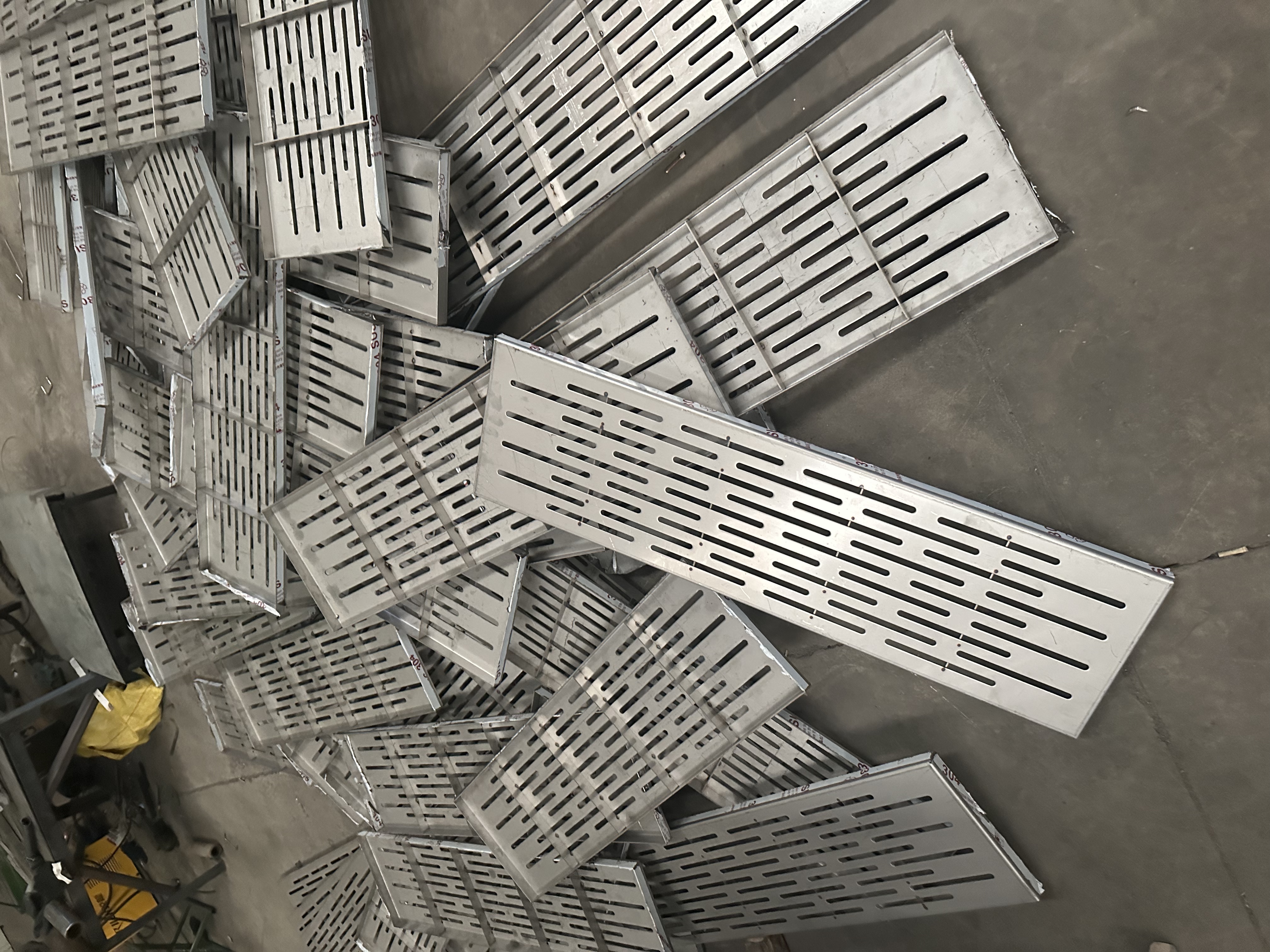
This is where the distinction between trading companies and terminal factories becomes critical. A terminal factory, such as Hengai Metal, owns its punching, cutting, bending, and welding equipment. The quality control loop is closed; there is no blaming a third-party processor.
The 7-Point Operational Checklist for Buyers:
Verify Punching Capabilities: Ask how many CNC turret punch presses they run. A factory should have multiple, not one. This ensures capacity redundancy.Scrutinize Edge Quality: Request a sample. Look for burrs. A quality manufacturer deburrs automatically; a middleman won't mention it unless asked.
Confirm Material Traceability: Can they provide mill certificates for the specific coil used in your batch? This is non-negotiable for mining and food-grade applications.
Evaluate "Bending & Welding" Clauses: If they can only sell you flat sheets, and you need angles or frames, find someone else. Sourcing secondary operations separately increases your liability.
Check Micro-Perforation Expertise: If your design requires holes below 1.5mm, standard tooling won't work. Ensure they have specialized micro-punch tooling, not just a promise.
Ask About Die Wear: Quality factories track tooling life. Poorly maintained dies cause ragged holes. Ask how often they replace punches.
Request Packaging Photos: For export, inadequate packaging for stainless steel (especially 430 grade) leads to "tea staining" in transit. Make sure they use VCI paper.
Why "One-Stop Shops" Are the Future of Industrial Sourcing
The complexity of modern engineering requires components that are ready to install, not semi-finished goods awaiting further processing. When you order a perforated sheet for a noise barrier, you don't want a flat piece of metal; you need a bent, framed, and finished panel.
Hengai Metal's approach exemplifies this vertical integration. They have structured their facility to move a part through the entire journey—from coil, to punching, to laser cutting for blanking, to CNC bending, and finally to MIG/TIG welding for assembly. This is crucial for functional parts like filter cores or protective guards.
Why this matters for your bottom line:
Fewer Rejections: When one vendor handles the entire process, they cannot argue about who caused a tolerance failure. They own the fix.Lower Logistics Costs: Shipping a fabricated basket is more efficient than shipping flat sheets to another vendor and then to you. You save on dimensional weight and double handling.
Faster Prototyping: A factory with integrated laser cutting can turn around a prototype in 48 hours compared to a week for a supplier who has to outsource the laser cutting.
Navigating Material and Hole Pattern Selection: The Technical Advantage
Designing with perforated metal is a balancing act between open area, strength, and aesthetics. Most standard catalogs limit you to a few generic patterns. This is insufficient for modern acoustic and structural needs.
Hengai Metal's technical team advises clients to push beyond "common sense." For example, on a major mining screen application, a client initially specified a round hole pattern. By consulting with the factory's engineers, they switched to a slotted (long-hole) configuration using a different material grade, boosting throughput by 18% and extending screen life by 35% due to superior fatigue resistance.
Three Technical Considerations to Discuss with Your Factory:
Staggered vs. Straight Patterns: Straight rows are often specified for aesthetics, but staggered patterns offer greater structural strength for the same open area. Let the factory's press brake and shear specialists guide you.Material Work Hardening: In stainless steel, excessive punching work hardens the edges, making subsequent shearing or bending more prone to cracking. Ask if they anneal or adjust bend allowances for high open-area sheets.
The "Libs" Addition: If you are buying a flat sheet larger than 1m x 2m that needs rigidity, ask the factory to roll or press stiffening ribs. This the difference between a flimsy screen and a structural panel. Hengai Metal typically handles this in-house via their roll forming or press brake.
Case Study: From A Dozen Samples to A Global Supply Agreement
The skepticism about overseas manufacturing is usually rooted in fear of communication breakdowns. Yet, the data points to success for those who use structured approaches.
In late 2023, a European lift engineering company was struggling with a supplier for elevator door protection panels. They needed a carbon steel sheet, powder-coated in specific RAL colors, with exact pre-drilled holes for their sensors.
They approached Hengai Metal initially for a small trial run—just 50 units to test the waters. The factory provided detailed engineering feedback on the bend radius to avoid cracking the powder coat, a detail the previous supplier had missed for years.
Within 6 weeks of the initial contact, the parts were delivered, packaged with individual foam separators to prevent scratching. The quality was so consistent that the client moved straight into a 5,000-piece annual contract. The secret wasn't luck; it was the factory's OEM/ODM flexibility and their willingness to sign off on a robust quality assurance plan (QAP) that included a pre-shipment inspection by a third-party agency in China.
Actionable Strategies for Forging a Long-Term Partnership
Finding a manufacturer like Hengai Metal is one thing; building a resilient relationship is another. Here is how to ensure you become a favored customer:
Standardize Your Specifications: Instead of sending 30 different drawings each month, work with the factory to standardize your hole patterns and material thicknesses. This reduces their setup times, and they will pass those savings back to you.Forecast Beyond the PO: Share your rough six-month forecast. Terminal factories need to purchase coils in bulk to hedge against steel price fluctuations. If you commit to a volume, they can lock in prices for you.
Invest in the "Sampling" Phase: Don't just ask for a free sample. Pay for it and specify strict tolerances. This proves you are serious and allows the factory to fine-tune their processes based on rigorous feedback.
Visit or Video Call: If travel isn't possible, request a real-time video walkthrough of the production line. Seeing your parts being manufactured builds a level of trust that emails cannot.
Surface Finishing: The Last Step that Determines Lifespan
Perforated metal is often exposed to harsh environments—coastal salt spray, chemical washdowns, or heavy UV. The punching process exposes raw edge grain, making it susceptible to corrosion even on galvanized sheets.
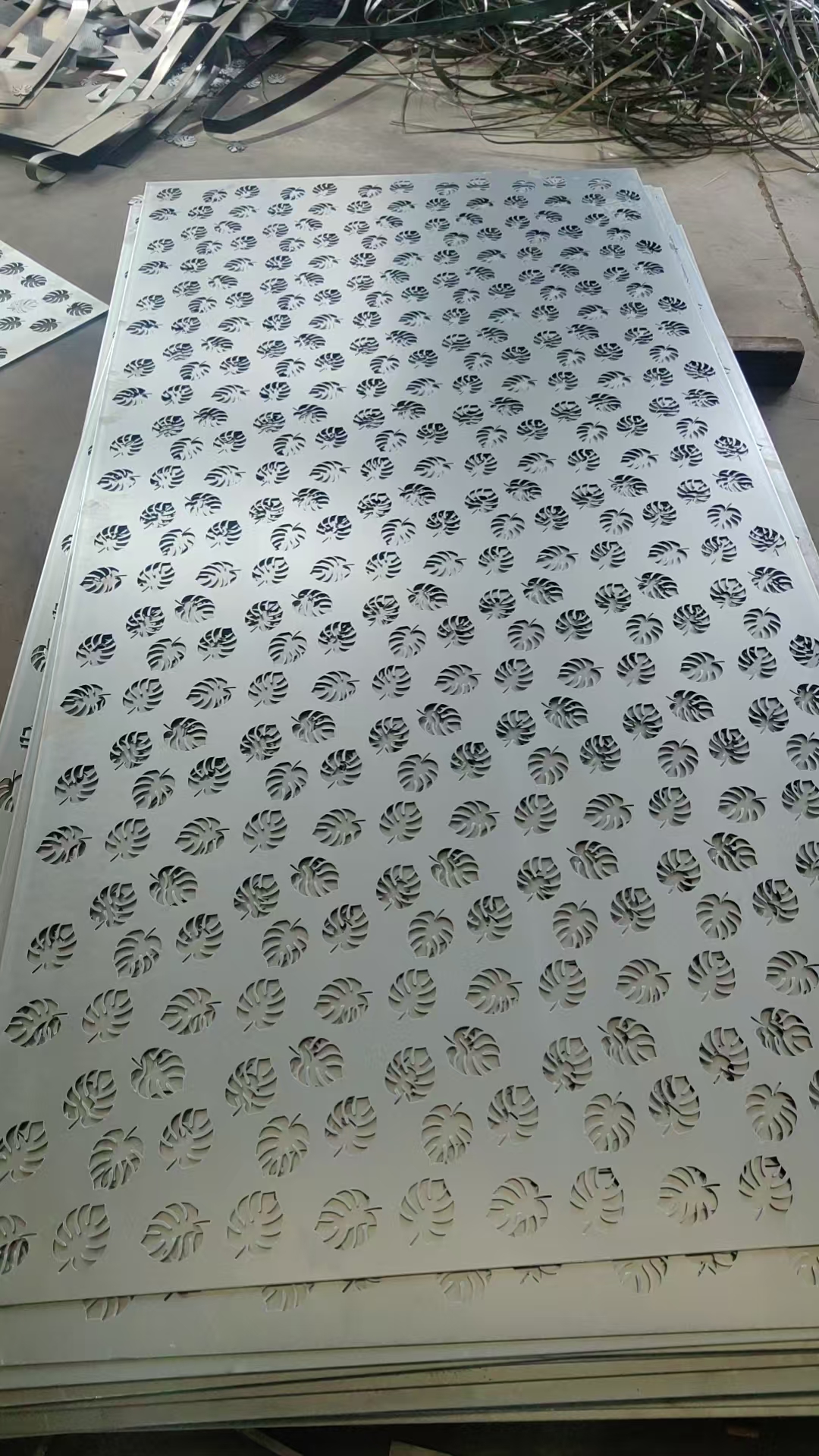
Hengai Metal offers a range of post-punching treatments, and they advise clients not to overlook the edge overcoat issue. Powder coating alone is often insufficient for panels that see condensation. They recommend a pre-treatment process (like iron or zinc phosphating) before the powder coat to ensure edge coverage.
Pro Tip: For architectural projects where "shadow gaps" are visible, specify a smooth-edged hold pattern or ask for a "deburred + brushed" finish. This elevates the product from industrial to architectural grade.
The Verdict: Why Transparency Trumps Price
Ultimately, the most affordable perforated metal sheet is not the one with the lowest quote today, but the one that performs flawlessly for years without hidden administrative costs. By eliminating the middlemen, verifying factories capabilities, and planning for the long-term, procurement leaders can secure not just materials, but a competitive advantage.
The next time you source perforated metal, skip the catalogs and call the factory floor. Ask to speak to the applications engineer, not just the sales representative. With partners like Hengai Metal, you gain a team that stands behind the steel, the holes, and the weld, ensuring your project runs on time and on budget.
Your supply chain is your risk buffer. Make it strong. Go direct.