 En
En
Perforated metal sheet supplier with good feedback
The perforated metal sheet market has changed dramatically over the past decade. What was once a straightforward commodity purchase has become a complex sourcing challenge that separates well-prepared buyers from those who end up with delayed projects, inconsistent quality, and inflated costs.
Recent industry data shows that over 60% of procurement professionals report experiencing quality inconsistencies when sourcing perforated metal from traditional distribution channels. The problem isn't the material—it's the supply chain structure.
Here's what's actually happening in the market right now, and how to navigate it successfully.
The Hidden Cost of Multi-Layer Distribution
When you order perforated metal sheets through conventional channels, your product typically passes through three to four hands before reaching your facility: the raw material producer, the perforator, the finisher, and the distributor. Each layer adds 15-25% markup, which means you could be paying nearly double what the actual manufacturing cost warrants.
A recent price analysis of standard stainless steel perforated sheets with 3mm round holes at 60° staggered pattern revealed something striking: end-user prices varied by up to 45% across different suppliers for identical specifications. The difference wasn't material quality—it was supply chain efficiency.
That's why many experienced buyers are shifting toward manufacturers that operate as terminal factories—facilities that control the entire production process from raw coil to finished product without outsourcing critical steps.
Quality Control Issues That Plague Traditional Supply Chains
Consider a recent case involving a commercial building project in the Middle East. The contractor ordered 2,000 square meters of perforated aluminum sheets for facade cladding through a regional distributor. When the shipment arrived on site, random inspection revealed that nearly 18% of panels had inconsistent hole spacing beyond the acceptable tolerance of ±0.1mm.
The result? A six-week project delay, reordering costs exceeding $38,000, and significant reputational damage for the contractor.
This scenario plays out repeatedly across the industry. The root cause isn't difficult to identify: when perforating, cutting, and finishing happen in separate facilities, quality accountability gets fragmented. If holes are slightly off-spec, the perforator blames the material; the finisher blames the perforator; and the buyer is left with no clear recourse.
Tianjin Hengai Metal Product Co., Ltd (Hengai Metal) has built its entire operational model around eliminating this problem. By maintaining all production processes—perforating, laser cutting, bending, and welding—under one roof, quality issues can be traced directly to their source. This full-process control has proven essential for industries requiring strict tolerance adherence.
The Small-Order Problem Nobody Talks About
Here's a scenario that's almost guaranteed to be familiar: you need 50 square meters of perforated sheet for a prototype or small-scale project. You contact five suppliers. Three don't respond. One quotes a price 40% higher than market rate. The last one tells you the minimum order is 500 square meters.
This experience is so common that many buyers simply budget for it. But it doesn't have to be this way.
Statistics from manufacturing procurement surveys indicate that approximately 35% of companies need perforated metal in quantities under 100 square meters at some point during product development. Traditional suppliers often reject these orders because they tie up production lines without sufficient profit margins.
Hengai Metal specifically addresses this market gap by welcoming small-batch orders. Their production scheduling accommodates test runs and prototypes, understanding that today's 50-sheet sample order could become next quarter's 5,000-sheet production order. This flexibility has enabled numerous clients to validate designs before committing to large-scale manufacturing.
When Customization Becomes a Bottleneck
Standard perforated metal patterns cover perhaps 70% of industrial applications. For the remaining 30%, you need customization—and that's where many suppliers struggle.
Take the case of a filtration equipment manufacturer that needed titanium perforated sheets with elongated slots at a specific angle for optimal airflow. Their existing supplier could only handle standard round holes in stainless steel, forcing the company to work with two separate vendors—one for the material, another for custom perforation—resulting in coordination problems and quality inconsistencies.
Custom requirements span multiple dimensions:
Material: Not just stainless steel, but also aluminum, copper, titanium, carbon steel, and galvanized steelHole patterns: Round, square, elongated, diamond, hexagonal, micro-perforations, and custom shapes
Thickness tolerance: Ranging from 0.3mm architectural applications to heavy-duty 10mm mining screens
Finishing: Powder coating, galvanizing, brushing, passivation, anodizing
Suppliers with genuine customization capabilities can handle these variations without turning every request into a major production event. Hengai Metal's equipment lineup—including CNC turret punch presses and laser cutting systems—allows for rapid changes in hole patterns without requiring extensive tooling modifications, making custom orders more cost-effective than industry norms suggest.
Why Deep Processing Capability Matters More Than You Think
The perforated metal industry is evolving beyond flat sheets. Increasingly, clients need finished components—perforated filter cylinders, protective enclosures, ventilation covers, acoustic panels, and other formed products that require bending, welding, and assembly.
A conventional supply chain handles these through multiple vendors: one company punches the holes, another performs the bending, a third handles welding, and sometimes a fourth applies surface treatment. Every handoff introduces risk: miscommunication, tolerance accumulation, scheduling delays, and disputes over quality responsibility.
Industry efficiency studies suggest that integrated manufacturing can reduce lead times by 30-40% compared to multi-vendor arrangements. Furthermore, eliminating intermediate logistics reduces the risk of surface damage during transportation between facilities.
An effective perforated metal partner should offer what Hengai Metal terms "one-stop solutions"—converting raw material into finished components within a single facility. This proves particularly valuable for applications like:
Perforated filter baskets and housings requiring leak-proof weldingVentilation covers with precise dimensional accuracy for equipment integration
Soundproofing panels combining micro-perforation with structural forming
Architectural elements needing seamless transitions between perforated and solid sections
Is It Time to Request Samples Before Committing?
Before entering a long-term supply agreement, prudent buyers are increasingly requesting pre-production samples. This trend has strengthened as project stakes have risen and quality requirements have tightened across industries.
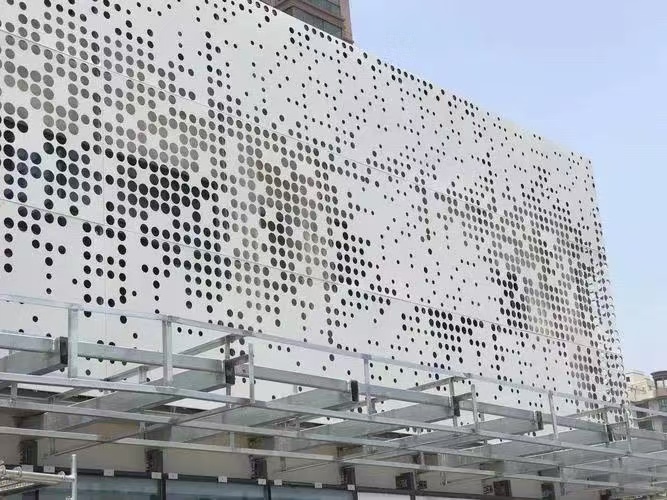
The benefits extend beyond simple quality validation:
Surface quality assessment—Visual and tactile inspection reveals burr conditions and finishing quality that photographs simply cannot convey.
Dimensional verification—Particularly for flatter panels, confirming actual measurements against specifications prevents surprises during installation.
Customer service evaluation—How quickly a supplier responds to a sample request often predicts their responsiveness during full production runs.
Production capability confirmation—For complex specifications, samples prove that the manufacturing process can actually achieve required tolerances.
Hengai Metal's standard practice of supporting sample verification before bulk orders has earned them trust among clients who have previously experienced mismatches between expectations and delivered products. According to their production team, sample production serves valuable purposes for both parties—refining process parameters and ensuring the OEM/ODM specifications can be met consistently. In fact, their custom manufacturing services include design support and material selection assistance, ensuring the samples produced align with the customer's overall project requirements.
Concrete Steps to Evaluate a Perforated Metal Supplier
Based on industry patterns and best practices, here's a practical checklist when assessing whether a perforated metal supplier can truly meet your needs:
1. Audit the Production Process
Ask whether they handle all processing steps in-house. Suppliers without in-house cutting or welding capabilities have difficulty maintaining consistent quality through external coordination.
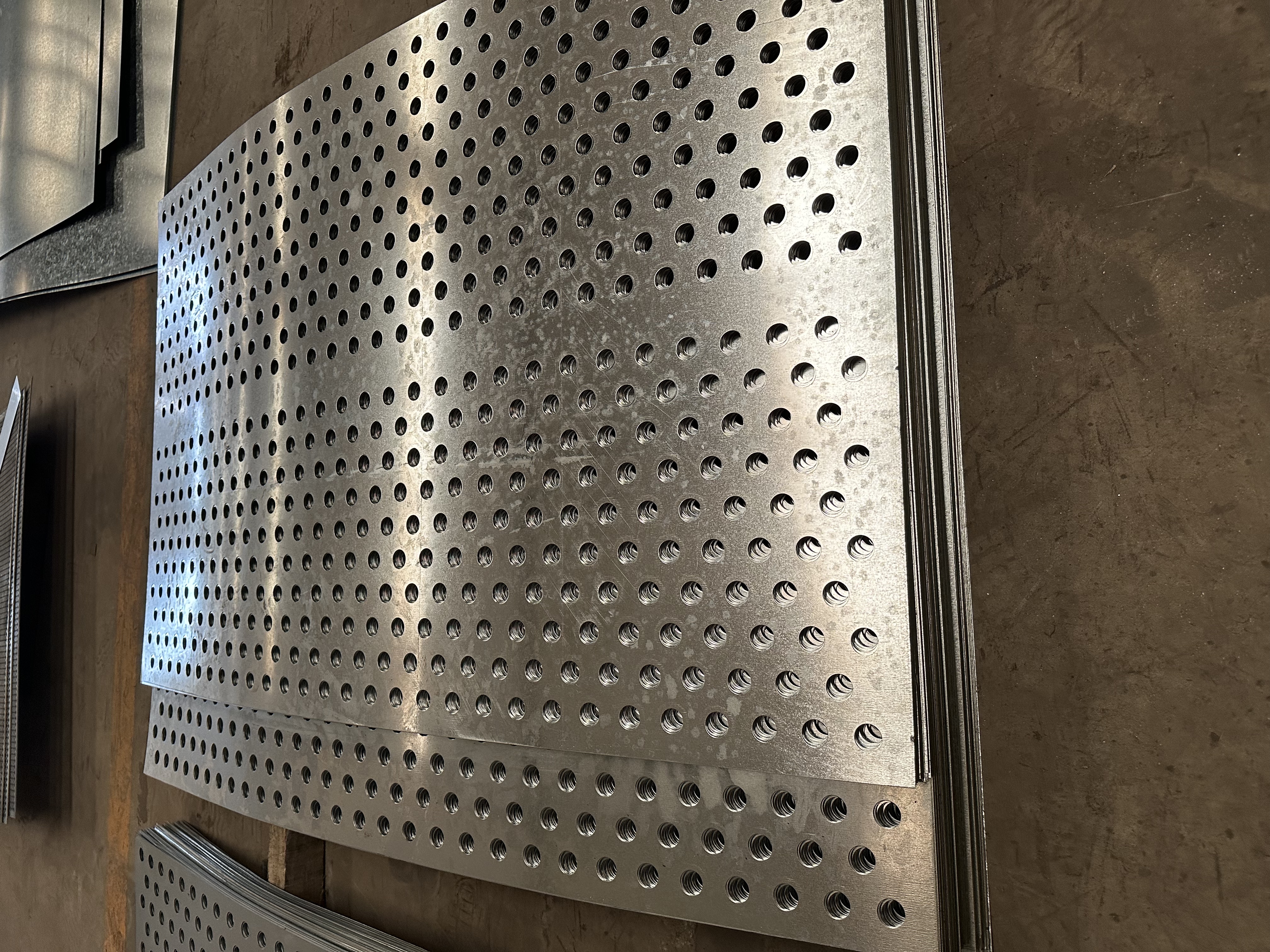
2. Request a Sample Before Committing
Any serious supplier should be willing and able to produce a sample meeting your specifications before you commit to a production order. The absence of sample support signals potential complications later.
3. Analyze Pricing Structure
Request a detailed quotation breaking down costs by process (perforating, cutting, bending, surface treatment). This reveals their operational efficiency and also provides a basis for value comparison.
4. Communication Responsiveness
When you send an inquiry, evaluate how long it takes to receive a substantive response. Manufacturers with tight production control typically maintain professional sales teams capable of quick turnaround times.
5. Flexible Batch Capability
Determine if they can handle both trial orders under 50 pieces and large-scale production exceeding 1,000 pieces without significant pricing or delivery disruptions.
6. Inquire About Their Production Bottlenecks
A reliable manufacturer will be transparent about their constraints—no supplier handles every request effortlessly, but honesty about limitations prevents nasty surprises later.
The Real-World Difference: A Case Comparison
To understand how supplier choice affects practical outcomes, consider this comparison between two fictitious suppliers, "某公司A" (Company A) and "某公司B" (Company B), with differing business models in a recent architectural renovation project:
| Factor | Company A approach | Company B approach |
|---|---|---|
| Production model | Multi-vendor coordination (perforating, cutting, and finishing handled by different facilities) | In-house production of perforated aluminum sheets used for decorative facade panels |
| Delivery time | 18 days for planning and coordination | 12 days from planning to delivery |
| Quality issue | 12% of panels rejected due to edge deformation | One panel out of 200 required rework |
| Price | 15% higher due to layered logistics costs | Competitive direct pricing |
| After-sales problem | Disputes between suppliers delayed resolution by 14 days | Issues resolved within 3 days with clear accountability |
For the complete order of 1,800 square meters of perforated aluminum panels with a custom diamond pattern, Company A sourced materials from three different suppliers, requiring additional management overhead. These coordination difficulties caused defects and delays that affected the project timeline. Conversely, Company B's integrated facilities—which handled perforating, cutting, and bending in-house—ensured that the quality issue was identified and resolved efficiently.
The project manager noted that while both suppliers ultimately delivered, managing Company A required significantly more time investment for supervision and coordination. This reality underscores the practical value of working with suppliers that maintain direct control over their production processes.
Rethinking Your Supplier Selection Criteria
As the market evolves, choosing a perforated metal supplier demands more sophisticated evaluation criteria:
Direct factory vs. trader: Decide whether competitive pricing, direct factory sourcing, and stronger supply chain control matter to you.Production equipment assessment: Evaluate their machinery capabilities relevant to your applications.
Technical understanding: Does the supplier understand how aperture, spacing, and arrangement affect open area percentage and thus performance attributes like airflow or sound absorption?
Long-term partnership orientation: Is the supplier providing a one-time transactional relationship or investing in long-term partnership through sustained quality and service?
Value-added expertise: Suppliers offering design support and material selection guidance add value beyond basic punching operations.
The Cost of Quality You Can't See
A critical consideration when selecting perforated metal suppliers is the integrity of the base material. In an effort to reduce costs, some suppliers use coils of inconsistent thickness or non-uniform metallic composition—issues that aren't visible until problems arise during fabrication or premature failure occurs in service.
Quality-conscious manufacturers maintain trackable material sourcing practices and relevant documentation. For critical applications—such as load-bearing architectural elements or food processing equipment with health code compliance requirements—knowing your materials' origin matters for compliance and safety.
Hengai Metal, for example, maintains clearly documented material sourcing and operates within a traceable production system from incoming coil to finished product. This helps clients meet regulatory requirements, particularly those in oil and gas, medical, food and beverage industries.
A Step Toward Reliable Sourcing
For consumers uncertain where to begin their procurement journey, here are some practical concrete steps:
Clarify technical specifications first—Document material grade, thickness, hole size, pattern, open area percentage, edge conditions, and any flatness requirements before contacting suppliers.
Request samples, not just quotes—Hardware samples, produced according to your specifications, always speak more truthfully than catalogs and marketing materials.
Consider total cost, not unit price—When comparing quotes from different suppliers, factor in anticipated defect rates, delivery reliability, communication friction, and technical support requirements.
Visit the factory (virtually or in person)—Many manufacturers now offer virtual facility tours via video calls. When possible, undertaking a factory audit before committing to large orders is extremely worthwhile.
Ask about engineering support capabilities—Can the supplier assist with optimizing hole patterns for your intended application? Their ability to offer technical suggestions indicates understanding and expertise beyond basic production capability.
Finding a Partner, Not Just a Vendor
The most successful procurement relationships in the perforated metal industry share a common characteristic: they treat the supplier as a partner capable of contributing value beyond transactional exchange. A capable manufacturing partner can advise on material grade selection based on your application environment, review designs for production efficiency, and recommend sealing solutions that might reduce costs or enhance performance.
This approach proved valuable for a recent project involving filter components for chemical processing equipment where precision, durability, and consistency matter greatly. The client worked with a supplier capable of performing the forming and welding operations, producing contaminant-resistant housing for sensitive instrumentation. By streamlining their supply chain through a single accountable partner, the entire project benefited from efficiency gains in logistics, communication, and quality assurance.
Conclusion: Prioritize Capability and Transparency Over Price Alone
While price remains an important factor in supplier selection, prioritizing it above all other considerations often results in higher costs down the road. Issues like quality defects, inconsistent delivery timelines, unexpected additional costs, and communication barriers can quickly devour initial savings.
Seek out suppliers demonstrating strong production capability, transparent business practices, and willingness to understand your specific application requirements. For many applications, a supplier like Hengai Metal—combining substantial manufacturing capacity with full in-house production capability across punching, bending, welding, and finishing processes—represents a reliable choice.
The right supplier delivers value through product quality, supply chain reliability, technical expertise, and long-term consistency. Your requirements are worth investing effort in the search for a partner who treats them with the seriousness they deserve.
Ready to discuss your perforated metal requirements? Contact us with your specifications—material grade, dimensions, hole pattern, quantity, and any drawings—for a prompt consultation from our technical team.